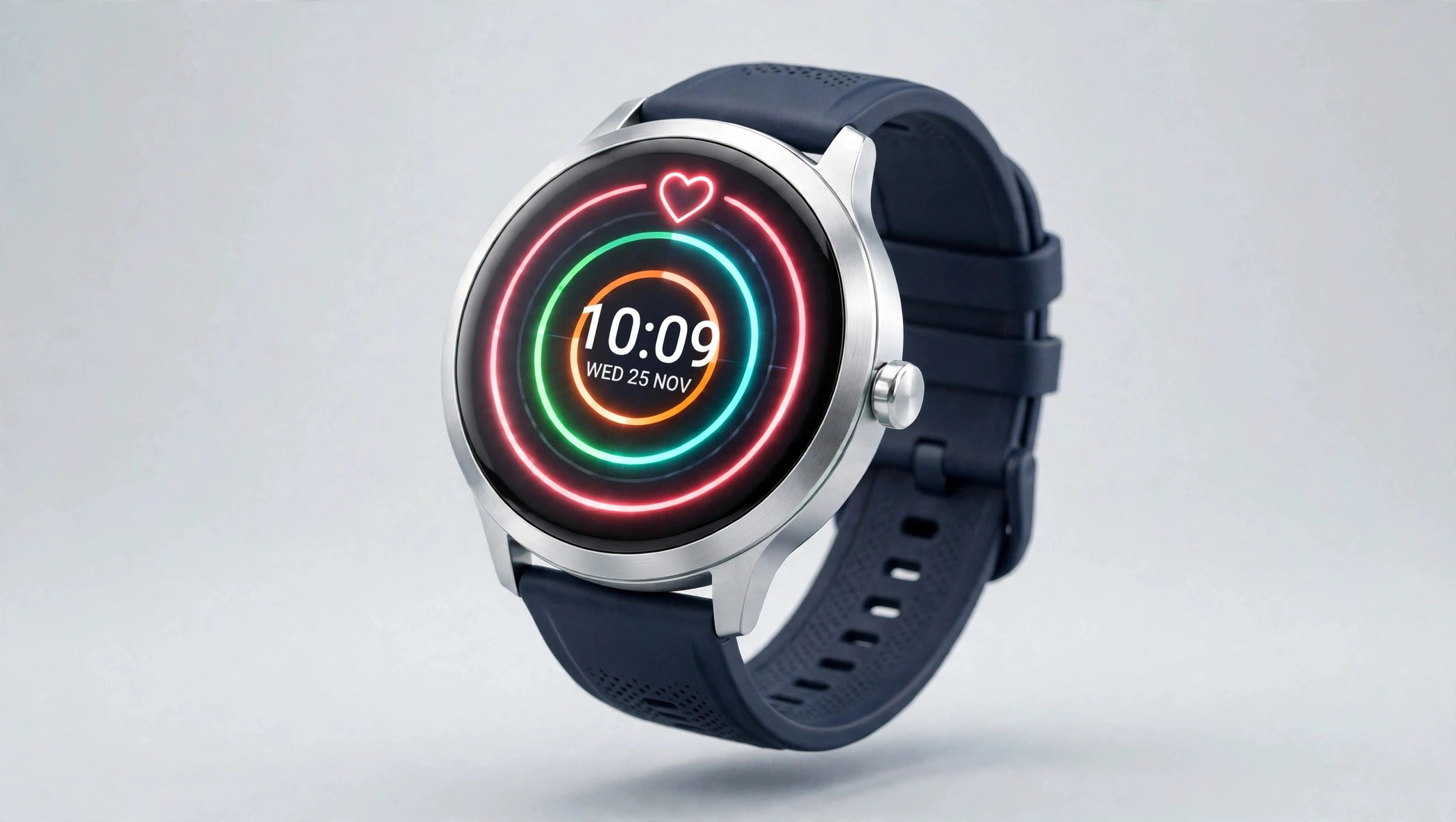
Samsung has confirmed that its biggest smartwatch software update of the year is now rolling out around the world. One UI 9 Watch, built on Google's Wear OS 7, is reaching the Galaxy Watch8 and Galaxy Watch8 Classic, bringing with it a set of health features that until now were exclusive to Samsung's newest watches, the Galaxy Watch9 and Galaxy Watch Ultra2.
The confirmation came on 24 November 2026, when Samsung Mobile Press announced the global rollout. The update itself had already begun quietly reaching watches in mid-November — first in South Korea on 11 November, then in the United States a few days later — but Samsung's announcement is the first official word that the rollout is now in full swing worldwide. If you own a Galaxy Watch8 or Watch8 Classic and have not seen the update yet, it should arrive soon: Samsung says availability varies by country, model and carrier, and the rollout is staged.
What makes this update worth checking for is not a new watch face or a visual refresh, though those are in there too. It is the health toolkit. One UI 9 Watch turns the Watch8 series into a far more serious health companion, with overnight vitals tracking, a single heart-health score, smarter exercise guidance and an upgraded sleep apnea check that has now cleared regulators in the US and South Korea. Here is what is inside, what each feature actually does, and how to get the update on your wrist.
Vitals: your body, measured while you sleep
The headline addition is Vitals. While you sleep, the watch measures five biometric indicators: heart rate, heart rate variability, respiratory rate, skin temperature and blood oxygen saturation. Over several nights it builds a personal baseline for your body, and when it spots a notable deviation from that baseline, it alerts you.
The idea is simple but powerful. A single night's heart rate tells you very little on its own. Your normal resting heart rate, your usual breathing rate and your typical skin temperature are personal — and only by knowing what is normal for you can a watch flag what is not. Samsung says Vitals needs at least seven nights of sleep data before the baseline is established, and you need to wear the watch — or a Galaxy Ring — while sleeping. The feature runs through the Samsung Health app (version 7.0 or above) on an Android phone running Android 11 or above, with a Samsung account signed in.
Samsung is careful to note that Vitals is not intended for diagnosing or treating any medical condition. If a reading worries you, the advice is the same as ever: see a medical professional. What Vitals offers is an early warning system, not a diagnosis.
Heart Health Score: one number for your heart
Alongside Vitals comes the Heart Health Score, which pulls everyday health indicators — sleep, activity and other daily data — into a single, unified score. Instead of juggling half a dozen charts, you get one number that rises or falls with your habits, and you can watch how it changes over time.
The score needs a short setup period: Samsung says it requires wearing the watch for an initial 24 hours, including while awake and asleep, before the first score appears. Like Vitals, it needs a compatible Samsung Galaxy phone, Samsung Health 7.0 and a Samsung account. And like Vitals, it is a guide to your routines, not a medical device — Samsung states plainly that the Heart Health Score is not intended for the diagnosis of disease or other conditions.
Daily Cardio Load and Fitness Index: train smarter, not just harder
For anyone who exercises, two new training features arrive with the update. Daily Cardio Load measures the strain that workouts and daily activities place on your heart, then suggests an appropriate load range — the aim being to help you balance hard training days with recovery, instead of pushing every day and wondering why progress stalls.
Fitness Index takes a different angle: it combines multiple fitness-related metrics into one comprehensive overview of your physical fitness, and recommends fitness content matched to your goals. To use it, the watch needs at least one measurement each of body composition (BIA) and VO2 Max, along with two days of activity records and step counts. Daily Cardio Load needs at least seven days of activity records, and Samsung recommends 28 days of continuous wear for the best accuracy. Both features need Samsung Health 7.0 or above, and both are available on Galaxy Watch7 or newer running One UI 9 Watch — so Watch8 owners are covered.
Sleep Coaching gets personal, and Sleep Apnea gets serious
Sleep is where the Watch8 update may matter most. The upgraded Sleep Coaching experience now delivers more personalised guidance based on your goals and your sleep data. Coaching can start with as little as three days of sleep data from the past two weeks, and the weekly guidance adapts as your sleep patterns change. Built on principles of behavioural sleep science, the programme gives you daily habit checklists and plain-language sleep tips. It runs on Samsung Health 7.1 or above.
The bigger news is the upgraded Sleep Apnea feature. It uses an AI algorithm to analyse how often breathing disruptions occur per hour of sleep, and sorts the results into three levels: minimal, occasional and frequent. Results appear in the Samsung Health Monitor app after two valid nights of sleep data within a 10-day period.
What gives this feature weight is the regulatory backing behind it. Samsung says the upgraded Sleep Apnea feature received clearance from the US Food and Drug Administration (FDA) in July 2026, and approval from South Korea's Ministry of Food and Drug Safety in October 2026. It is an over-the-counter, software-only feature intended to detect signs of moderate to severe sleep apnea in users aged 18 and older, over a two-night monitoring period. It is not intended for people who have already been diagnosed with sleep apnea, and Samsung stresses it is not a replacement for a clinician's diagnosis or treatment.
Beyond health: a watch face that knows your people, and a compass that finds your way back
One UI 9 Watch is not only about health. The new Portrait Watch Face lets you display your favourite moments on your wrist: it recognises people in your photos and arranges the clock and background around them, so the time never covers a face.
The upgraded Compass is aimed at anyone who walks, hikes or travels. You can now save important locations — where you parked the car, a campsite, a trailhead — as waypoints, and with Track Back you can follow a recorded route back to your starting point. For a watch that already tracks your runs and hikes, that is a genuinely useful addition.
How to check for the update
If you own a Galaxy Watch8 or Galaxy Watch8 Classic, you can check manually instead of waiting for the notification. On the watch itself, open Settings, tap Watch software update, then tap Download and install. From your phone, open the Galaxy Wearable app, go to Watch settings, then Watch software update, then Download and install.
A few practical points before you tap. Samsung says the watch needs at least a 30% charge to update, and the watch must stay paired with a compatible Android phone. The download is a large one if you are coming from the older software: reports from SamMobile put the full upgrade from One UI 8 Watch at around 2 GB, while watches that were already on the beta need only about 158.5 MB. The firmware version to look for ends in BZJ7 — L320XXU2BZJ7 on the Watch8 and L500XXU2BZJ7 on the Watch8 Classic, according to SamMobile's reporting. And note that some of the new features also need a separate update to the Samsung Health app or the Samsung Health Monitor app, so update those too if a feature does not appear straight away.
If your Galaxy phone is waiting on updates too, Samsung's November 2026 security update is rolling out to the Galaxy S25, S24 and Fold 6 at the same time.
Which watches get it — and which are still waiting
Samsung's announcement names only two models: the Galaxy Watch8 and the Galaxy Watch8 Classic. Those two are first in line, and the global rollout Samsung confirmed on 24 November covers them.
Owners of older watches will have to wait a little longer. The Galaxy Watch7, the original Galaxy Watch Ultra and the Galaxy Watch6 series are still on the One UI 9 Watch beta in South Korea, and Samsung has given no date for their stable release. The Galaxy Watch5 series and the Galaxy Watch FE are also expected to get the update, according to reports, but again with no timetable from Samsung. One report suggests the 2021 Galaxy Watch4 will miss out on the Wear OS 7 update altogether — but that rests on a single report and Samsung has not confirmed it, so treat it as unconfirmed for now.
The pattern is familiar from Samsung's phone updates: the newest models first, then the previous generations in waves. Samsung has said compatible watches will get One UI 9 Watch before the end of 2026, so if your watch is on the list, the wait should be measured in weeks, not months.
Samsung is running a similar staged rollout on phones, with the One UI 9.5 beta now testing on the Galaxy S26.
Why this update matters
Smartwatch updates are usually easy to ignore. A new watch face here, a small speed improvement there. One UI 9 Watch is different because it changes what the watch is for. The Watch8 launched in July 2026 as Samsung's thinnest watch yet, with a bright display and new health sensors — but the software to make full use of those sensors arrived on the newer Watch9 first. This update closes that gap, bringing the flagship health features down to a watch many people already own.
The timing matters too. The rollout began in mid-November and Samsung's global confirmation landed on 24 November, which means the staged release is now reaching more countries every day. If your Watch8 has not offered the update yet, check manually — and check again in a day or two if it is not there. With Vitals needing seven nights of sleep data before it can build your baseline, the sooner the update is installed, the sooner the watch starts learning what normal looks like for you.
One honest caveat, though. None of these features is a doctor. Vitals, Heart Health Score and the Sleep Apnea check are screening and guidance tools, built on data from a wrist sensor. They can flag that something looks unusual and prompt a conversation with a clinician — and for sleep apnea in particular, that prompt could matter, since the condition often goes undiagnosed. But a watch reading is the start of a question, not an answer.
For Galaxy Watch8 owners, the message is simple: check your watch. The biggest software update your watch will get this year is rolling out now, and the health features inside it are the reason Samsung built the Watch8's sensors in the first place.


Comments (0)
Comments are reviewed before they appear on the site. Your email address is never shown publicly.
No comments yet — be the first to share your thoughts.