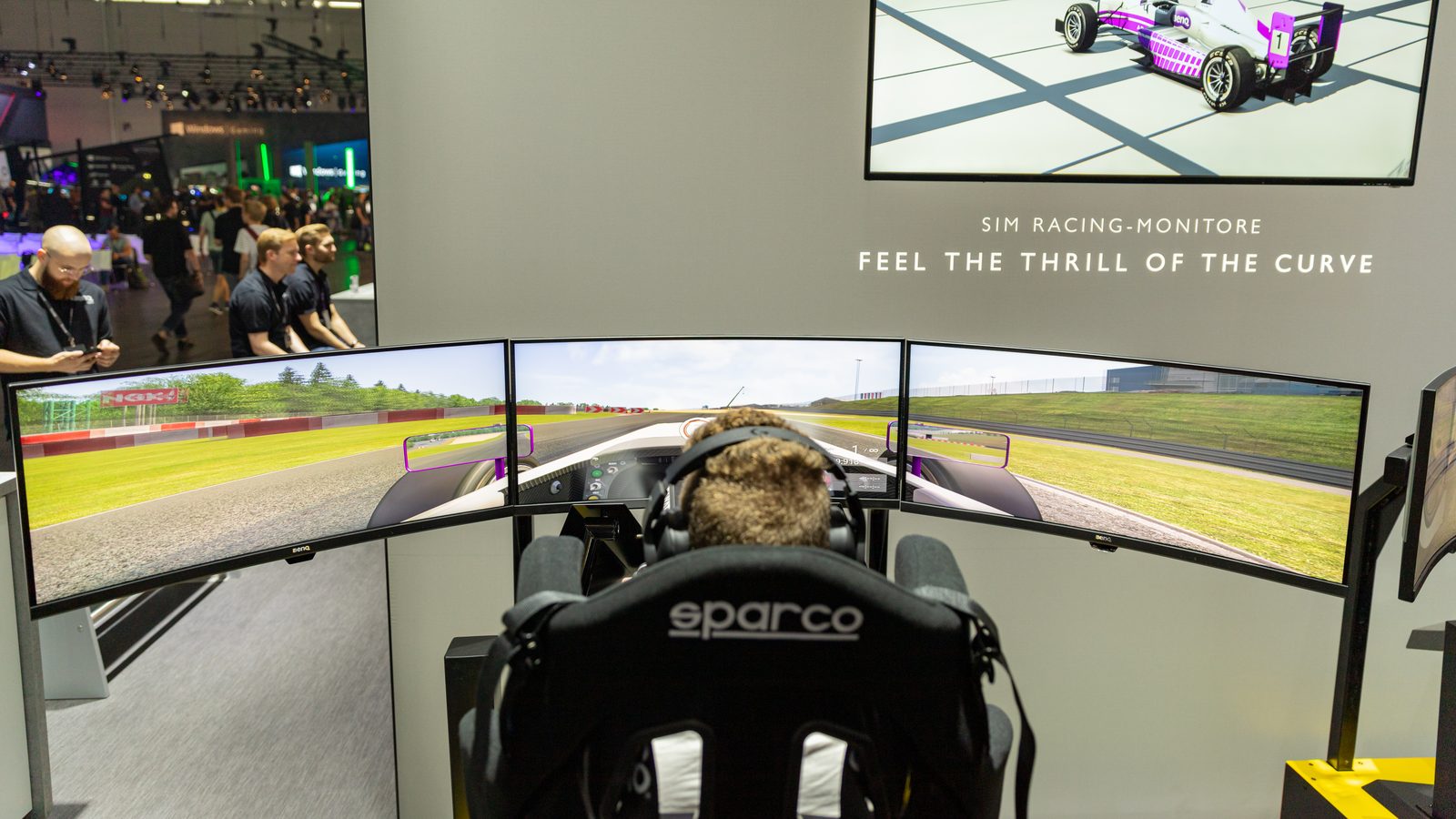
Samsung has just made the fastest gaming monitor ever — and then immediately told buyers they probably will not use its fastest mode.
The company announced the launch of the 27-inch Odyssey G6 (G60H) on Monday 23 November 2026, calling it the world's first gaming monitor to support a refresh rate of up to 1,100Hz. It is a genuine record — but the headline number comes with a trade-off every buyer should understand before spending close to $900 on it.
The Odyssey G6 is a monitor of two personalities, and Samsung built a switch into it so you can choose between them. That switch — Samsung calls it Dual Mode — is the whole story of this product.
What the Odyssey G6 actually is
The Odyssey G6 is a 27-inch monitor built around a Fast IPS LCD panel. Its native resolution is QHD, 2,560 x 1,440 pixels, and at that resolution it refreshes the image up to 600 times per second. Its response time is 1 millisecond grey-to-grey — the time a pixel takes to change colour, so lower means less smearing when things move fast.
Dual Mode is what makes the monitor unusual. With one switch, the monitor drops its resolution to HD — 1,280 x 720 — and in return pushes its refresh rate all the way to 1,100Hz. Switch back, and you get the sharper QHD picture at up to 600Hz. The idea is simple: a sharper picture for slow, beautiful games; raw speed for competitive shooters, where spotting an enemy a fraction of a second earlier matters more than scenery.
"With the Odyssey G6, we are bringing together an ultra-high refresh rate and enhanced motion clarity, while enabling gamers to toggle between display modes depending on their gaming preferences," said Hun Lee, executive vice president of Samsung's Visual Display business, in the launch announcement. "We will continue to advance display technology to make the gaming experience more immersive."
The monitor also introduces a new feature called Odyssey Clear Motion, which Samsung says reduces motion blur through an optimised blur-reduction algorithm, keeping fast-moving scenes clear during the moments that decide a match. Samsung says it plans to bring Clear Motion to more of its gaming monitors after this one, which is a sign the company sees it as a platform feature rather than a one-off trick.
The 1,100Hz catch — read this before you buy
Here is the part Samsung's headline does not say out loud: 1,100Hz is a speed almost nobody's computer can actually feed.
A monitor's refresh rate is only half of the equation; the other half is the frame rate — how many images per second your graphics card can draw. A 1,100Hz monitor showing a game at 200 frames per second still shows only 200 new images a second; the extra refreshes are repeats. To benefit from 1,100Hz, your PC must produce 1,100 frames per second.
No consumer graphics card can do that in a modern game on its own — not even in light competitive shooters, let alone in demanding titles. The practical route to 1,100 frames per second is frame generation: technology such as NVIDIA's DLSS 4.5, which on RTX 50-series graphics cards can synthesise extra frames between the ones the card actually renders, multiplying the effective frame rate. That works, but it needs a current-generation NVIDIA card, and generated frames are not the same as genuinely rendered ones. Buyers with older cards, or with AMD hardware, will spend nearly all of their time in the monitor's other mode: 600Hz at QHD.
That is not a criticism of the monitor so much as a reality check on the headline. 600Hz at QHD is itself a record for a shipping monitor, and it is the mode most owners will actually live in. The 1,100Hz mode is a specialist tool for competitive players with top-end hardware — and a statement of intent from Samsung, which is clearly determined to own the refresh-rate race. The company had already shown a 1,040Hz prototype of this monitor at the CES technology show in January 2026; the finished product is 60Hz faster than that.
One more piece of small print: Samsung says macOS does not support Dual Mode or the 600Hz maximum, and the refresh rate you get can vary with the game and input. This is a Windows PC gaming monitor first and foremost.
The rest of the package
Beyond the headline speed, the Odyssey G6 is a well-specified monitor in the areas that matter every day.
It supports HDR10+ GAMING, which adjusts brightness and contrast scene by scene, and Black Equalizer, which lifts detail out of dark scenes where an opponent might hide. It is compatible with NVIDIA G-SYNC and AMD FreeSync Premium, the two technologies that match the monitor's refresh rate to the graphics card's output to stop the picture tearing and stuttering.
Connectivity is generous for a monitor of this size: one DisplayPort 2.1 port and two HDMI 2.1 ports, so a PC and two consoles can stay plugged in at once. Auto Source Switch+ notices when a newly connected device wakes up and switches to it without you cycling through inputs by hand. The stand adjusts for height, tilt, swivel and pivot, so the screen can be set up for a desk or turned upright for reading.
All of this sits on a serious commercial foundation. Samsung says it has led the global gaming monitor market for seven consecutive years, from 2019 through 2025, citing IDC's Quarterly PC Monitor Tracker. The Odyssey G6 is the company defending that lead the way it knows best: by putting a number on the box that nobody else can match.
Price and availability: the messy part
If you want to buy one, here is where the story gets untidy — because Samsung itself has not said how much it costs or exactly when it goes on sale where you live.
The company's own launch statement says only that "availability, pricing, and launch timing vary by market", and points readers to Samsung's website for local details. So today's numbers come from retailers and specialist outlets rather than from Samsung — and they do not all agree.
SamMobile reports that the monitor will go on sale in the United States in December 2026 for $899.99. But an Amazon US listing shows it available to pre-order at $893.11, with a release date of 24 November 2026 — tomorrow — and a separate report puts the release on the same date at $899.
Until Samsung's own store lists the monitor, the exact American launch date should be treated as unconfirmed — but the price picture is consistent enough to be useful: expect to pay around $900 in the US. Prices in other markets, including Europe and Asia, have not been reported yet, and Samsung has given no date for them either.
From showpiece to shop shelf
Today's launch is the end of a story that started in public three months ago, not the beginning of one. Samsung first unveiled the Odyssey G6 at the Gamescom expo in Cologne in August 2026, as the headline act of its 2027 Odyssey line-up, alongside three new OLED monitors. At the time it was a statement product for next year; today it is a product you can actually buy.
That gap is the pattern with Samsung's most extreme monitors: the technology is shown early, and the finished product follows once the panel and supply chain are ready. It also explains the 2027 model-year label on a monitor on sale before Christmas.
November has been a busy month for Samsung. The company began the One UI 9.5 beta for the Galaxy S26, its next big phone software update, and named a new chief for its mobile business. (Read more: Samsung One UI 9.5 Beta Is Here: App Lock, Smarter Cameras and a Health Upgrade for Galaxy S26) (Read more: Samsung Has a New Mobile Chief: Won-Joon Choi Takes Over the Galaxy Business From TM Roh) The Odyssey G6 launch is the third act: Samsung is ending the year by reminding every part of its audience — phone users, and now PC gamers — that it has something new for them.
Who should buy it — and who should not
The Odyssey G6 is not a monitor for everyone, and at around $900 it should not be. It is for a specific kind of buyer, and knowing which one you are will save you money.
Buy it if you play competitive shooters seriously, own a high-end graphics card — ideally an RTX 50-series card that can use frame generation — and want the fastest panel money can buy. For that player, 600Hz at QHD is already a genuine advantage, and the 1,100Hz mode is a bonus for the games where every millisecond counts.
Do not buy it if your graphics card is mid-range, because you will never feed the refresh rates you are paying for. Do not buy it if you mostly play slow, cinematic games, where a larger 4K screen or an OLED panel would give you a better picture for the same money. And do not buy it if you are a Mac user: Samsung itself says macOS does not support the monitor's headline modes.
For most PC gamers, the honest summary is this: the Odyssey G6 is a 600Hz QHD monitor with a 1,100Hz party trick. The 600Hz part is real, useful and unmatched today; the 1,100Hz part is real too, but only for players with the hardware to reach it.
That is still a meaningful launch. PC gaming has climbed from 144Hz to 240Hz to 360Hz and beyond, and each step was first dismissed as overkill and then became normal. (Read more: GTA 6 on PC: No Download Yet — Release Date, Price and Every Record Explained) The Odyssey G6 is the next step on that ladder, arriving just in time for the holiday season — if Samsung's stores list it in your country soon.
What to watch next
Three things will decide whether the Odyssey G6 is a milestone or a curiosity. First, the price and date outside the United States — Samsung has said nothing yet, and the monitor's real test is whether it reaches Europe and Asia at a price gamers will pay. Second, whether the three OLED monitors Samsung showed alongside it at Gamescom get the same treatment, and how they are priced against this LCD model. And third, whether rivals answer: a 1,100Hz record will not stay unchallenged for long.
For now, though, the record belongs to Samsung — and the world's fastest gaming monitor is, finally, something you can buy rather than something you can only read about.


Comments (0)
Comments are reviewed before they appear on the site. Your email address is never shown publicly.
No comments yet — be the first to share your thoughts.