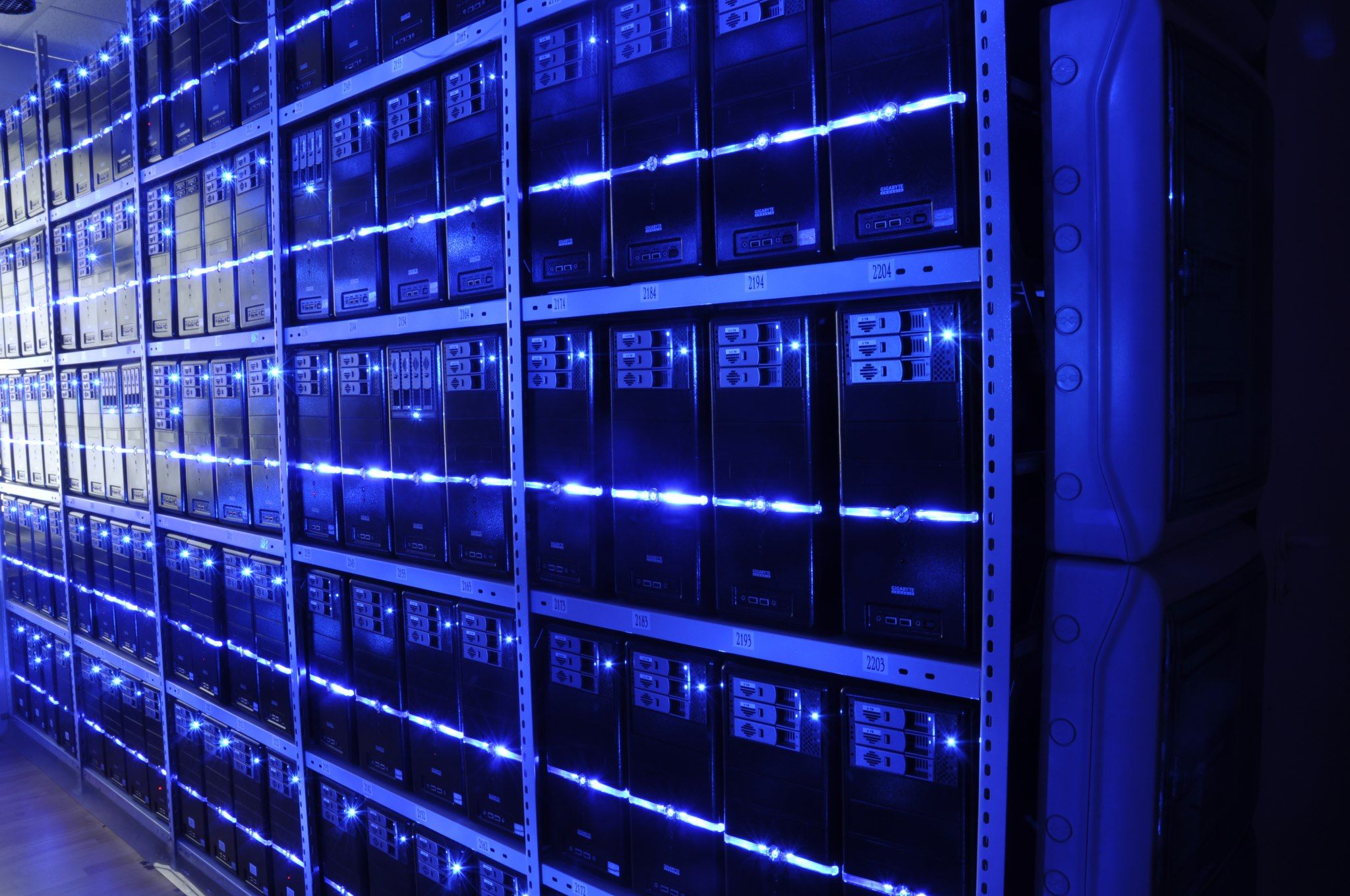
On 23 November 2026, two of the biggest names in technology announced a project built around a simple idea: what if a computer system could defend itself while it waits to be fixed?
Cisco and OpenAI have jointly launched Shirudo — Japanese for “shield” — an open-source runtime that protects Linux systems in the gap between a vulnerability being discovered and a permanent patch being rolled out. Cisco calls it an industry-first open-source project for what the two companies call self-defending infrastructure: systems hardened from the moment they are built, which keep getting harder to attack and can be restored to a known-good state.
Here is what it is and what is still unknown — in plain English.
First, what is agentic AI?
Most people know AI as a chatbot: you type a question, it gives an answer. Agentic AI is the next step. An AI agent is software that does not just answer questions — it takes actions on its own to reach a goal. It can plan steps, use tools, read files, run code and change settings, often with little or no human input.
But agents change the security picture. A chatbot that gives a wrong answer is embarrassing; an agent with access to real systems that makes a wrong decision — or is tricked into one — can delete data, open a door to attackers or shut down a service. And because agents act at machine speed, a mistake can spread across thousands of systems before a human notices.
Attackers get the same speed advantage. AI tools now help them find weaknesses and turn them into working exploits far faster than before. According to Cisco’s Isovalent team, exploitation can in some cases begin before a flaw is even publicly disclosed. Defenders still work at human speed: a flaw is disclosed, engineers write a fix, it is tested, then rolled out — a process that can still take days or weeks, as OpenAI puts it.
The patch gap: why fixing software takes so long
When a serious flaw is found in widely used software, the clock starts ticking. The vendor writes a patch, but that is only the beginning. It has to be tested, scheduled around live services, and rolled out across every server running the software — thousands of machines for a big company.
Meanwhile, attackers need only one machine that has not been patched yet. “Defenders must protect every part of their infrastructure, all the time. Attackers only need one machine that hasn’t been patched,” Cisco’s announcement says. Shirudo offers a middle path: a temporary shield that blocks the specific malicious behaviour until the real fix is ready.
What Shirudo actually does
Shirudo is built on eBPF, short for extended Berkeley Packet Filter. The name is forbidding, but the idea is simple: eBPF is built into Linux and lets small, carefully checked programs run at specific points inside the operating system’s kernel, without changing the kernel or restarting anything.
Think of it as a guard posted at one door: they do not rebuild anything, they just check what passes through. Shirudo posts that guard where a vulnerability can be exploited.
Here is how it works, as described by OpenAI and Cisco:
- Find the flaw. AI agents scan open-source code and vendor disclosures, tracing each flaw to the systems it affects and the attack path an intruder would use.
- Build a shield. The agent writes a small, targeted piece of code that blocks the vulnerable behaviour. In one demonstration, the shield added an input check to Java’s Base64 decoder, rejecting the malicious input an attacker would send.
- Test it before trusting it. The shield is checked against the exploit and against the real service, to confirm it blocks the attack while legitimate work still gets through. A shield only goes live when the evidence says it is safe.
- Deploy without a restart. Once an operator approves it, the shield is loaded into the running system. The service keeps running the whole time — and the shield is removed when the permanent fix is deployed.
OpenAI describes four core capabilities: live protection, so shields block vulnerable code paths without a restart; defence at machine speed, so agents investigate a flaw, build a shield and validate it far faster than a human team; trusted deployment, with every shield cryptographically signed and checked before it loads; and hardware-backed verification, with a computer’s Trusted Platform Module (TPM) chip recording which protections were loaded or removed.
The signing matters: the host verifies a shield before running it, even if an attacker already has administrator access. And humans stay in charge — operators must approve a shield before it becomes active, while AI agents do the legwork and people keep the keys.
The test: stopping an attack on a live service
Announcements are easy; demonstrations are harder. The most interesting part of the launch is the test the two companies ran.
Using OpenAI’s Codex coding agent, the team generated a shield against Java4Shell, a recently discovered flaw in OpenJDK, the open-source version of Java. They attached the shield directly to a running Elasticsearch service and then attempted the exploit. The shield rejected the malicious input, blocking the attack, while Elasticsearch continued running normally. No restart was needed.
Cisco says the same approach has also written code that detected and blocked attempts to exploit a recent PHP flaw. Both tests were controlled demonstrations, not real-world attacks, and few technical details have been published so far; a deeper walkthrough and a public webinar are promised for 15 December.
Controlled tests prove an idea can work — not that it will work on every system, against every attack, or without side effects.
Where Shirudo comes from
Shirudo did not appear from nowhere. It has its roots in Tetragon, an eBPF-based security platform that Isovalent — the company behind the Cilium networking project, now part of Cisco — open-sourced back in 2022. Tetragon watches what happens inside a Linux system and enforces security rules in real time.
Shirudo is a rewrite of Tetragon for the agentic era. The key difference, according to Isovalent engineers Thomas Graf and Liz Rice, is that agents are no longer limited to a policy language designed for humans: an agent works in its natural language — code — and writes a mitigation directly.
There is no permanently running daemon: Shirudo uses a one-shot command-line tool, and shields are delivered as signed packages through a standard container registry. Each target machine checks the signature against its TPM before loading anything.
The project is open source from day one. The code is published on GitHub, licensed under BSD 2-Clause, with the eBPF programs dual-licensed under BSD and GPL terms. Anyone can inspect it, test it and contribute — and Cisco and OpenAI are inviting developers, researchers and operators to do exactly that.
Who is Shirudo for?
Shirudo is not a consumer product — you will not install it on your phone or laptop. It is for the people who run the infrastructure the internet depends on: cloud operators, large companies, security teams and open-source maintainers.
For those teams, the value is time: a shield buys the days or weeks needed to test and roll out a proper patch without leaving systems exposed.
AI is moving into every layer of computing at once. Nvidia’s leadership drama earlier this month, when chief executive Jensen Huang was reinstated just 11 days after resigning, showed how central AI hardware has become. The networks underneath are changing too, as our guide to Wi-Fi 7 and whether you should upgrade explains. And AI agents are arriving on the devices in our pockets, among the top smartphones coming in 2027. Shirudo is part of the same story: the security layer trying to keep up.
What Shirudo does not do — and what is still unknown
A careful reader should not walk away thinking Shirudo solves computer security. It does not, and the companies launching it do not claim that it does.
It is not a replacement for patching. A shield blocks one attack path; the underlying flaw is still there until the real fix is installed. Shirudo buys time. It does not remove the need to patch.
It is early. The project is a first step, launched with a demonstration and an invitation to test. There are no public figures yet on adoption or how widely it has been tested, and Cisco is asking the community to run shields against the kernel builds they use and report where shields break legitimate traffic — an open admission that coverage is unproven.
A bad shield could cause harm. A shield that blocks too much could take a service offline, which is the very outcome it is meant to avoid. That is why shields are tested against real workloads and only go live after an operator approves them. But the risk cannot be eliminated entirely.
The demonstrations were controlled. Blocking an exploit in a test is not the same as stopping a live attack by an intruder who adapts. How well agent-written shields hold up against that is not yet known.
Key details are still thin. The announcements do not give vulnerability identification numbers for the Java4Shell or PHP flaws used in testing, and they do not say when production-ready versions of Shirudo will be available. The 15 December webinar should answer some of these questions.
None of this makes Shirudo unimportant. New security tools almost always start this way. The honest way to judge it is to watch what happens next — whether independent researchers can reproduce the results, and whether shields work on the messy variety of real systems.
Why this launch matters
Shirudo matters because security has to change as fast as AI itself. For decades, attackers found a flaw, defenders wrote a fix, and the fix travelled slowly through testing and rollouts — because attackers were human and slow too. AI breaks that symmetry: when an agent can find a vulnerability, write an exploit and launch it in minutes, a defence that takes weeks to deploy is not really a defence.
Shirudo’s answer is to let defenders fight at the same speed, with humans keeping control of the final decision. If it works, it changes the balance of a contest defenders have been losing for years.
“There is nothing more important than giving security teams the tools they need to match the speed of the AI-driven threats they are facing,” said Jeetu Patel, Cisco’s President and Chief Product Officer, at the launch. “We need self-defending infrastructure that acts at the speed of code, learns in real time, and shields itself until patches are safely rolled out.”
Greg Brockman, OpenAI’s President and Co-founder, made the open-source case: “So many teams rely on the same software that it makes sense to build these tools in the open.”
Both are, for now, promises rather than proven facts — but promises made in public, with open code. That is a good place to start.
Sources & Further Reading
- OpenAI and Cisco introduce Shirudo | https://openai.com/index/introducing-shirudo/
- Cisco and OpenAI Launch Shirudo, A New Project to Safeguard Agentic AI | https://newsroom.cisco.com/c/r/newsroom/en/us/a/y2026/m11/cisco-and-openai-launch-shirudo-a-new-project-to-safeguard-agentic-ai.html
- Cisco and OpenAI introduce Shirudo | https://isovalent.com/blog/post/cisco-openai-shirudo/
- OpenAI's Codex builds shields to block exploits on Linux systems | https://interestingengineering.com/ai-robotics/openai-cisco-shirudo-linux-security-runtime


Comments (0)
Comments are reviewed before they appear on the site. Your email address is never shown publicly.
No comments yet — be the first to share your thoughts.