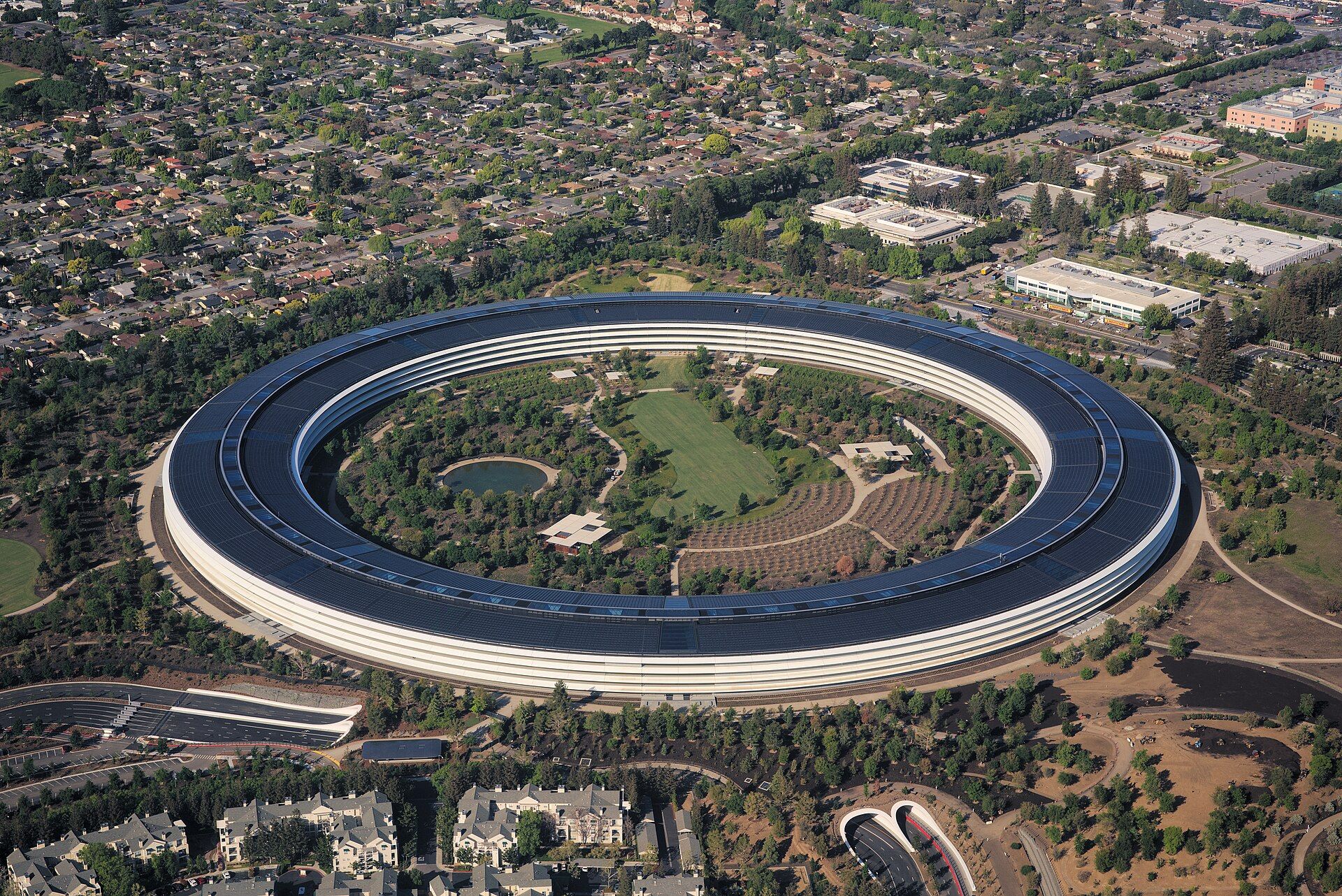
For five months, Apple was the one doing the accusing. In July 2026, the iPhone maker sued OpenAI, claiming the ChatGPT company had poached its engineers and taken confidential hardware secrets with them. On Friday 27 November, OpenAI hit back — filing counterclaims that accuse Apple of doing exactly the same thing, and of using its enormous power over suppliers to strangle OpenAI's hardware ambitions before its first device ever reaches a shop shelf.
The two companies were partners not long ago. ChatGPT is built into Apple Intelligence and answers questions through Siri on hundreds of millions of iPhones. Now they are on opposite sides of a courtroom fight over who gets to build the next great AI device.
The tables have turned
OpenAI filed its counterclaims on Friday 27 November 2026 in federal court in San Jose, California, in the same case Apple started. The filing brings claims including federal trade-secret theft, interference with contracts, and unfair competition under California law.
The heart of OpenAI's case is a mirror image of Apple's. Apple sued OpenAI and its hardware unit, io Products, in July 2026, alleging that two former Apple employees — Tang Tan and Chang Liu — had carried confidential hardware files to OpenAI to help it build a competing device. OpenAI now says the traffic went the other way too.
At the centre of the countersuit is an unnamed former employee OpenAI calls "Employee X". According to the filing, he left Apple to join OpenAI, spent about six months on its devices team, and then returned to Apple. In that time, OpenAI alleges, he sent more than 100 confidential files to personal accounts — images of unreleased hardware, engineering and manufacturing data, supplier information, and standards for cosmetic finishes and sealants. OpenAI says it now appears stealing those documents "may have been his reason for joining OpenAI in the first place", and claims he later briefed senior Apple staff on its hardware work. Apple denies that allegation.
None of this has been proven in court. Every claim on both sides remains an allegation until a judge or jury decides otherwise. But the filing changes the shape of the case: Apple is no longer only the accuser. It is now a defendant too.
"Coercing and threatening" the suppliers
The most consequential part of OpenAI's filing may not be the trade-secrets claim at all. It is the accusation that Apple is using its dominance over the electronics supply chain to shut OpenAI out of hardware.
OpenAI accuses Apple of "coercing and threatening" suppliers that work with both companies. According to the filing, Apple has demanded that shared vendors identify their OpenAI projects and name the workers assigned to them, and has then sought to exclude workers with OpenAI experience from Apple work — a move OpenAI says discourages suppliers from committing staff to its projects at all.
The filing gives concrete examples. One supplier that provides specialist finishing services moved its manufacturing work for OpenAI products to the night shift to avoid overlapping with its work for Apple, increasing costs for OpenAI. Another supplier dropped planned work, citing threats from Apple. Other suppliers, OpenAI says, "have expressed fear of losing Apple business and have moved or rescheduled meetings with OpenAI to avoid Apple seeing them".
OpenAI's argument is blunt: "Apple's power over suppliers and engineers cannot lawfully be used to exclude competing purchasers and employers from the market." The company says Apple is using its "size and wealth to forestall competition" and trying to "compete unfairly by any means available".
This matters because building hardware is, above all, a supply-chain problem. A phone or a pair of smart glasses is the product of dozens of specialist firms, and Apple — which buys components at a scale almost no other company can match — is the customer those suppliers cannot afford to lose. If OpenAI can prove Apple leaned on that leverage, the case stops being a squabble over stolen files and becomes a competition case with much bigger stakes.
The "Hotel California" argument
OpenAI also turned its fire on Apple's employment practices, arguing that they are designed to "trap" employees and stop them working for competitors. The filing criticises Apple for encouraging staff to do work on their personal Apple devices and accounts, then making it hard for them to separate work and personal material cleanly when they leave — leaving nearly every departing employee holding material Apple could later call confidential.
OpenAI put it memorably in the filing: "Bright young minds thought they would work in Cupertino. Instead, they were joining Hotel California: you can check out any time you like, but you can never leave."
The company says about 400 employees have left Apple for OpenAI so far, and argues Apple's lawsuit is really an attempt to intimidate others from following them. That figure comes from OpenAI itself and has not been independently verified.
What Apple says in response
Apple has denied OpenAI's claims. In a statement, the company said: "This case is about OpenAI employees deliberately stealing, accessing, and using Apple's secret and confidential information regarding our unreleased technologies, processes, and products — not about inadvertent retention of Apple information. OpenAI's counterclaims are a transparent attempt to distract from the substance of Apple's lawsuit, in which OpenAI has already been ordered to stop using Apple's confidential information."
Apple has also previously said its investigation turned up no OpenAI confidential information, and it denies trying to suppress competition in AI device manufacturing.
The reference to OpenAI being "ordered to stop using" Apple's information needs context. In October 2026, OpenAI voluntarily agreed not to use the trade secrets at the centre of Apple's suit, after the judge said he was "highly likely" to grant Apple's request for a preliminary injunction — an order that could have stopped OpenAI working on its AI device altogether. The agreement ended Apple's injunction request without the court deciding whether anything was actually taken.
The two cases at a glance
| Apple's lawsuit (July 2026) | OpenAI's counterclaims (27 Nov 2026) | |
|---|---|---|
| Filed | July 2026, federal court in California | 27 November 2026, federal court in San Jose, California |
| Core accusation | OpenAI poached Apple staff and took confidential hardware files | Apple stole OpenAI's secrets via a rehired employee and pressured suppliers |
| Key people | Tang Tan and Chang Liu, former Apple employees | "Employee X", who spent six months at OpenAI then returned to Apple |
| Main claims | Trade-secret misappropriation | Federal trade-secret theft, contract interference, unfair competition |
| Status | Trial set for 19 July 2027 | Same case, same trial date — claims unproven |
Why this fight is really about the next device
Strip away the legal language and this is a fight about what comes after the smartphone. OpenAI is developing AI-enabled personal electronic devices — hardware built around ChatGPT rather than apps and screens — that it says threaten to "outcompete Apple on what Apple views as its own turf". Its first device is reportedly planned for launch in 2027, though that date comes from unconfirmed reports, not from OpenAI itself.
The hardware effort is run through io Products, the startup founded by legendary former Apple designer Jony Ive, which OpenAI acquired in 2025. That is part of what makes this dispute so personal: the people building OpenAI's device include some of the same designers and engineers who built the iPhone. Apple clearly sees a rival being assembled from its own alumni, in its own backyard, aimed at its own customers.
That mutual dependence is what makes the supplier allegations so pointed. If Apple really did warn shared vendors away from OpenAI, it would be using its strength in today's market — the iPhone supply chain — to block a rival in tomorrow's. And if OpenAI's claims are exaggerated, as Apple insists, then the countersuit is a tactic to muddy a straightforward theft case. The court will decide, but the framing alone tells you how seriously both companies take the hardware race.
For more on how OpenAI is already working with other big technology firms, see our report on Cisco and OpenAI's Shirudo security project for AI agents — and for the supply-chain ties that already bind Apple to its rivals, see how Apple may depend on Samsung for iPhone screens for five years.
What it means for you
If you own an iPhone, the short answer is: nothing changes right away. The ChatGPT integration in Apple Intelligence is not part of this lawsuit, and neither company has suggested it will be switched off.
But there are three things worth watching.
- Siri's future could get complicated. Apple and OpenAI are now legal adversaries as well as partners. Partnerships can survive lawsuits — big technology companies sue each other and keep doing business all the time — but every new filing makes the relationship harder to manage. If Apple eventually decides to lean less on ChatGPT and more on its own AI, iPhone users could see Siri's answers change. For now, that is speculation, not something either company has announced.
- OpenAI's first device could be delayed. The October agreement already limits what OpenAI can do with the disputed Apple material, and a court could impose further restrictions before the July 2027 trial. If the device is genuinely planned for 2027, as reports suggest, legal delays could push it back — or force OpenAI to redesign parts of it. A delayed or weakened launch would be good news for Apple and bad news for anyone hoping for a genuine alternative to the smartphone.
- The AI hardware race is now a legal race too. Whoever wins in court will shape who can hire whom and who can buy from which supplier. If OpenAI proves Apple bullied suppliers, other small hardware startups will benefit from the precedent. If Apple proves its secrets were taken, every AI company hiring from a rival will think twice.
What happens next
The case is set for trial on 19 July 2027, starting at 9 a.m. That is a long way off, and much can happen before then — more filings, more document fights, and possibly settlement talks, since most big technology lawsuits end in a deal long before a jury is seated.
Two questions will decide how this ends. First, can either side prove that secrets actually changed hands — and that the material genuinely counted as a trade secret, properly protected by its owner? Second, can OpenAI prove that Apple pressured suppliers? That claim depends on what vendors are willing to say on the record, and suppliers that depend on Apple may be reluctant witnesses.
Until those questions are answered, treat every claim in this story as what it is: an allegation in a court filing, denied by the other side. What is certain is that the partnership between Apple and OpenAI has broken down in public, the hardware race has a new front, and the company that builds the device after the smartphone may be decided as much by lawyers as by engineers.


Comments (0)
Comments are reviewed before they appear on the site. Your email address is never shown publicly.
No comments yet — be the first to share your thoughts.