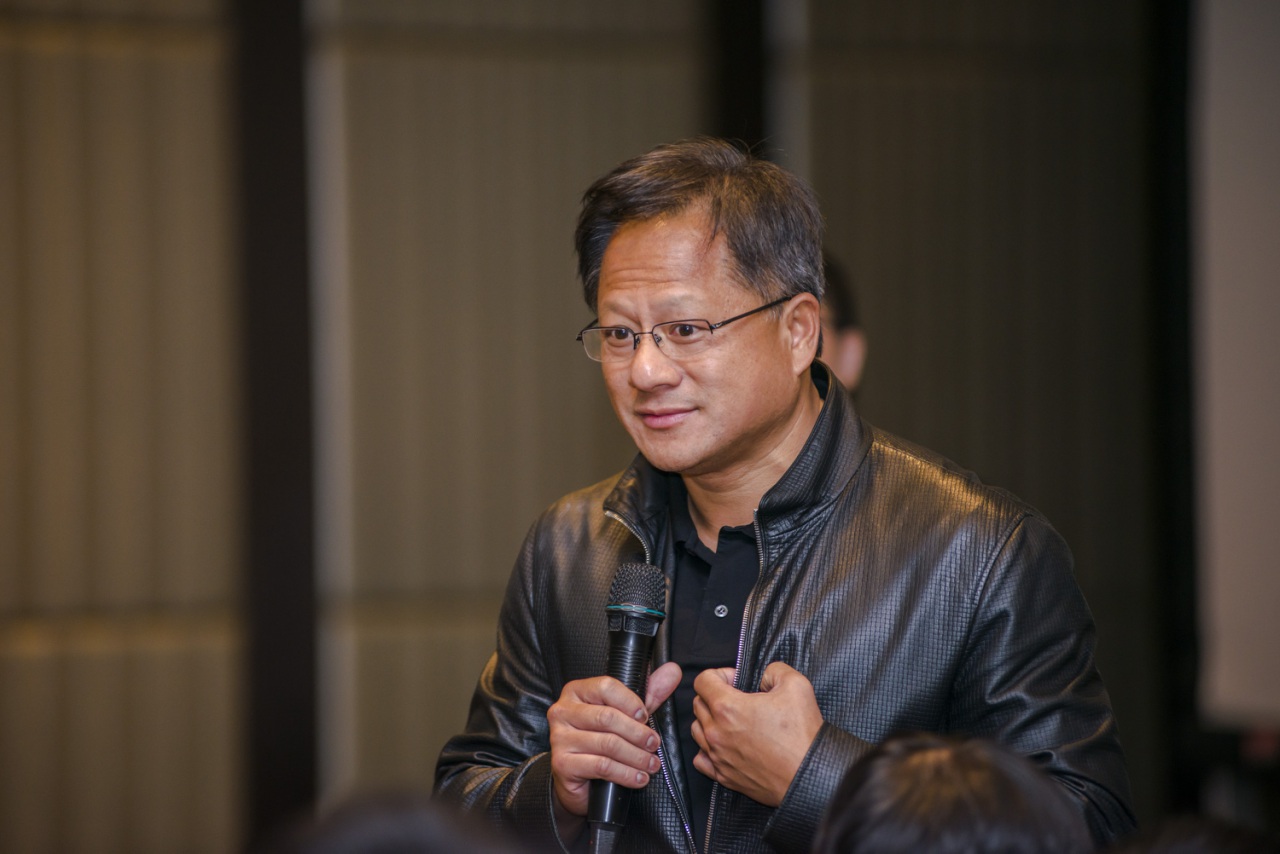
Eleven days after he resigned, Jensen Huang is the chief executive of Nvidia again. The company's board announced on Monday, 23 November 2026, that it had voted unanimously to reinstate Huang as president, chief executive officer and a member of the board, effective immediately — reversing a decision that had stunned the technology world less than two weeks earlier.
The announcement ends one of the strangest leadership episodes in the history of a major American company: a founder-chief executive who built Nvidia from a small graphics-chip maker into the engine of the artificial-intelligence boom, resigned without warning, and then returned before the company had even begun its search for his successor. Nvidia's shares surged about 30% on the news, with reports varying between 30% and 33%, in one of the sharpest single-day rallies the stock has ever seen.
"I am honored to return to NVIDIA and lead one of the most consequential technology companies in the world at the beginning of a new industrial revolution," Huang said in the company's announcement.
What the board said
Nvidia said its board reached the decision after "a series of discussions and meetings" with Huang, and that it was "satisfied with respect to Mr. Huang's candor and ability to lead NVIDIA". The board added that it had received input from senior levels of the United States government during the process, and that based on that input it is "confident that Mr. Huang's reinstatement poses no national security risk".
Board chair Harvey C. Jones, who remains in that role, said: "The Board believes Jensen is the right person to lead NVIDIA, and that his reinstatement is in the best interests of our stockholders, employees, partners and customers."
Colette Kress, who had been interim chief executive since Huang's resignation, returns to her role as chief financial officer only. She had been Nvidia's finance chief since 2013 before stepping in as interim CEO, and the company made no announcement of any other leadership change.
The reinstatement does not close the matter that led to Huang's departure. The board's committee of independent directors will complete its investigation, and Huang has said he fully supports the investigation and is committed to cooperating with it. The board has also formed a National Security and Export Control Committee, made up solely of independent directors, to oversee trade compliance and national security risks, and it is searching for a chief compliance officer.
The 11-day reversal, in order
The speed of the turnaround is the story. In less than two weeks, Nvidia went from investigating its chief executive, to losing him, to ruling out his return, to bringing him back unanimously.
- Sunday 8 November: Nvidia says its independent directors and outside lawyers will investigate whether Huang had been targeted by a foreign intelligence operation, after reports about his personal life began circulating.
- Wednesday 11 November: The board meets to consider Huang's future, according to a person familiar with the matter cited by Reuters. A regulatory filing the same day records the board accepting his resignation as president, CEO and director, effective immediately.
- Thursday 12 November: Nvidia announces the change publicly. Colette Kress is named interim chief executive, keeping her finance role, and Harvey C. Jones becomes the board's first-ever chair. Jensen Huang had resigned after 33 years as Nvidia's only chief executive, and the board begins a search for a permanent successor.
- Tuesday 17 November: Huang says on X that he would be honoured to return if the board wanted him. More than 150,000 people sign an open letter to the board demanding his reinstatement.
- Wednesday 18 November: On the company's earnings call, Jones says the board does not intend to reinstate Huang. Five days later, the same board votes unanimously to do exactly that.
- Sunday 22 November: The board takes the vote to reinstate Huang, according to the company's Form 8-K filing.
- Monday 23 November: Nvidia announces the reinstatement, effective immediately. President Donald Trump praises the decision on Truth Social.
Why he left — what is known and what is not
Nvidia's announcement of the resignation gave no reason for it. The context, reported by Reuters and others, is that the board acted after reports concerning two extramarital affairs — including one involving a businesswoman whom US officials suspect of links to Chinese intelligence, and another involving a senior Nvidia executive who reported to him.
Huang has acknowledged being unfaithful, in an email to staff in which he said he would cooperate with the investigation. The allegation of links to Chinese intelligence has not been independently verified, and the reported relationships remain allegations under investigation — not established facts. Nvidia has not confirmed the reason for the resignation, and this article does not present the allegations as proven.
What is established is the sequence: an investigation was announced on 8 November, the board met on 11 November, the resignation took effect the same day, and on 23 November the board unanimously reversed itself — saying it had spoken with Huang, received input from senior levels of the US government, and was satisfied on both his candour and the national security question.
What changes — and what does not
For Nvidia's business, nothing else changes for now. No product or roadmap change was announced with the reinstatement. That matters, because the company is in the middle of the most consequential product cycle in its history: five days after Huang resigned, Nvidia posted $115.8 billion in quarterly revenue, a reminder that the AI chip business was still running at full speed without him.
The return does settle the question that had hung over the company since 12 November — who leads Nvidia through the AI boom — with the answer being the same person who led it into the boom. The board's unanimous vote, after its public statement only five days earlier that it did not intend to reinstate him, is a striking reversal, and it came with the board's explicit statement that it had consulted senior levels of the US government first.
For investors, the market's verdict was immediate. Shares surged about 30% after the announcement, lifting US technology stocks with them after nearly two weeks of turmoil around the leadership of the world's leading AI chipmaker. Reports of the exact size of the jump vary between 30% and 33%, but the direction was never in doubt.
What happens next
The independent committee's investigation will proceed to its conclusion, with Huang cooperating. That is the board's own statement, and it is the part of this story that is not finished: the reinstatement restores the chief executive while the investigation into the reports that he was targeted by a foreign intelligence effort is still running.
The new National Security and Export Control Committee will oversee trade compliance and national security risks, and the search for a chief compliance officer is under way. Both are governance changes that did not exist before the crisis — signs that the board intends the next chapter to look different from the last one, even with the same chief executive.
For now, though, the simplest fact is the headline: eleven days after the founder of Nvidia walked out, he walked back in — unanimously invited, immediately effective, and with the market's loud approval.
Read next: Samsung Launches Odyssey G6, the World's First 1,100Hz Gaming Monitor

Comments (0)
Comments are reviewed before they appear on the site. Your email address is never shown publicly.
No comments yet — be the first to share your thoughts.