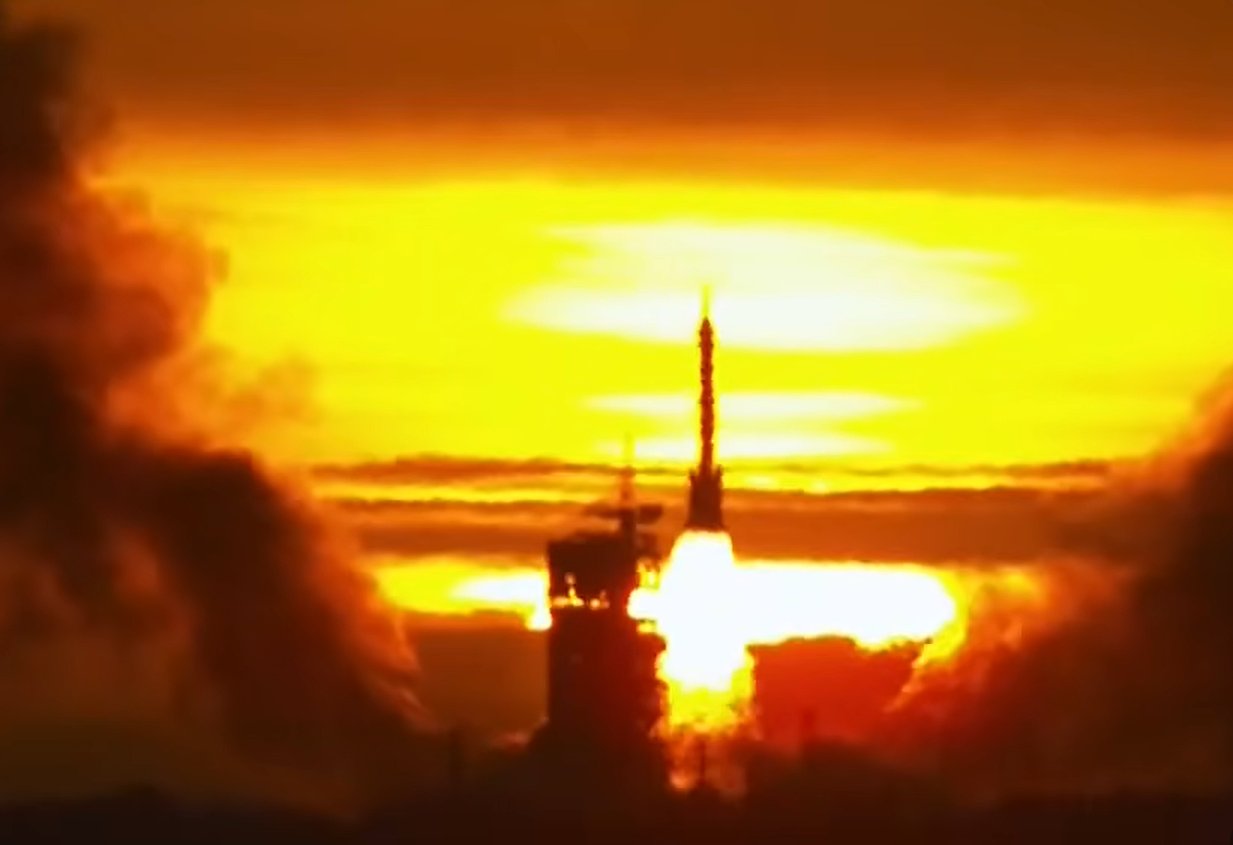
On the morning of 25 November 2026, a Long March 2F rocket lifted off from the Jiuquan Satellite Launch Center in northwest China, carrying three astronauts toward the Tiangong space station. Three and a half hours later, their spacecraft docked. It was a routine flight by the standards of China's space programme — except for one of the people on board.
Muhammad Zeeshan Ali, a 40-year-old pilot from the Pakistan Air Force, became the first Pakistani to reach orbit, and the first foreign astronaut ever to visit China's Tiangong station. When the hatches opened and he floated into the station, Pakistan joined the small group of countries whose citizens have lived and worked in orbit — and China opened its space station to the world for the first time.
The flight, hour by hour
Shenzhou-24 launched at 8:18 a.m. Beijing time on Wednesday, 25 November 2026 — 00:18 UTC — from the Jiuquan Satellite Launch Center in Inner Mongolia. About ten minutes after liftoff, the spacecraft separated from its Long March 2F carrier rocket and entered its planned orbit. The China Manned Space Agency declared the launch a complete success, and the crew in good condition.
Then came the fast rendezvous. Shenzhou-24 completed an automated docking with the front port of Tiangong's Tianhe core module at 11:56 a.m. Beijing time, about three and a half hours after launch. The whole docking process, from liftoff to a hard connection with the station, took roughly the time of a long morning.
At around 2:35 p.m. Beijing time, the hatches between the spacecraft and the station were opened. Commander Tang Hongbo, flight engineer Wu Yi and payload specialist Muhammad Zeeshan Ali floated aboard, where they were greeted by the three members of the Shenzhou-23 crew already living on the station: Zhu Yangzhu, Li Jiaying and Zhang Zhiyuan. The two crews posed for a photograph inside the Tianhe module — six people, two missions, and, for the first time, two nations.
Meet the crew
Tang Hongbo commands the mission. It is his third time in space and his third time entering the Tiangong station, making him one of China's most experienced astronauts. Wu Yi, the flight engineer, is flying for the first time.
Then there is Muhammad Zeeshan Ali. Born in August 1986 in Sargodha, in Pakistan's Punjab province, he served as a pilot in the Pakistan Air Force, reaching the rank of lieutenant colonel. He was selected in April 2026 as one of Pakistan's first two astronaut candidates, alongside fellow candidate Khurram Daud, under a February 2025 agreement between Pakistan's Space and Upper Atmosphere Research Commission (SUPARCO) and the China Manned Space Agency. He is flying as the mission's payload specialist — the crew member responsible for the scientific experiments on board.
Ali's stay on Tiangong will be short, about five to ten days. He will return to Earth aboard the Shenzhou-23 spacecraft, with two members of that crew, while Shenzhou-24 stays docked at the station as part of the crew-rotation system. His first day in space was spent adapting to microgravity alongside Tang and Wu, and being brought up to speed on the station's ongoing science work.
Why this flight matters
Ali is the first Pakistani to reach orbit. That distinction needs one careful note: in October 2023, Namira Salim became the first Pakistani to reach space, on a Virgin Galactic suborbital flight that briefly crossed the edge of space and came straight back down. Ali is the first Pakistani to go into orbit — to circle the Earth, live aboard a space station, and work there for days.
He is also the first foreign astronaut to visit Tiangong, and the first non-Chinese person China has ever launched into space. The China Manned Space Agency calls Shenzhou-24 the first joint flight of Chinese and foreign astronauts in the history of China's crewed space programme. For a programme that has flown only Chinese citizens since its first crewed mission in 2003, that is a genuine turning point.
For Pakistan, the flight is a national milestone. Pakistan's space programme, SUPARCO, was founded in 1961, but the country has never flown its own astronaut. Ali's mission puts Pakistan among the countries taking part in human spaceflight, and opens a path for scientific collaboration with China that did not exist before.
What he will do up there
Ali's main work on Tiangong is science. He is supporting and carrying out experiments that flew up with him from Pakistan, in the fields of life sciences and materials sciences — research into how living things and materials behave in weightlessness, where the rules of gravity no longer apply. The results will go back to Pakistani researchers when he returns.
His visit is also a handover. The Shenzhou-23 crew has been aboard Tiangong for a six-month mission, and the arrival of Shenzhou-24 begins the rotation that will eventually bring them home. The two crews will spend days together on experiment management, safety procedures and station maintenance before the Shenzhou-23 astronauts depart.
One member of the Shenzhou-23 crew is herself a first: Li Jiaying is the first woman taikonaut from Hong Kong. The station, for a few days, holds two crews and two sets of firsts.
Ali was selected alongside a second Pakistani candidate, Khurram Daud, who remains in training in China. His presence in the programme is a sign that Pakistan expects to fly again — and that this mission is the start of a relationship, not a one-off. China has said it is open to flying astronauts from other partner countries, and the February 2025 agreement with Pakistan was the first of its kind. If the pattern holds, the next foreign astronaut on Tiangong could come from another country that has never flown before, following the path Ali has just opened.
The station he is visiting
Tiangong, which means "heavenly palace", is China's permanently crewed space station, flying about 400 kilometres above the Earth. It is built around the Tianhe core module, with two laboratory modules, Wentian and Mengtian, attached. It has been continuously occupied since 2022, and China plans to keep it flying for at least a decade.
For most of its life, Tiangong has been a Chinese-only station, in contrast to the International Space Station, which has hosted astronauts from many countries. That is partly by design and partly by politics: American law has long restricted NASA's cooperation with China, so Tiangong developed as a separate programme. Shenzhou-24 changes the picture. A station that was Chinese-only now has a foreign guest, and China has said it wants more international astronauts to follow.
The timing matters. The International Space Station is ageing and is due to be retired around 2030. After that, Tiangong may be the only crewed station in orbit for a time, alongside the commercial stations now being built. Countries that want their astronauts in space in the 2030s may have to fly with China — or with a commercial provider. Pakistan got there early.
What it means for the region
For South Asia, Ali's flight is the biggest space story in years. India has its own human spaceflight programme, Gaganyaan, and its own astronauts in training. Now Pakistan has flown first, on a Chinese spacecraft. The two countries' space programmes have taken very different paths — India building its own crewed capsule, Pakistan flying as a partner — and both now point toward the same thing: a region where going to space is no longer something only the great powers do.
For China, the flight is a statement about the future of Tiangong. A station that hosts international astronauts is a station with a future beyond one country. China has already signed space cooperation agreements with several countries, and the Shenzhou-24 mission is the proof that those agreements can put a real person in orbit. More foreign astronauts are likely to follow, and each one makes Tiangong a little more international.
For the rest of the world, the mission is a reminder that human spaceflight is no longer a two-player game. The United States and Russia built the first space stations. China built the third. Now a Pakistani pilot is living on it, doing Pakistani science, and coming home in about a week with results that belong to his country.
A short visit, a long shadow
Ali will be back on Earth within days, and Shenzhou-24 will stay docked at Tiangong, waiting for its own crew's return months from now. The flight itself will be a footnote in the history of the station: one more crew rotation, one more docking, three and a half hours from launch to arrival.
But the photograph of six people in the Tianhe module — three Chinese astronauts, two more Chinese astronauts, and a Pakistani pilot floating between them — will last longer than the mission. It is the first photograph of an international crew aboard a Chinese space station, and it will not be the last.
Pakistan waited 65 years, from the founding of SUPARCO to the launch of Shenzhou-24, for its first astronaut. The next one may not have to wait nearly so long.
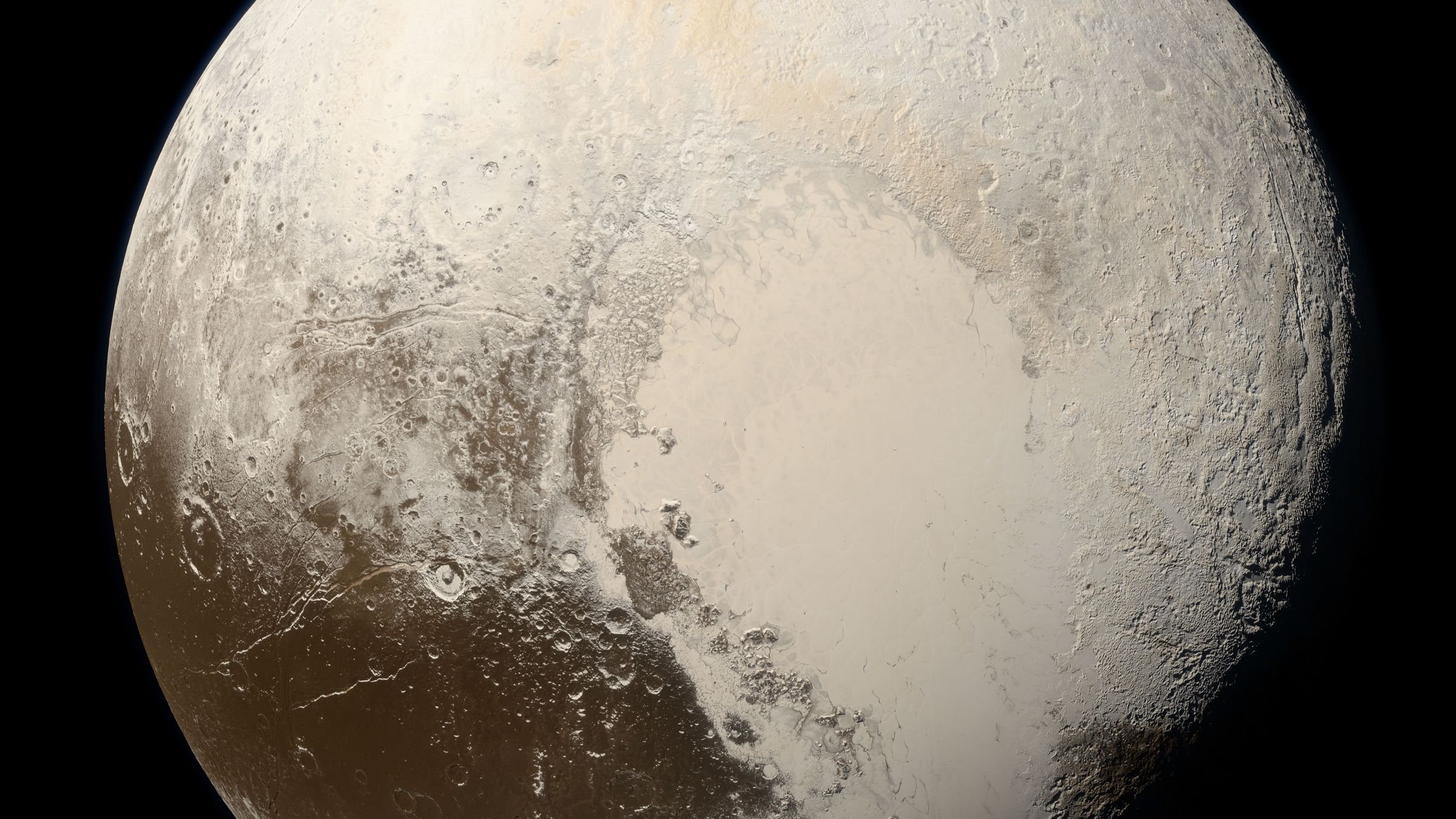
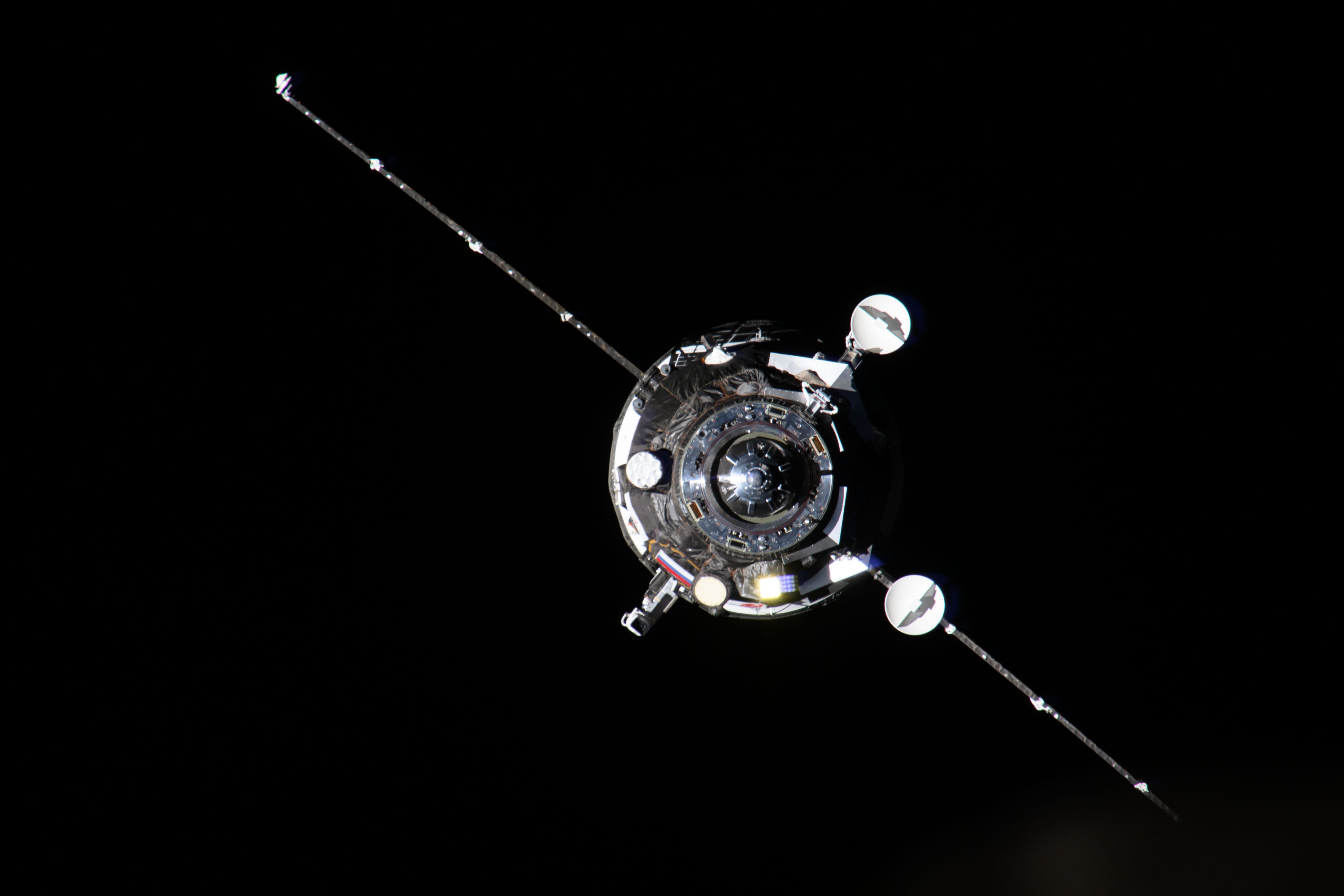
For more space station news, read about Progress 97 docking with the International Space Station, and for the oldest ice in the solar system, see NASA's clues to an ancient ocean of ice beyond Neptune.
Comments (0)
Comments are reviewed before they appear on the site. Your email address is never shown publicly.
No comments yet — be the first to share your thoughts.