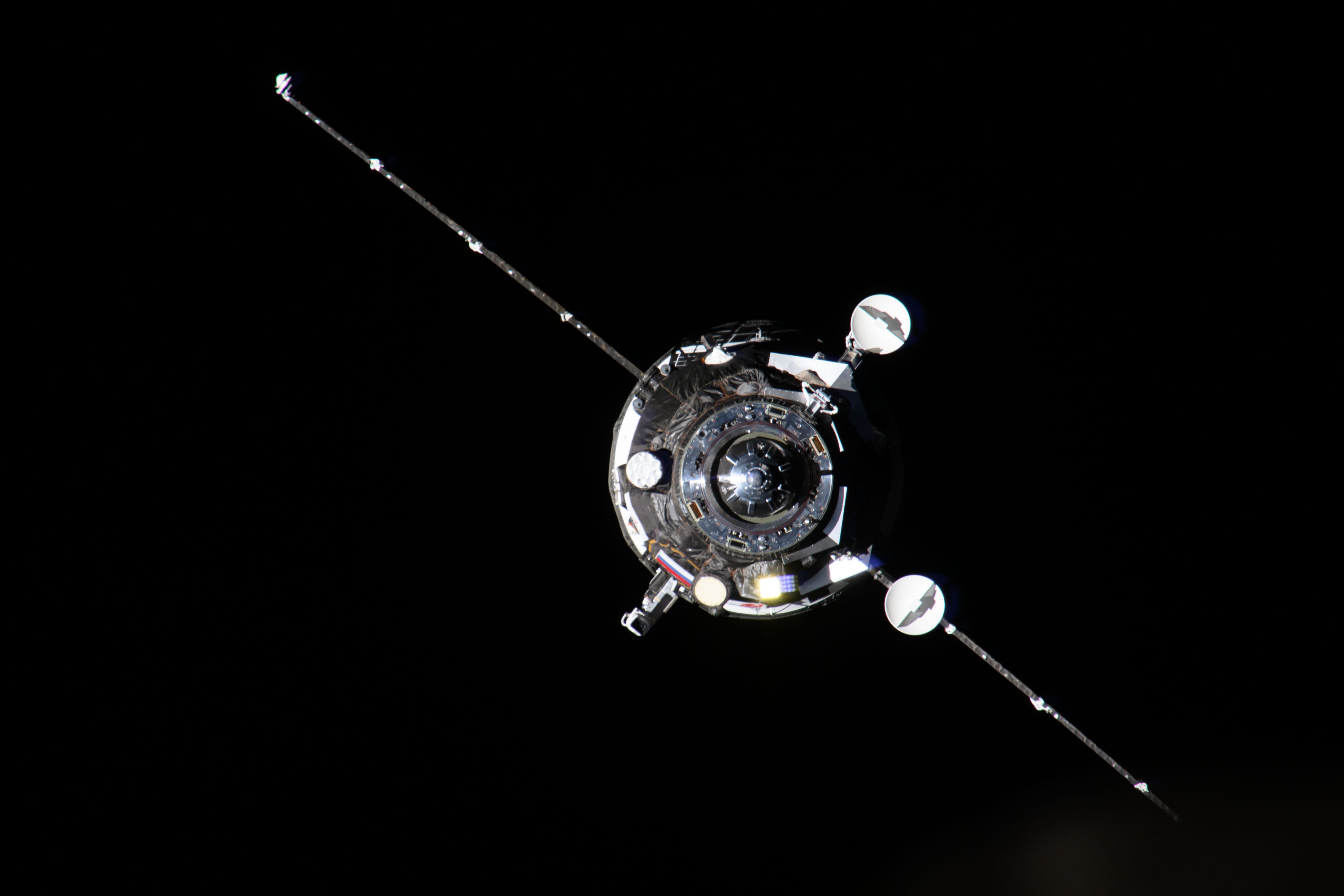
THE SHORT ANSWER: Russia's uncrewed Progress 97 cargo spacecraft docked with the International Space Station on Thursday, 26 November 2026, at 7:08 a.m. EST (6:08 p.m. in Dhaka), delivering about three tons of food, fuel and supplies to the Expedition 75 crew. The freighter will stay attached to the station for about eight months before departing to burn up in Earth's atmosphere.
Thanksgiving Day brought a delivery to the International Space Station — not by truck or sleigh, but by an uncrewed Russian freighter that chased the orbiting laboratory for two days across 34 orbits of Earth. At 7:08 a.m. EST on Thursday, 26 November 2026, the Roscosmos Progress 97 spacecraft eased into the Earth-facing port of the station's Rassvet module and locked on, shortly before an orbital sunset above Eastern Europe.
NASA streamed the rendezvous and docking live, and within minutes the space agency confirmed the link-up on its space station blog. The timing was almost exactly as planned: the spacecraft had been scheduled to dock at approximately 7:11 a.m. EST, and it arrived three minutes early.
For the seven astronauts and cosmonauts of Expedition 75, the docking means fresh food, fresh water, fresh air and fresh fuel — the unglamorous supplies that keep a space station alive. And for the station itself, Progress 97 carries something else: a mission with a twist that no Progress freighter has attempted before.
What happened on Thanksgiving Day
Progress 97 launched at 5:17 a.m. EST on Tuesday, 24 November, on a Soyuz rocket from the Baikonur Cosmodrome in Kazakhstan. The climb to orbit took under ten minutes, and the freighter spent the next two days carefully raising its orbit to match the station's, circling Earth every 90 minutes at around 28,000 kilometres per hour.
On Thursday morning, NASA's live coverage began at 6:30 a.m. EST. The spacecraft flew itself through the final approach using its automated Kurs rendezvous system, with Russian flight controllers in Korolyov, near Moscow, watching every metre. There was no crew aboard to take manual control if something went wrong — Progress freighters are designed to dock entirely on their own, and this one did.
The docking target was Rassvet, a small Russian module whose name means "dawn". Rassvet arrived at the station in 2010 aboard the space shuttle Atlantis, and its Earth-facing — or nadir — port is one of the station's busiest parking spots for visiting vehicles. Contact and capture came at 7:08 a.m. EST, which was 12:08 p.m. in London, 1:08 p.m. in Moscow and 6:08 p.m. in Dhaka.
After docking, the crew first checks that the seal between the two spacecraft is airtight. Only then do they open the hatches and begin the slow work of unloading — a job that takes days, not hours, because every bag has to be unpacked, checked off and stowed in its proper place.
What is Progress 97?
Progress 97 is the name NASA gives this flight. In Russia it is known as Progress MS-36 — the 36th of the modernised Progress MS series, and production spacecraft number 466. The "MS" stands for the upgraded version of a freighter design that has been flying to space stations since 1978, when the first Progress docked with the Soviet Salyut 6 station.
The spacecraft is essentially a flying delivery van. It is built in three sections: a pressurised cargo compartment at the front where the crew's supplies ride, a tank section in the middle carrying fuel and water, and a service module at the back with the engines, solar panels and navigation equipment. Once its job is done, the whole vehicle is loaded with rubbish and sent to burn up over the Pacific Ocean — the station's dustbin as well as its delivery service.
Progress 97 is uncrewed, but it is not simple. It carries its own navigation radar, star trackers and thrusters, and it can fly to the station, dock, stay attached for months and leave again without anyone on board. The Soyuz-2.1b rocket that launched it is the same family of launcher that has carried crews and cargo to orbit since the 1960s, though this version is thoroughly modernised.
What is inside the three tons?
NASA describes the load simply: about three tons of food, fuel and supplies. The detailed breakdown, published by Roscosmos and reported by independent mission trackers, gives a clearer picture of what a space station actually needs.
The freighter carried a total of 2,427 kilograms of cargo. The largest share, 1,206 kilograms, is pressurised cargo — the dry goods that travel in the shirtsleeve environment of the cargo compartment. That means food for the crew, including fresh fruit and vegetables that are a rare treat in orbit, clothing, spare parts, medical supplies and equipment for science experiments. A further 750 kilograms is propellant, fuel that will be pumped into the station's own tanks and later used to keep the station in orbit. There are 420 kilograms of water and 51 kilograms of gases — oxygen and nitrogen to top up the air the crew breathes.
Those numbers tell a story about life in orbit. A space station is a closed system, but not a perfectly closed one. Air slowly leaks away, water is recycled but never perfectly, and the station's orbit constantly decays as the thin air of the upper atmosphere drags on it. Every few months a freighter like Progress 97 has to arrive to top everything up again.
The Thanksgiving timing is a coincidence of orbital mechanics, not a calendar choice, but it is a fitting one. The crew's first fresh food in weeks will taste especially good on a day when millions of people on Earth are sitting down to a holiday meal.
Why this mission is different from other Progress flights
Most Progress missions are routine — and routine is exactly what space agencies want. This one, however, has a complication that makes it the first of its kind.
According to space historian Anatoly Zak, writing on RussianSpaceWeb.com, Progress 97 is scheduled to do its two main jobs at two different docking ports. First the crew will unload its cargo at the port where it docked. Then the freighter will undock, fly around the station and dock a second time at a different port: the aft port of the PrK transfer tunnel, which leads to Russia's Zvezda service module.
The reason is orbital mechanics. The PrK port points backwards along the station's direction of travel, which makes it the best place for a spacecraft's engines to push the station into a higher orbit — a manoeuvre called a reboost. Progress freighters regularly provide this service, using their engines to lift the whole 420-tonne station and counteract the drag that would otherwise bring it down.
Normally a freighter would simply stay where it docked and do both jobs from the same port. But the PrK transfer tunnel has been sealed off from the rest of the station because of an air leak that was first documented in 2019 and has never been fully fixed. The crew cannot get to Progress 97 through that tunnel to unload it — so the freighter has to dock where the crew can reach it, then move to where its engines can do the most good.
If the plan goes ahead as described, Progress 97 will be the first cargo mission to unload its supplies and perform the station's orbit corrections from different docking ports. It is a clever workaround for a problem that has troubled the Russian segment of the station for seven years.
There is one detail on which sources differ: NASA names Rassvet as the docking port, while some other reporting, including Space.com's coverage of the launch, named the Poisk module instead. NASA's docking report is the authoritative account of where the spacecraft actually attached, and this article follows it.
A launch that was already months late
Progress 97 was originally expected to fly in August 2026, but the mission slipped several times. The most serious delay came from an accident on the ground: in November 2025, a service platform at Baikonur's Site 31 — the launch pad used for this flight — collapsed and had to be repaired before any rocket could fly from it again.
None of that mattered once the Soyuz lit its engines on Tuesday morning. The launch was clean, the two-day chase was uneventful, and the docking came three minutes ahead of schedule.
Who is waiting on board?
Progress 97's cargo is for the Expedition 75 crew, the seven people currently living and working aboard the station. The Russian cosmonauts — Pyotr Dubrov, Anna Kikina and Sergey Teteryatnikov — will do most of the unloading, since the cargo is in the Russian segment and the procedures are theirs.
The rest of the crew is made up of NASA astronauts Luke Delaney, Jessica Watkins and Anil Menon, and Canadian Space Agency astronaut Joshua Kutryk. In the days before the docking, the crew's schedule was dominated by biomedical research — ultrasound scans and blood pressure checks — alongside preparations for the freighter's arrival and practice with the station's robotic arm.
For them, a cargo ship is not just a delivery. It is also a reminder that they are not cut off: every few weeks, something new arrives from Earth, and every few months, someone comes to take the rubbish away.
What happens next?
Progress 97 will remain docked to the station for about eight months, according to NASA — one of the longer stays for a Progress freighter, which typically remains attached for around six months. During that time the crew will gradually empty it, then gradually fill it again with waste: broken equipment, used clothing, packaging and anything else that needs to leave the station.
When its time is up, the freighter will undock, fire its engines to drop out of orbit and burn up in the atmosphere over a remote stretch of the Pacific Ocean, far from shipping lanes. It is the same ending every Progress gets — a controlled, fiery disposal that leaves nothing behind.
The next delivery is already close behind. Northrop Grumman's Cygnus XL cargo spacecraft is due to launch on a SpaceX Falcon 9 rocket on 29 November, bringing the year's final cargo mission to the station. Between them, Progress 97 and Cygnus XL will keep Expedition 75 supplied well into 2027.
Why cargo ships matter
It is easy to overlook a cargo flight — no crew aboard, no spacewalk, no dramatic landing. But the International Space Station cannot exist without these deliveries.
The station has been continuously occupied for more than a quarter of a century, and in that time it has been kept alive by a relay of freighters: Russia's Progress, SpaceX's Dragon, Northrop Grumman's Cygnus, and in earlier years Europe's ATV and Japan's HTV. Each one brings a few tons of the things a crew needs to live and work — food, water, air, fuel, spare parts, science — and each one takes away the waste.
Progress 97 is the 97th Progress flight NASA has tracked to the station, and it arrived on a holiday, three minutes early, carrying everything from drinking water to rocket fuel. For the seven people 400 kilometres above Earth, that is the most useful Thanksgiving gift imaginable.
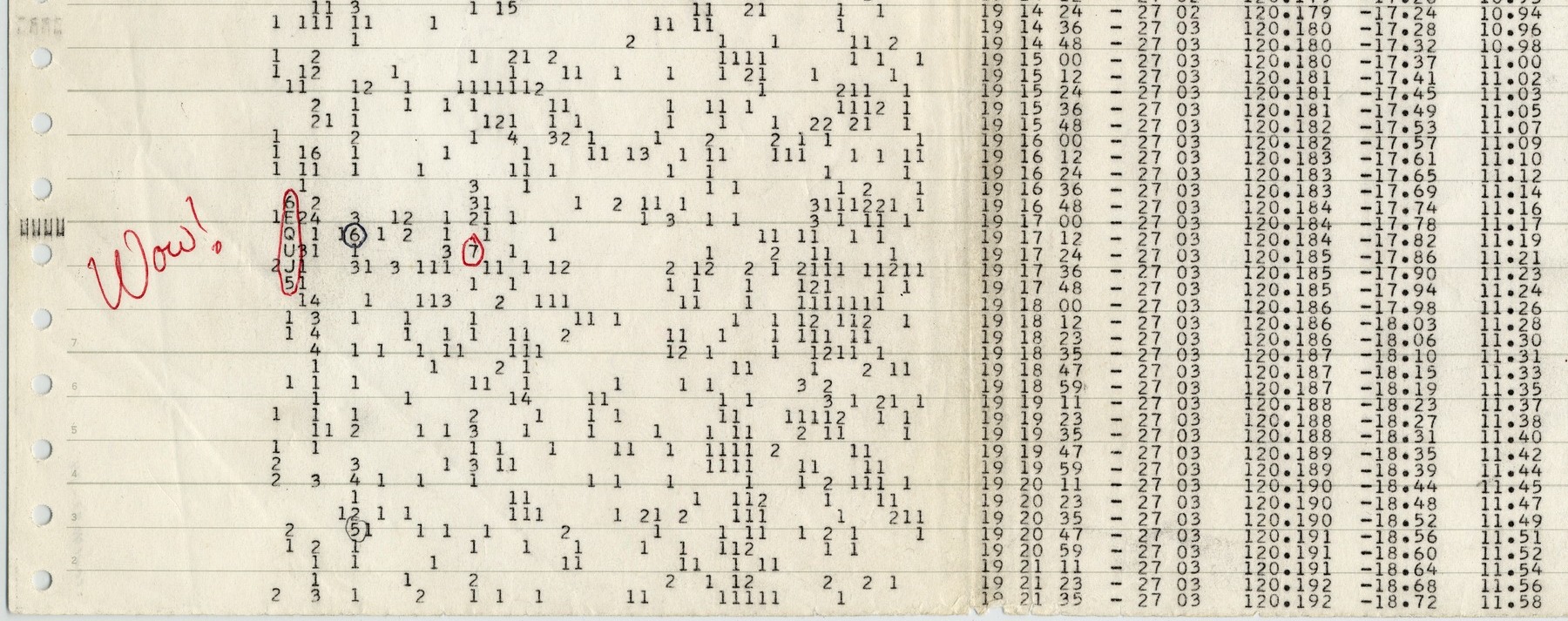
Read more about the space around us in our story on the ancient ocean of ice NASA found beyond Neptune, and in our look at the Wow! Signal, the strange radio burst heard once in 1977 and never again.


Comments (0)
Comments are reviewed before they appear on the site. Your email address is never shown publicly.
No comments yet — be the first to share your thoughts.