First, the sheer scale of the planet
Jupiter's radius is 69,911 kilometres (43,441 miles), making it about 11 times wider than Earth; NASA's comparison is that if Earth were a grape, Jupiter would be a basketball. It contains about 318 times Earth's mass — more than two and a half times the mass of all the other planets put together — and if it were hollow, roughly 1,000 Earths could fit inside. Despite that bulk, it spins faster than any other planet: a Jovian day lasts under 10 hours, which is why the planet bulges noticeably at its equator and its clouds stretch into the famous horizontal bands.
The storm that has outlived every telescope pointed at it
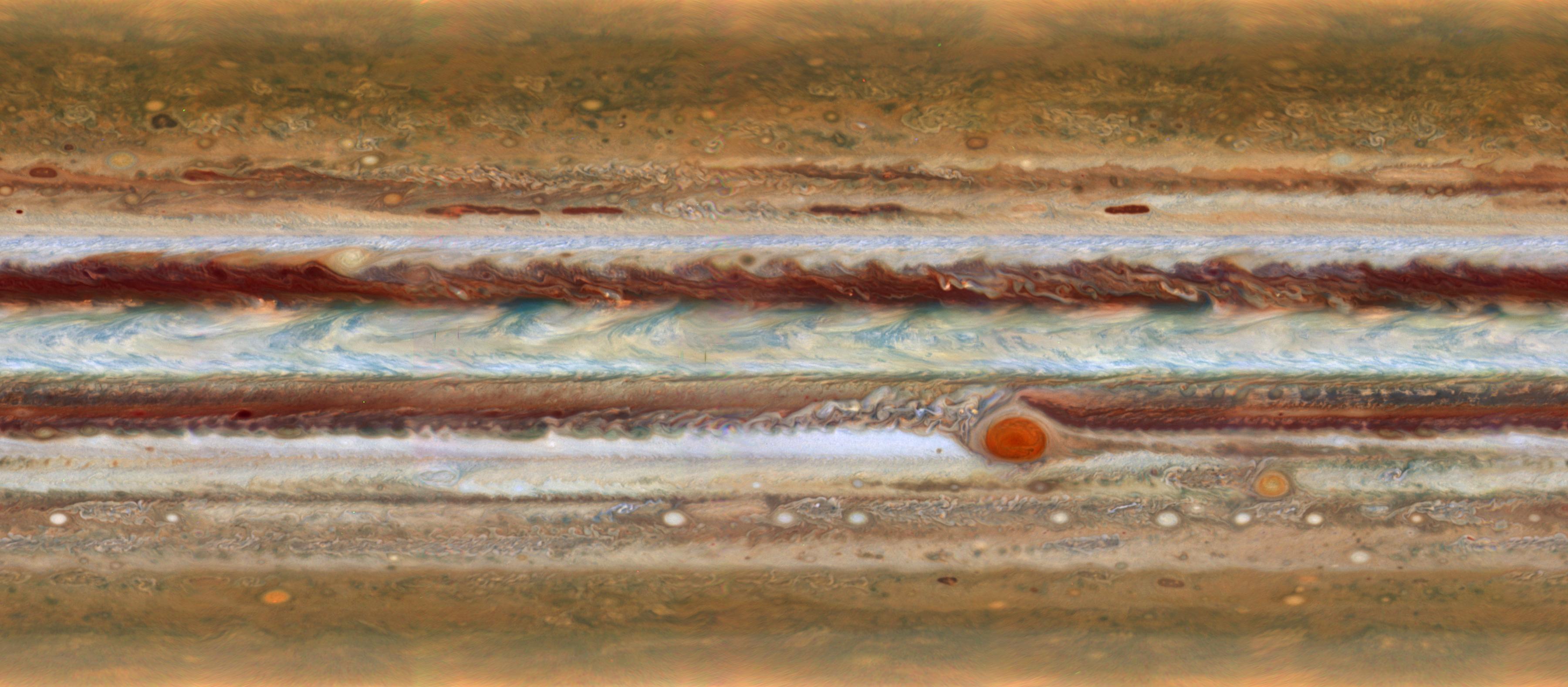
The Great Red Spot is an anticyclone — a vast high-pressure system — churning in Jupiter's southern hemisphere. Astronomers have watched it continuously since at least the 1830s, and a "permanent spot" described by Giovanni Cassini in 1665 may have been the same storm, though scientists cannot prove the two are identical. For much of its recorded life it was about twice Earth's width. It has been shrinking for decades, and modern measurements put it at roughly 16,350 kilometres across — smaller than its Victorian-era self, but still comfortably wider than Earth.
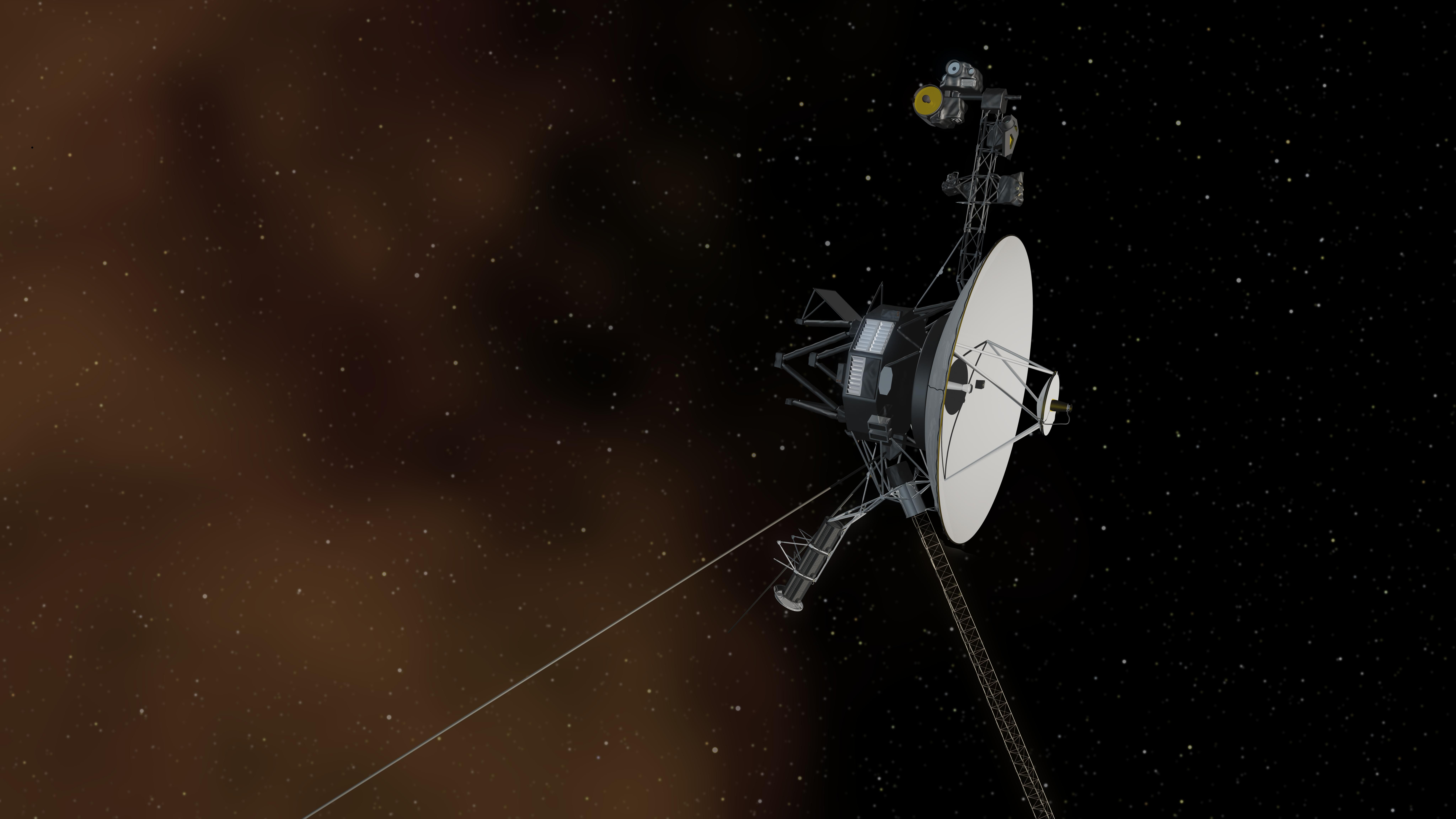
NASA's Juno spacecraft, in orbit since 2016, has peered beneath the cloud tops: the storm's roots extend at least 300–500 kilometres (roughly 200–300 miles) down into the atmosphere, far deeper than Earth's weather reaches. Why it is red, and why it has lasted centuries when Earth storms die in weeks, are questions researchers are still working on — the honest state of the science is "partly understood."
A moon count that keeps growing
Jupiter does not have a moon so much as a court. NASA currently lists 115 moons officially recognised by the International Astronomical Union — a number that was 95 until recently, and that rises as astronomers confirm more tiny, distant irregular moons with well-determined orbits. The exact total matters less than the trend: Jupiter's gravity well is so deep that it has captured and kept a swarm of worlds.
Four moons that changed astronomy in 1610
The famous four are the Galilean moons — Io, Europa, Ganymede and Callisto — spotted by Galileo Galilei in 1610 with an early telescope. They were the first objects seen to orbit another planet, a quiet observation that helped dismantle the Earth-centred universe. Each is a world in its own right: Io is the most volcanically active body known; Europa hides a global saltwater ocean beneath its ice; Callisto is among the most heavily cratered objects in the solar system.
And then there is Ganymede. At about 5,268 kilometres across, it is the largest moon in the solar system — larger than Mercury, a planet. It is also the only moon known to generate its own magnetic field, and evidence suggests it too holds a deep subsurface ocean. If Ganymede orbited the Sun instead of Jupiter, nobody would hesitate to call it a planet.
Why Jupiter matters to Earth
Jupiter's gravity shapes the outer solar system and deflects or captures some comets and asteroids that might otherwise wander inward — though scientists debate whether it acts more as shield or as occasional slinger of debris our way. What is not debated is its value as a time capsule: as the first planet to form, its composition preserves the recipe of the cloud that built everything else, which is exactly what missions like Juno — and ESA's JUICE spacecraft, now en route to Ganymede — are out there reading.


Comments (0)
Comments are reviewed before they appear on the site. Your email address is never shown publicly.
No comments yet — be the first to share your thoughts.