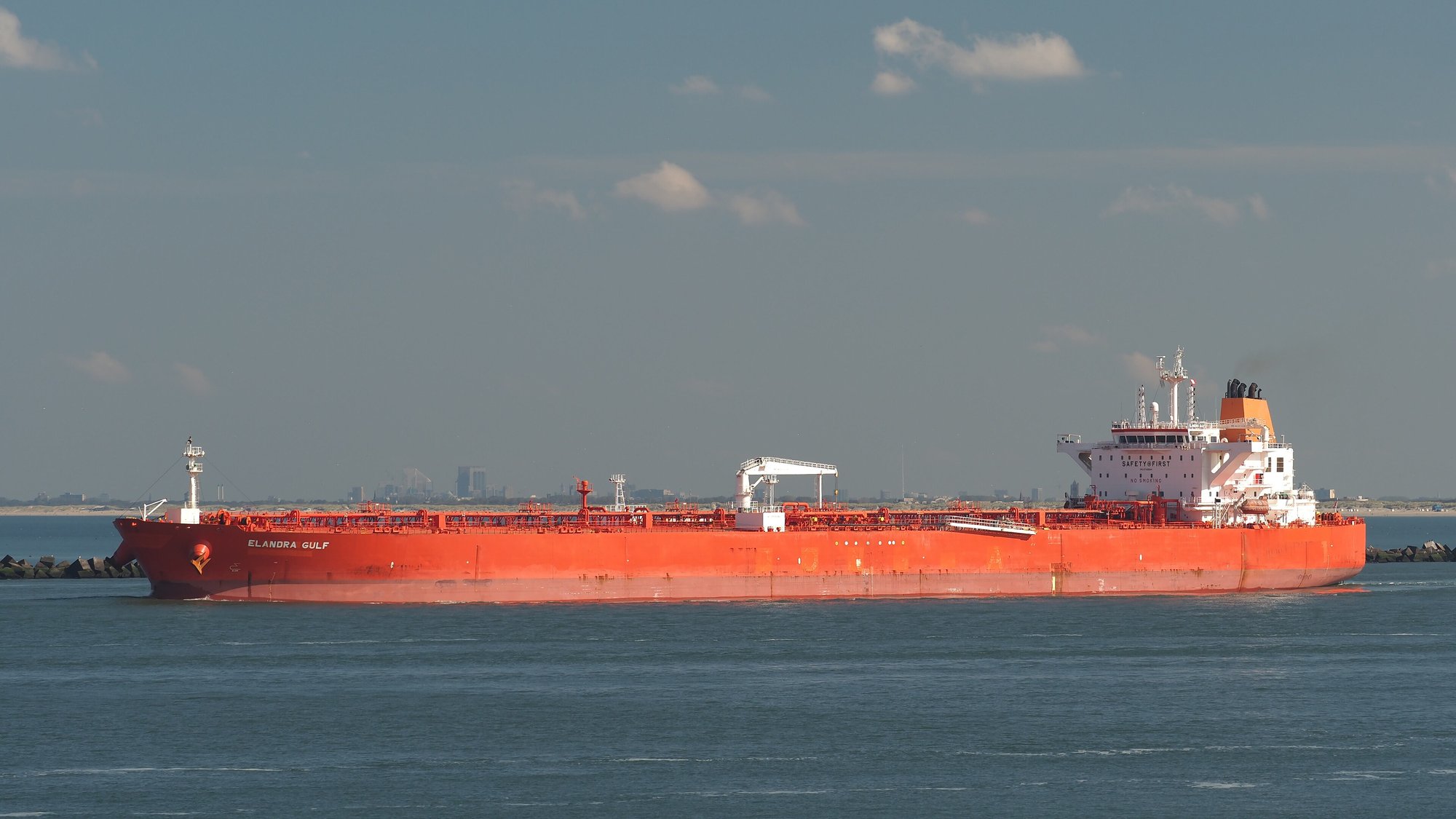
Six oil tankers have been hit in the Strait of Hormuz in the past 24 hours after striking mines, according to Iran's army and the navy of the Islamic Revolutionary Guard Corps (IRGC). The claim, reported on Tuesday 24 November 2026, is the sharpest escalation yet in a confrontation that has been building for months around the narrow waterway that carries roughly a fifth of the world's traded oil.
But the figures do not line up neatly — and in a war, that matters. Iran's own accounts give different numbers at different times, and the only independent confirmation so far counts fewer ships, hit by something else. Here is what is confirmed, what is claimed, and why it matters far beyond the Gulf.
What Iran says happened
According to the IRGC Navy, speaking through Iran's official IRNA news agency, a fourth tanker struck a naval mine while sailing what Tehran calls an "unauthorised" route through the strait. Three earlier vessels, the IRGC said, caught fire after hitting mines.
Reporting from Tehran put the total higher still: the IRGC said five vessels had hit sea mines in the past 24 hours, and more than 30 in the past 10 days. The latest figure, in the headline of the day's reporting, is six tankers in 24 hours.
Tehran's position is blunt. It says the ships were using lanes that Iran has not approved, or were sailing under escort by US forces, and that the strait is fully under its control. Any vessel that does not coordinate its passage with Iran, Tehran says, will be treated as a legitimate target.
That is a claim about control, not just about mines: Iran is asserting the right to decide who may use one of the world's busiest shipping lanes.
What independent monitors confirm
The United Kingdom Maritime Trade Operations (UKMTO), the British naval body that tracks threats to commercial shipping, gives a different and smaller picture. It says three ships were struck by "unidentified projectiles" while sailing east through the strait on Monday evening. All three continued their journeys, UKMTO said, and all crew members were accounted for.
Note the differences. UKMTO says three ships, not five or six. It says "unidentified projectiles", not naval mines. And it reports no casualties and no ships stopped or sunk.
Neither account can be fully checked right now: there is no independent video or satellite evidence of the latest incidents in the public domain, and the tankers' owners and insurers have not confirmed the Iranian account. The pattern of the past month, though, points in the same direction: the Joint Maritime Information Center, which tracks attacks on shipping, has counted at least 12 vessels struck so far in November, after 17 in October.
There is also a second front in this campaign. The United States is investigating whether Iran was involved in cyberattacks on as many as 50 energy tankers, the Wall Street Journal reported, citing US officials. If confirmed, that would mean the pressure on shipping is not only physical — mines and projectiles — but digital too.
Why the Strait of Hormuz matters so much
The Strait of Hormuz is a narrow stretch of water between Iran to the north and Oman and the United Arab Emirates to the south. At its narrowest it is about 33 kilometres (21 miles) wide, and the shipping lanes in each direction are only a few kilometres across. Every tanker leaving the Persian Gulf — from Saudi Arabia, Iraq, Kuwait, Qatar, the UAE and Iran itself — must pass through it.
About 20 million barrels of oil a day move through the strait, roughly a fifth of all the oil traded in the world, along with a large share of the liquefied natural gas that heats homes and powers industry in Asia and Europe. There is no practical alternative: pipelines that bypass the strait exist, but they carry only a fraction of the volume, and most Gulf oil has no other way out.
That is what makes the strait a chokepoint — a single narrow passage on which the whole system depends. The strait is to oil what undersea cables are to the internet: invisible to most people, until the day it stops working. JagoAmerica has explained how submarine cables carry the internet through equally narrow and vulnerable routes — and the same logic applies here. Break the chokepoint, and the effects spread everywhere within days.
Iran has threatened to close the strait many times over the years, and has never done so — closing it would also strangle Iran's own oil exports, which are its main source of income. What is happening now is different: not a closure, but a campaign of attacks that makes the strait dangerous to use. Ships can still pass, but each passage carries a risk, and risk costs money.
The wider war behind the mines
The tanker attacks are part of a much larger conflict between Iran and the United States, and the two sides are now openly talking about war.
The immediate trigger is the US naval blockade of Iran, which Tehran calls an act of war. In response, Iran has been hitting back at sea — and, according to Iranian researcher Ali Akbar Dareini of the Center for Strategic Studies, speaking to Al Jazeera, Iran is targeting US military assets and early-warning systems as a "preparatory plan" for a larger-scale war. That is not the language of a skirmish. It is the language of a country preparing for a full conflict.
Iran has also filed lawsuits in US and European courts over alleged war crimes, including a missile attack on a school that Iran says killed at least 178 people, most of them schoolgirls, and the killing of Supreme Leader Ayatollah Ali Khamenei. The lawsuits are a legal front in the same war — an attempt to put the conflict on the record in courtrooms as well as on the battlefield.
Diplomacy has not stopped. Qatar's Prime Minister, Sheikh Mohammed bin Abdulrahman bin Jassim Al Thani, and US Vice President JD Vance discussed de-escalation in Washington. But the talking has not slowed the fighting, and the region's governments are openly preparing for a long conflict. Saudi Arabia's finance minister, Mohammed al-Jadaan, said the kingdom is "resilient enough" to withstand a prolonged conflict — a statement that tells its own story about what Riyadh expects.
The war is also spreading beyond the Gulf. The Saudi-led coalition said a tower in Riyadh's financial district was targeted in what it called a "terrorist attack", giving no further details. And the United Kingdom announced new sanctions on the Houthis, the Yemeni movement allied with Iran that has attacked shipping in the Red Sea.
What it means for oil prices — and for everyone else
For now, the oil market has taken the news calmly — but nervously. Brent crude, the global benchmark, fell 40 cents to $88.97 a barrel on Tuesday, near a three-month low, and US West Texas Intermediate slipped to $79.94. Traders are weighing two forces against each other: rising crude supply and a growing surplus on one side, and the risk to shipping through Hormuz on the other.
That calm is fragile. "Despite some improvement in inventories and product availability, the oil market remains under severe strain," Daniel Hynes, a senior commodity strategist at ANZ, said in a client note quoted by Reuters. Analysts point out that logistics remain constrained and inventory buffers are thin — so a single serious disruption could send prices sharply higher.
History says markets can turn fast when oil is threatened. The last time the Gulf was this dangerous, prices spiked within days. Anyone who has watched a market panic over a supply shock knows the pattern: first disbelief, then a rush, then regret. JagoAmerica has written about how that cycle works, in the story of tulip mania, the first market bubble — and the lesson is the same. Markets do not wait for proof of a disaster. They move on the fear of one.
There are already signs of strain under the surface. Middle East crude exports have been trending lower for weeks, according to data compiled by Kpler: shipments for the week starting 16 November were 13.96 million barrels a day, down from 15.77 million the week before and 16.03 million the week before that. The recovery in flows through the Strait of Hormuz in September and October has reversed, and exports are now well below the levels seen before the conflict began.
The costs do not stop at the oil price. Every tanker that sails through a war zone pays more for insurance — war-risk premiums rise with each attack — and some owners will refuse the route altogether, or demand higher freight rates. Those costs eventually reach petrol stations, heating bills and the price of almost everything that moves by ship, truck or plane.
What happens next
Three things are worth watching in the coming days.
First, the American response. The United States has a large naval presence in the Gulf, and its forces escort some commercial shipping. If Washington concludes that Iran is systematically mining the strait, it may step up escorts, send minesweepers, or strike the launch sites — any of which would raise the risk of a direct clash between US and Iranian forces.
Second, whether the strait stays open in practice. A waterway does not have to be closed to be unusable: if insurers refuse cover, or crews refuse to sail, or owners reroute around the Cape of Good Hope, the oil stops flowing just as surely as if a chain had been stretched across the water. The test is not what Iran declares, but what shipowners do.
Third, the diplomacy. The conversation between Qatar's prime minister and the US vice president shows that channels for de-escalation are still open. But talks and tanker attacks are happening at the same time, and each attack makes a deal harder. The question is whether either side wants an off-ramp badly enough to take one.
This is a developing story. The numbers will change, the claims will be tested, and some of what is reported today will turn out to be wrong. What is already clear is that the world's most important oil waterway has become a battlefield — and that the consequences, for energy prices, for shipping and for the region, are only beginning.
This article is based on reporting from Al Jazeera's live blog and Reuters. Figures attributed to Iran's military are Iran's claims and have not been independently verified. UKMTO's account is the only independent confirmation available at the time of publication.

Comments (0)
Comments are reviewed before they appear on the site. Your email address is never shown publicly.
No comments yet — be the first to share your thoughts.