On Friday 20 November 2026, a mathematician at the artificial-intelligence company Anthropic announced that he had done something no one had managed in 167 years: proved the Riemann hypothesis, the most famous unsolved problem in all of mathematics — with the help of an AI.
Within a day, independent researchers had checked his work and confirmed that the proof, as written in computer code, is correct. The announcement set off a weekend of excitement, disbelief and careful caveats. It is a genuinely historic claim — and not yet the end of the story.
This is what happened, what was actually verified, and what is still open.
What is the Riemann hypothesis, in plain English?
Start with the prime numbers: 2, 3, 5, 7, 11, 13, and so on — the numbers divisible only by themselves and 1. They are the atoms of arithmetic: every whole number can be built by multiplying primes together. But primes do not arrive in any obvious pattern. They thin out as numbers get bigger, yet they never stop, and nobody has ever found a formula that predicts exactly where the next one will appear.
In 1859, the German mathematician Bernhard Riemann published an eight-page paper, "On the Number of Primes Less Than a Given Magnitude", that connected the primes to a strange mathematical object called the zeta function. Riemann noticed that the places where this function equals zero — its "zeros" — seemed to control how the primes are spread out. And he made a guess: every interesting zero of the zeta function lies on a single straight line, the "critical line", where the real part of the number equals one half.
That guess is the Riemann hypothesis. If it is true, the primes — for all their apparent randomness — follow a hidden order. If it is false, and even one zero sits off the line, much of what mathematicians believe about the primes would need rethinking.
It is the kind of problem that has resisted every attack. It was one of David Hilbert's famous list of 23 problems in 1900, and in 2000 the Clay Mathematics Institute named it one of its seven Millennium Prize Problems, with a $1 million prize for a correct proof. Computers have checked the hypothesis for more than ten trillion zeros — Xavier Gourdon and Patrick Demichel verified the first ten trillion in 2004, and Platt and Trudgian rigorously verified the first 12.36 trillion in 2021 — and every single one sits on the critical line. But checking examples, even trillions of them, is not a proof. A proof has to cover all infinitely many zeros, and no one had found one.
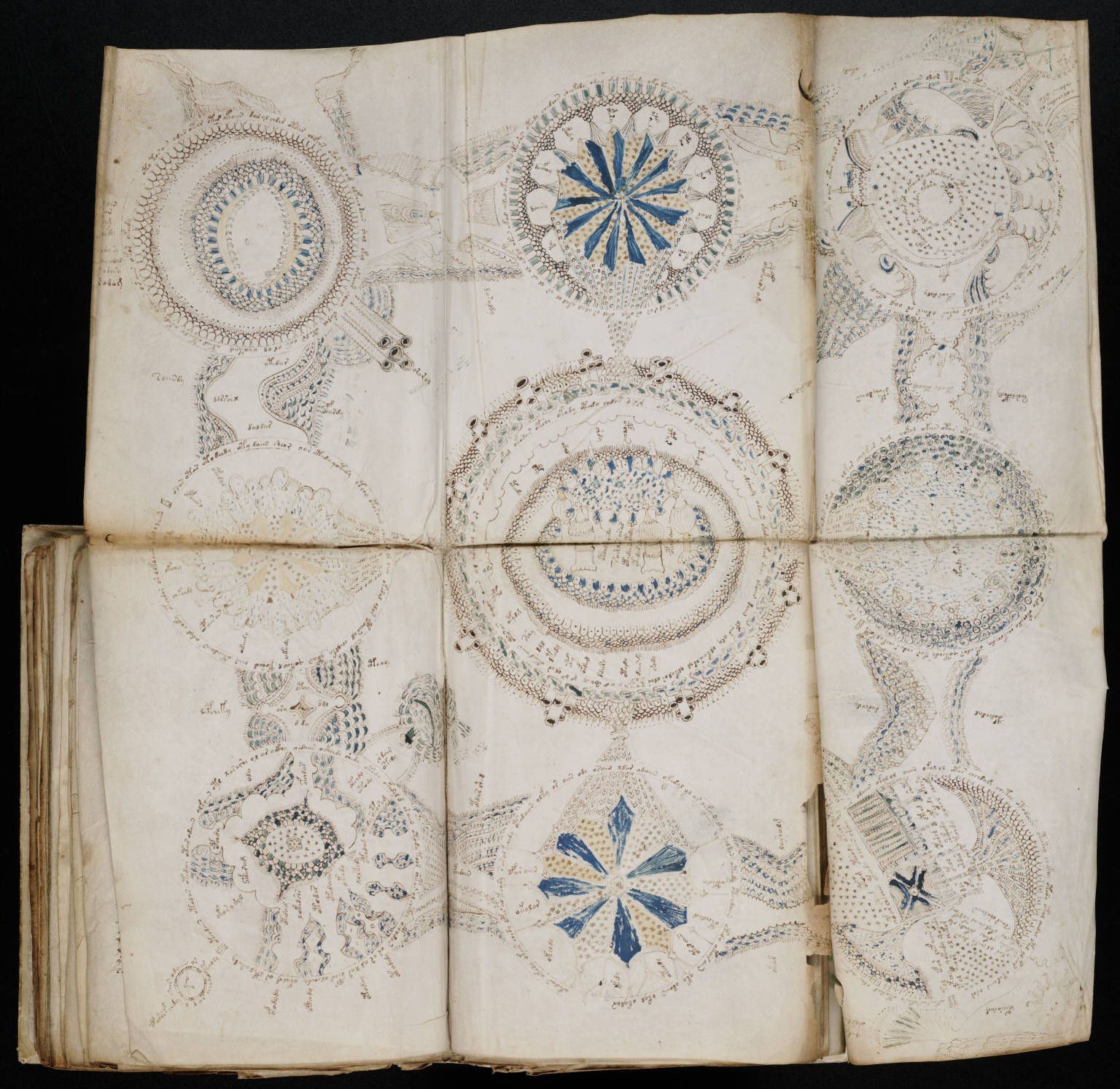
Unsolved puzzles have a hold on the imagination — the Voynich manuscript, a 600-year-old book nobody can read, has resisted every attempt to decode it. (Read more: The Voynich Manuscript) Riemann's work belongs to the same long tradition: the ancient Greeks built the Antikythera mechanism, a machine that used mathematics to predict the heavens more than 2,000 years ago. (Read more: The Antikythera Mechanism: The World's First Computer)
What exactly happened on 20 November?
The claim comes from Levent Alpöge, a mathematician who works at Anthropic and is a junior fellow at the Harvard Society of Fellows. In a short note titled "Remark", posted on his personal website on Friday 20 November, he wrote: "I believe I have, working with Claude, discovered a proof of the Riemann Hypothesis."
The proof is not a paper. There is no 50-page argument a mathematician can sit down and read. Instead, Alpöge released the proof as computer code, written in Lean — a "proof assistant", a programming language designed so that a computer can check every step of a mathematical argument. The release is a 14-part archive of 175,187 Lean files — about 239 megabytes compressed, expanding to more than 61.5 gigabytes. It claims to prove not only the classical hypothesis but the Generalised Riemann Hypothesis, a much bigger version covering a whole family of related functions.
Alpöge says the work was developed in intense collaboration with Claude over several months. He guided the high-level architecture — translating ideas from simpler settings into the heavy machinery of automorphic forms and arithmetic geometry — while Claude carried out complex algebraic manipulations, trace formulas and technical lemmas. The final pieces, by his account, fell into place late on Sunday night, 15 November. After consulting Anthropic's chief executive Dario Amodei and close mathematical colleagues, he published.
Why code instead of a paper? Because, Alpöge says, a natural-language version of the argument would run to more than 250,000 pages — no human could ever referee it. Code is the only form in which the claim can be checked at all. If this proof stands, it is the first Millennium Prize Problem claimed through a fully compiled formal proof rather than a conventional manuscript.
There is a curious piece of timing. The announcement came a day after Anthropic's record-breaking debut on the stock market, as Scientific American noted in its coverage. Whether that is coincidence or stagecraft, the claim itself is what mathematicians are now examining.
How the proof was checked — and why it is not a normal proof
A proof written in Lean is checked differently from a proof written in words. Lean does not ask whether an argument looks convincing. It verifies, step by step, that each claim follows from the definitions and from earlier results — and if a single step fails, the whole thing refuses to compile. If it compiles cleanly, the logic is correct, given the starting definitions.
That is a much stricter test than peer review. But it has a catch: Lean only checks the statement it is given. Before anyone can celebrate, experts have to confirm three things — that the theorem proved in the code really is the Riemann hypothesis and not a slightly different statement, that the definitions in the code faithfully capture the standard mathematical objects, and that no extra assumption was slipped in along the way.
The first outside checks came within hours. Mathematician Elliot Glazer confirmed that the formalised statement in Alpöge's release is in fact the Generalised Riemann Hypothesis. Then Andrew Sutherland, a computational number theorist at the Massachusetts Institute of Technology, coordinated an independent verification: his team compiled the whole archive in Lean without problems, and rechecked it with the Lean kernel using only the three standard axioms — meaning no extra assumptions were smuggled in.
On Saturday 21 November, the Lean and Mathlib communities published a joint statement: "We hereby certify that both the statement and the proof of the Riemann Hypothesis are correct." Sutherland's verification page recorded that lean4lean — an independent re-implementation of Lean's checker — had accepted all 175,187 modules, and that the comparison tools con-leche and con-ron had justified all five headline theorems. "Honestly the chance that anything is fishy here is approximately zero," Sutherland said.
The comparison step matters: a "comparator run" checks that the code does nothing nefarious, like quietly redefining a symbol in the statement. It is the audit that turns "the code compiles" into "the code proves what it claims". As of Sunday 22 November, the longest comparator runs were still going — the statement comparison had passed, the kernel replays still running — but the core verdict was in.
What is NOT settled yet
Here is where the story gets complicated.
First, a critique has been raised. Jenny Lorraine Nielsen published an objection on PhilArchive arguing that a trivial geometry predicate in the proof undermines the classical argument, even though the computer checkers accept the code. That objection has not been resolved, and it is exactly the kind of question a machine check cannot answer on its own: the computer verifies logic, not meaning.
Second, nobody understands the proof yet. Mathematicians have verified that the argument is correct; they have not yet understood it. A proof that no human has read is a strange object — it settles the question in one sense and leaves it wide open in another. The real mathematical work now begins: finding the ideas inside 175,187 files of machine code and turning them into mathematics that humans can learn from.
Third, the $1 million is not yet won. The Clay Mathematics Institute still lists the Riemann prize as open. Its rules require publication in a refereed journal and two years of general acceptance by the mathematics community. A code archive is neither of those things — yet. The Institute has not changed its position.
And fourth, the formal verification covers the proof as written. The deepest question — whether the ideas are right in the sense mathematicians care about — will be answered the slow way, by people working through the argument over months and years.
None of this makes the claim false. It makes it unfinished in a way that matters. The right way to describe it, as of today, is this: a machine-checked proof of the Riemann hypothesis has been produced and independently verified as formally correct, and the mathematical community is now working out what it means.
Would a proof break the internet?
The most common fear about a Riemann proof is that it would break encryption and bring down the internet. It would not — at least, not in any direct way.
Modern encryption, including the RSA system that protects much of the web, relies on the practical difficulty of factoring very large numbers into their primes. The Riemann hypothesis is about the distribution of primes, not about a fast way to factor them. Proving it would sharpen our understanding of how primes are spread out, and it might eventually lead to better algorithms — but there is no known path from "the zeros are all on the critical line" to "here is how to crack your bank's encryption". Cryptographers have known for decades that a Riemann proof was possible, and the systems in use today were not built on the assumption that it would never happen.
What a proof would change is mathematics itself. More than a thousand published results begin with the words "assuming the Riemann hypothesis". A proof would turn those conditional results into theorems overnight — and that, not your passwords, is the real prize.
What happens next
The next steps are unglamorous and essential. The remaining comparator runs will finish, confirming — or complicating — the certification. Mathematicians will start extracting human-readable ideas from the code and answering Nielsen's critique. The Clay Institute will in time have to decide whether a machine-checked proof counts under its rules — a question that may reshape how mathematics is done.
There is a precedent for the strangeness of this moment. When the four-colour theorem was proved in 1976, much of the proof was a computer check that no human could verify by hand, and mathematicians argued about it for years. The Riemann claim is that argument, scaled up by orders of magnitude: a proof too large for any human to read, checked by machines, delivered by a human working with an AI.
Riemann wrote his guess in eight pages in 1859 and called it "very likely". For 167 years, that was the best anyone could do. Now there is a verified proof — in a form no one expected, from a collaboration no one imagined, checked by machines rather than by people. Whether history records 20 November 2026 as the day the hypothesis fell will depend on what mathematicians find when they finally read what the machines have confirmed.


Comments (0)
Comments are reviewed before they appear on the site. Your email address is never shown publicly.
No comments yet — be the first to share your thoughts.