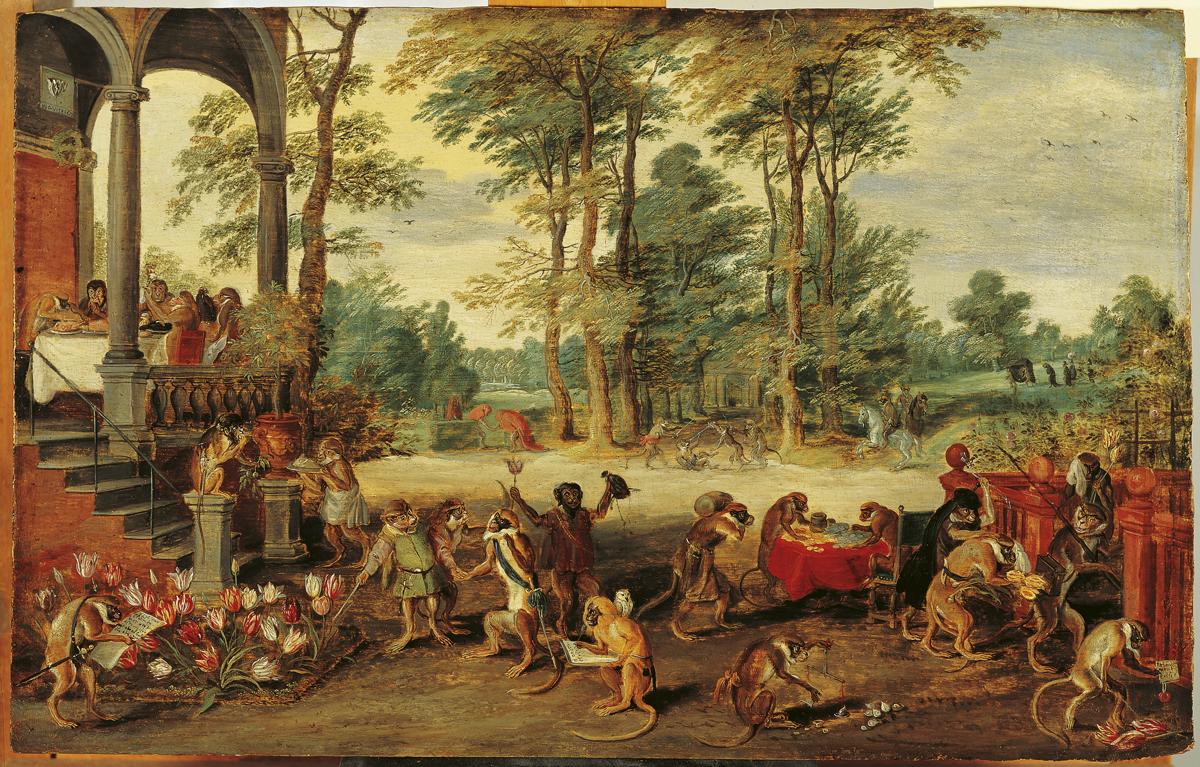
In the winter of 1636–37, people in the richest country on Earth paid the price of a house for a flower bulb. Then, in the first week of February 1637, the buyers vanished, prices collapsed by 90 percent or more, and a nation supposedly went bankrupt over tulips.
That is the story everyone knows, told for nearly 200 years as the first great speculative bubble. The prices were real and the crash was real — but much of the legend is wrong, and the truth holds sharper lessons for investors today.
A flower from the mountains of Central Asia
The tulip did not start out Dutch. Wild tulips grow in the highlands of Central Asia, and the flower was first cultivated in the Ottoman Empire, where sultans prized it in palace gardens. In the 16th century it travelled west along diplomatic and trade routes, reaching Vienna in the 1550s.
The botanist Carolus Clusius published the first tulip monograph in 1576 and planted tulips at Leiden's botanical garden in 1593; they flowered in spring 1594, the usual date given for the start of Dutch tulip growing. Within a generation, the flower had become a status symbol in a Dutch Republic growing rich on global trade, the 17th-century equivalent of the undersea networks that carry today's internet. (Read more: The Invisible Cables That Carry the Internet)
The republic was one of the world's leading trading powers, and wealthy merchants collected rare things — paintings, porcelain, shells, and now tulips.
Why one bulb could cost a house
The tulips that commanded fortunes were "broken" tulips, their petals streaked with flames of contrasting colour. Nobody then knew the cause; we now know it was a virus, which produced the spectacular patterns while weakening the bulb so it multiplied slowly. Beauty and scarcity came in the same package.
The most famous of all was the Semper Augustus, a white flower streaked with deep red. Only about a dozen bulbs were known to exist, most owned by Adriaan Pauw, a director of the Dutch East India Company, who refused to sell at any price.
The numbers attached to the Semper Augustus are the most quoted figures in financial history, and they need handling with care. A price of 10,000 guilders for a bulb is widely reported for the winter of 1636–37 — roughly the price of a grand canal house in Amsterdam. But that figure is contested: no receipt for it has survived. The economist Peter Garber, working from 17th-century price lists, traced a standard Semper Augustus bulb at 2,000 guilders in July 1625 and 6,290 guilders on 5 February 1637 — about 21 years of a master craftsman's pay, but well below the legendary 10,000.
What is documented is nearly as startling. On 5 February 1637, an orphanage auction in Alkmaar raised about 90,000 guilders selling a late innkeeper's bulbs; one Admirael van Enkhuysen bulb fetched 5,200 guilders, a Viceroy about 4,200. These were real, recorded transactions — in the very week the market broke.
There is another detail that explains how prices could run so far, so fast. A bulb can only be lifted from the soil and inspected in June, and must be replanted by September. For most of the year, traders bought and sold bulbs they could not see, for delivery months away. In the summer of 1636, tavern trading groups called "colleges" began trading these contracts again and again before any bulb was delivered — in effect, a futures market that ran on promises.
The crash: February 1637
The steepest rises came in January 1637, even as bubonic plague swept the Dutch Republic. Garber's figures for a variety called Switsers show the price rising from 0.035 guilders per unit on 23 January to 0.17 guilders on 5 February — almost five times in 13 days.
Then the buyers stopped coming. The turning point is usually placed at an auction in Haarlem on 3 February 1637, where almost no bids were made. Within days the collapse was general. Prices for even the most prized bulbs fell by 90 percent or more; one estimate puts them at 1 to 5 percent of their peak. Buyers refused to pay, sellers refused to deliver, and the paper edifice came apart.
The authorities did not ride to the rescue. Haarlem and Amsterdam refused to enforce the February 1637 contracts, and on 24 February the florists' delegates in Amsterdam proposed that buyers under contracts made after 30 November 1636 could walk away by paying the seller 10 percent of the price. In the end, no court upheld a tulip contract. The losses travelled through unfinished promises rather than through warehouses of worthless flowers — because in most cases, little money had actually changed hands.
That is the first great correction to the legend: the crash was a collapse of paper, not of the Dutch economy.
The legend, and what the archives actually say
The story most people know comes from a single book: Charles Mackay's Memoirs of Extraordinary Popular Delusions and the Madness of Crowds, published in 1841 — more than 200 years after the crash. Mackay wrote that the population, "even to its lowest dregs, embarked in the tulip trade," and claimed the crash left Dutch commerce depressed for years.
Mackay's account went almost unchallenged until the 1980s, when historians returned to the archives. The decisive work is Anne Goldgar's Tulipmania: Money, Honor, and Knowledge in the Dutch Golden Age (University of Chicago Press, 2007), based on years of research in Dutch records. What she found was a much smaller event than the legend.
The trade, Goldgar showed, was confined to a fairly small group of well-off merchants and skilled craftsmen, often connected by family, neighbourhood and religion. She could identify only 37 people who paid more than 300 guilders for a bulb — about a master craftsman's annual wage — and the dearest bulbs she traced cost around 5,000 guilders, the price of a well-appointed house. She found fewer than half a dozen participants who suffered financial trouble, and even for them tulips may not have been the cause. There were no tulip bankruptcies, no suicides in the canals. As Goldgar has joked, her book should have been called "Tulipmania: More Boring Than You Thought."
The wider economy barely noticed.
It is the same trap history sets again and again. Pompeii's famous casts, for example, are not the bodies of the dead — they are plaster poured into voids left in the ash. (Read more: Pompeii Casts: What They Really Are)
Prices did race upward and contracts did fail. But the nationwide ruin is a myth — and the myth, not the event, turned "tulip mania" into shorthand for every bubble since.
What actually caused the crash?
Historians still disagree about the trigger, and the honest answer is that no single cause has been proven. Goldgar emphasises fears of oversupply and the plain impossibility of January's prices lasting. Others point to the bulb's biology: planting hid the quantity and condition of bulbs from the market, and the first sprouts restored that information. Garber, comparing tulip prices with later hyacinth prices, argued that expensive new varieties commonly fall in value as propagation increases supply — leaving only the final month's rush in common bulbs as the strongest candidate for a genuine speculative bubble.
The debate itself is instructive: the participants were not obviously irrational. Goldgar has argued that tulips were a new luxury product in a country rapidly expanding its wealth and trade networks, and "it wasn't irrational to pay a high price for something that was generally considered valuable, and for which the next person might pay even more." The flaw was in the structure — a market in promises for goods nobody could inspect — more than in the people.
Five lessons for today's investors
Tulip mania is invoked every time a new asset soars — dot-com stocks, house prices, Bitcoin. Goldgar herself has pushed back, arguing that "whatever it is, Bitcoin is not tulip mania 2.0." The comparison works only if we take the real lessons, not the cartoon version.
1. Price is not value, and rarity is not a business model. The broken tulips were genuinely scarce and beautiful, and scarcity supported high prices for years. What it could not support was prices rising fivefold in 13 days for ordinary bulbs. When an asset's price rises far faster than anything about the asset has changed, the price is being set by the next buyer's hopes, not by the asset. Ask what the thing itself produces or does — if the answer is "someone else might pay more," be careful.
2. Leverage hides inside promises. The 1637 market ran on contracts for bulbs still in the ground, traded many times over before delivery. Most participants had not paid, and most sellers had not delivered, when the music stopped — which limited the real damage, but also made the panic total. Modern markets do the same thing with margin, options and borrowed money. The danger is not just the price falling; it is discovering how many promises were stacked on top of each other.
3. When you cannot inspect what you are buying, you are buying a story. For most of the year, tulip traders could not see the bulbs they were trading. They relied on catalogues, reputation and the word of the seller. The same gap exists today: a complex financial product, a start-up with no revenue, a token with no use. If you cannot explain, in one sentence, what you own and why it is worth what you paid, you own a story.
4. Narratives outlive evidence — and move markets anyway. Mackay's version, written two centuries later, shaped how every bubble since has been understood. Modern hype works the same way: GTA 6's record-breaking launch — a 99 on Metacritic, nearly $2 billion in sales, a PlayStation Network that buckled — had little to do with the game itself. (Read more: GTA 6 Is Out: A 99 on Metacritic, Nearly $2 Billion in Sales) Hype is not fraud, but it is not value either.
5. The crowd is not always wrong — but it is always late. The tulip market's sharpest rise came in its final weeks, when the most eager buyers piled in. The people who bought in January 1637 were not fools; they were following a trend that had rewarded buyers for months. Bubbles rarely announce their end. The practical defence is unglamorous: decide in advance what an asset is worth to you, how much you can afford to lose, and what would make you sell — before the excitement starts.
The flower that outlived the bubble
The tulip survived its mania: the Netherlands is still the heart of the global bulb trade. The Semper Augustus itself is gone — it exists now only in paintings and in the watercolour albums, the "tulip books," that growers used as sales catalogues. The virus that made it beautiful also made it fragile.
The most expensive flower in history was a sick plant whose beauty could not be reproduced, traded in promises about things no one could see, and remembered through a satire that exaggerated everything. The bubble burst in a week. The lesson has lasted almost four centuries: know what you own, know what it is worth without the next buyer, and never confuse a good story with a good investment.




Comments (0)
Comments are reviewed before they appear on the site. Your email address is never shown publicly.
No comments yet — be the first to share your thoughts.