It is the simplest question in ocean science, and the answer is a number so large it is hard to picture: how deep is the Mariana Trench? The short version is 10,935 metres. The longer version is more interesting — because that number took 150 years to settle, because it was measured by lowering a weighted rope, then by echo sounders, then by people riding a steel ball to the bottom, and because the trench is still, in places, unmapped.
This article answers the question directly, then the follow-ups people always ask next: how deep is that compared with Everest, where exactly the trench is, why it is so deep, how scientists measured it, who has actually been to the bottom, and whether anything on Earth is deeper.
The short answer: 10,935 metres
The deepest point of the Mariana Trench is Challenger Deep, a small valley on the trench floor in the western Pacific. Its depth is 10,935 metres — 35,876 feet, or about 6.8 miles — below the surface. That is the figure published in 2021 by a team led by Samuel Greenaway of the US National Oceanic and Atmospheric Administration (NOAA), based on a series of submersible dives to the bottom in June 2020. The team put the uncertainty at plus or minus six metres, at 95% confidence — the most precise measurement ever made of the deepest place on Earth.
Older figures you will see quoted are not wrong so much as older. Every survey of Challenger Deep has produced a slightly different number, because measuring nearly 11 kilometres of water from a moving ship is genuinely hard: the speed of sound changes with temperature, salinity and pressure, and every survey has to correct for all three. The 10,935-metre figure is the one the record books now use — Guinness World Records lists it as the deepest point in the sea — and it is the number to quote.
How deep is that, really?
Mount Everest, the highest point on land, is 8,849 metres above sea level. If you dropped Everest into Challenger Deep, its summit would sit about 2,086 metres — more than two kilometres — below the surface. You could stack the Burj Khalifa, the tallest building on Earth at 828 metres, on top of Everest, and the pair would still be under water.
| For comparison | Height / depth |
|---|---|
| Mount Everest | 8,849 m tall |
| Burj Khalifa | 828 m tall |
| Cruising altitude of a passenger jet | About 10,000–12,000 m |
| Average depth of the Pacific Ocean | About 4,000 m |
| Challenger Deep | 10,935 m deep |
The most useful comparison is the aeroplane one. Challenger Deep is deeper than a passenger jet flies high. The descent from the surface to the bottom takes a submersible about four hours — and the pressure at the bottom is more than 1,000 times the pressure at sea level, or more than a tonne pressing down on every square centimetre. It is, by a distance, the most extreme environment on the planet that humans have visited.
Where is the Mariana Trench?
The trench lies in the western Pacific Ocean, about 200 kilometres east of the Mariana Islands and roughly 320 kilometres south-west of Guam. It is a crescent-shaped scar in the ocean floor, about 2,550 kilometres long and about 69 kilometres wide on average — longer than the distance from London to Rome, and narrow enough to drive across in an hour.
Challenger Deep itself is a small, steep-walled valley at the southern end of the trench. It is not the whole trench: most of the trench floor is "only" 8,000 to 9,000 metres down. Challenger Deep is the one place where the floor drops past 10,900 metres, and it is barely 48 kilometres long. Finding it, in an ocean that covers most of the planet, is part of why the depth took so long to pin down.
The trench is also a protected place. In 2009 it was designated the Mariana Trench Marine National Monument, which protects the trench and the waters around it from commercial fishing and mining.
Why is it so deep?
The trench exists because of plate tectonics. At its location, the Pacific Plate — the slab of crust that carries most of the Pacific Ocean — is diving beneath the smaller Mariana Plate. The Pacific crust there is old, cold and dense, so instead of crumpling against its neighbour it sinks, steeply, into the mantle. The trench is the surface expression of that dive: a great V-shaped valley where one plate bends down and disappears.
The depth is a product of that geometry. The older and colder the diving plate, the steeper and deeper the trench it makes, and the Pacific Plate at the Mariana Trench is among the oldest ocean floor on Earth. The trench has been growing for tens of millions of years, and it is still growing: the Pacific Plate keeps moving, a few centimetres a year, and the trench keeps deepening with it.
How do we know the depth? A 150-year story
The trench was discovered by accident. In 1875, the British survey ship HMS Challenger was sounding the Pacific with a weighted rope — lowering a lead weight on a marked line until it hit the bottom — and recorded 8,184 metres near the southern end of the trench. The crew had no way to know they had found the bottom of the world; the rope was simply the best instrument they had.
Each generation of instruments revised the number. The story of the measurement is worth telling in full, because it shows why the figure kept changing.
| Year | Who | Method | Depth recorded |
|---|---|---|---|
| 1875 | HMS Challenger | Weighted sounding line | 8,184 m |
| 1951 | HMS Challenger II | Echo sounding | 10,900 m |
| 1957 | Soviet ship Vityaz | Echo sounding | 11,034 m (later revised down) |
| 2010 | USNS Sumner | Multibeam sonar | 10,994 m |
| 2021 | Greenaway et al. (NOAA) | Submersible pressure transects | 10,935 ± 6 m |
The 1951 survey is the one that named Challenger Deep: the crew of Challenger II, using echo sounding — bouncing sound off the seabed and timing its return — measured 10,900 metres and gave the deepest part the name it still carries. The 1957 Soviet figure of 11,034 metres stood in some books for decades, but later surveys could not repeat it, and it is now treated as an overestimate.
The 2021 figure is different in kind, not just in precision. Instead of measuring from a ship at the surface, it was derived from submersibles that actually went to the bottom, recording pressure as they descended. Pressure and depth are linked by physics, so a precise pressure reading at the seabed gives a precise depth — and because the submersibles visited the bottom repeatedly, the team could check the number again and again. That is why 10,935 metres, plus or minus six, is the figure scientists now trust.
Who has been to the bottom?
Fewer people have stood on the floor of Challenger Deep than have walked on the Moon. As of July 2022, only 27 people had descended to it — and the first two did it more than sixty years ago.
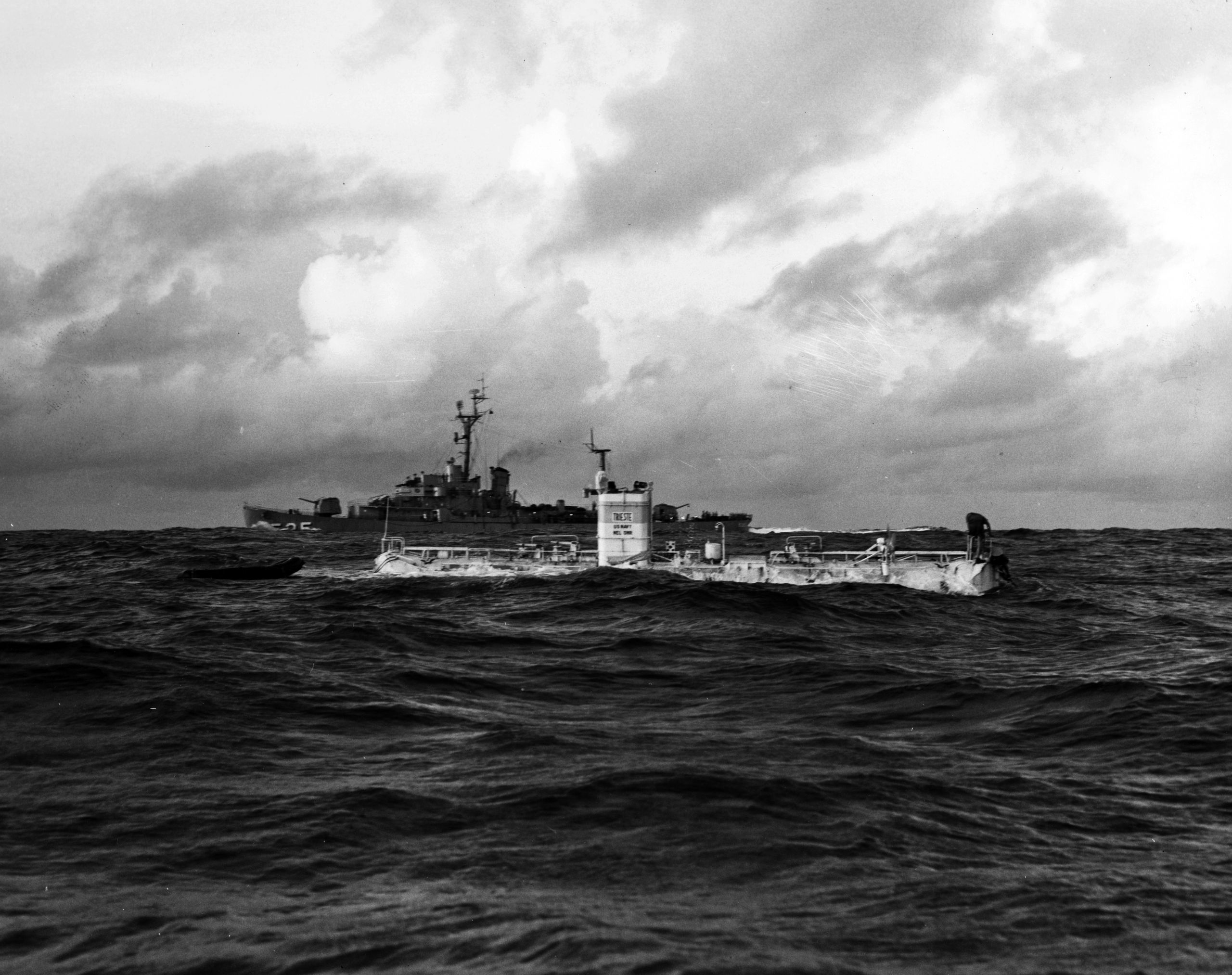
On 23 January 1960, Swiss ocean engineer Jacques Piccard and US Navy Lieutenant Don Walsh rode the bathyscaphe Trieste down to the bottom, reaching a depth then measured at 10,916 metres. They spent about twenty minutes on the seabed, in a steel sphere barely two metres across, before dropping their ballast and rising back to the surface. No one went back for 52 years.
The second visit came in 2012, when film director James Cameron made the first solo dive to Challenger Deep in his submersible DEEPSEA CHALLENGER. Then, in 2019, explorer Victor Vescovo began a series of dives in the submersible Limiting Factor, reaching 10,928 metres on 28 April 2019 and returning repeatedly — including the June 2020 dives that produced the current depth figure. In July 2022, oceanographer Dawn Wright joined a Limiting Factor dive and became the first Black woman to explore the trench.
Every one of those dives is a reminder of how hostile the place is. The submersibles are built to survive pressure that would crush a normal submarine like a drinks can, and the descent alone takes hours. The photograph above shows the Trieste on the surface over the trench on the morning of 23 January 1960, with the destroyer escort USS Lewis behind it — the day two men went further down than anyone had ever been.
What is it like down there?
There is no sunlight at Challenger Deep — sunlight gives out at about 1,000 metres, and the bottom is more than ten times deeper than that. The water is cold, between 1 and 4 degrees Celsius, and utterly dark. The pressure, as noted, is more than 1,000 times what you feel at the surface.
And yet there is life. Amphipods — small shrimp-like crustaceans — scavenge the seabed. Giant single-celled organisms called xenophyophores, several centimetres across, sit on the sediment. Sea cucumbers crawl across the ooze. Microbes thrive in the mud. Fish, though, have a limit: they have been found down to about 8,400 metres, and below that only invertebrates have been recorded. The deepest fish ever filmed, a snailfish, was seen at around 8,300 metres in the nearby Izu-Ogasawara Trench — and the trench floor is two and a half kilometres deeper still.
The trench is not untouched by us, either. Microplastics have been found in amphipods collected from the trench, carried down by sinking particles from the surface. The deepest place on Earth is not beyond the reach of human pollution.
Is anything deeper than the Mariana Trench?
Not that anyone has reliably measured. The second-deepest known point in the ocean is Horizon Deep, in the Tonga Trench in the south-west Pacific, at about 10,800 metres — roughly 130 metres shallower than Challenger Deep. The third is Sirena Deep, also in the Mariana Trench, about 200 kilometres east of Challenger Deep, at about 10,714 metres.
That ranking comes with a caveat. As of April 2026, only about 28.7% of the world's ocean floor had been mapped to modern, high-resolution standards, according to NOAA. Most of the deep ocean is still mapped from satellite gravity data, which can miss features tens of kilometres across. It is possible — unlikely, but possible — that a deeper point exists somewhere unmapped. Challenger Deep is the deepest place we know of, and the honest version of the claim always carries those last four words.
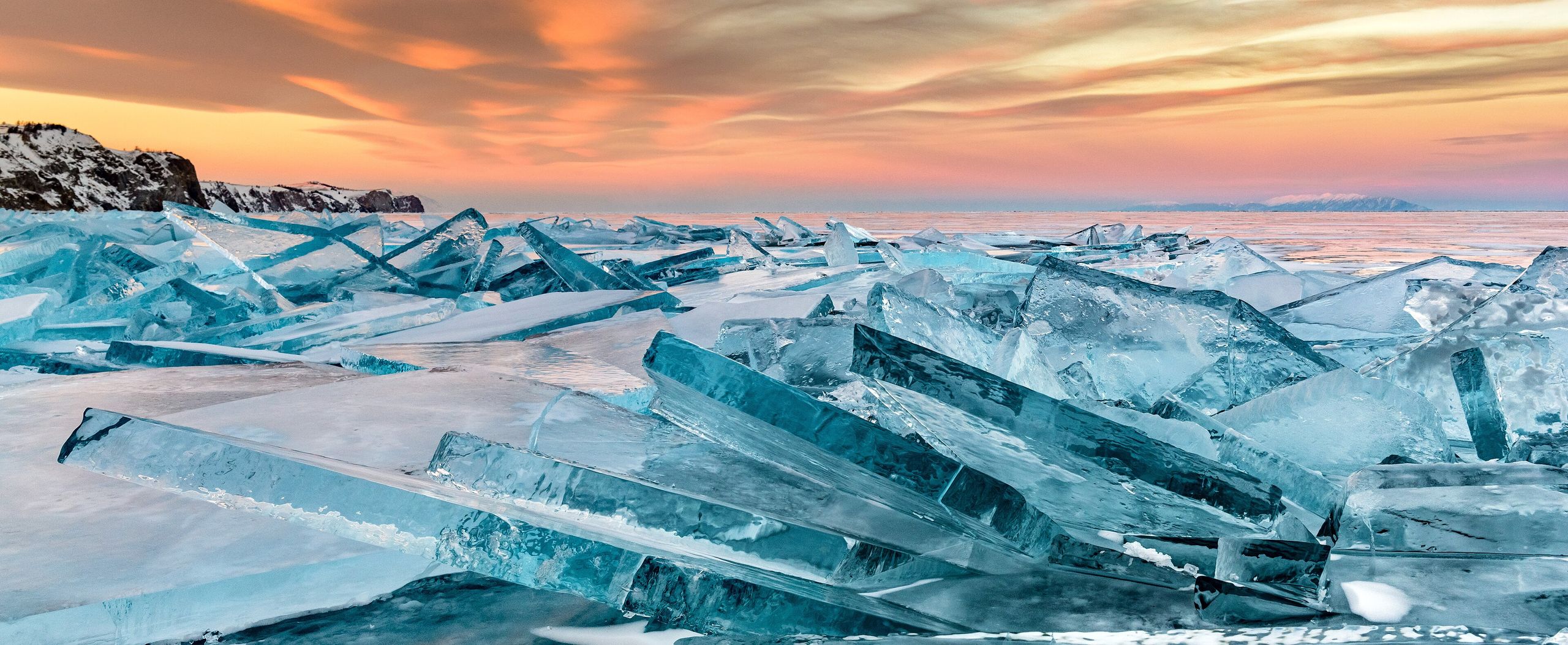
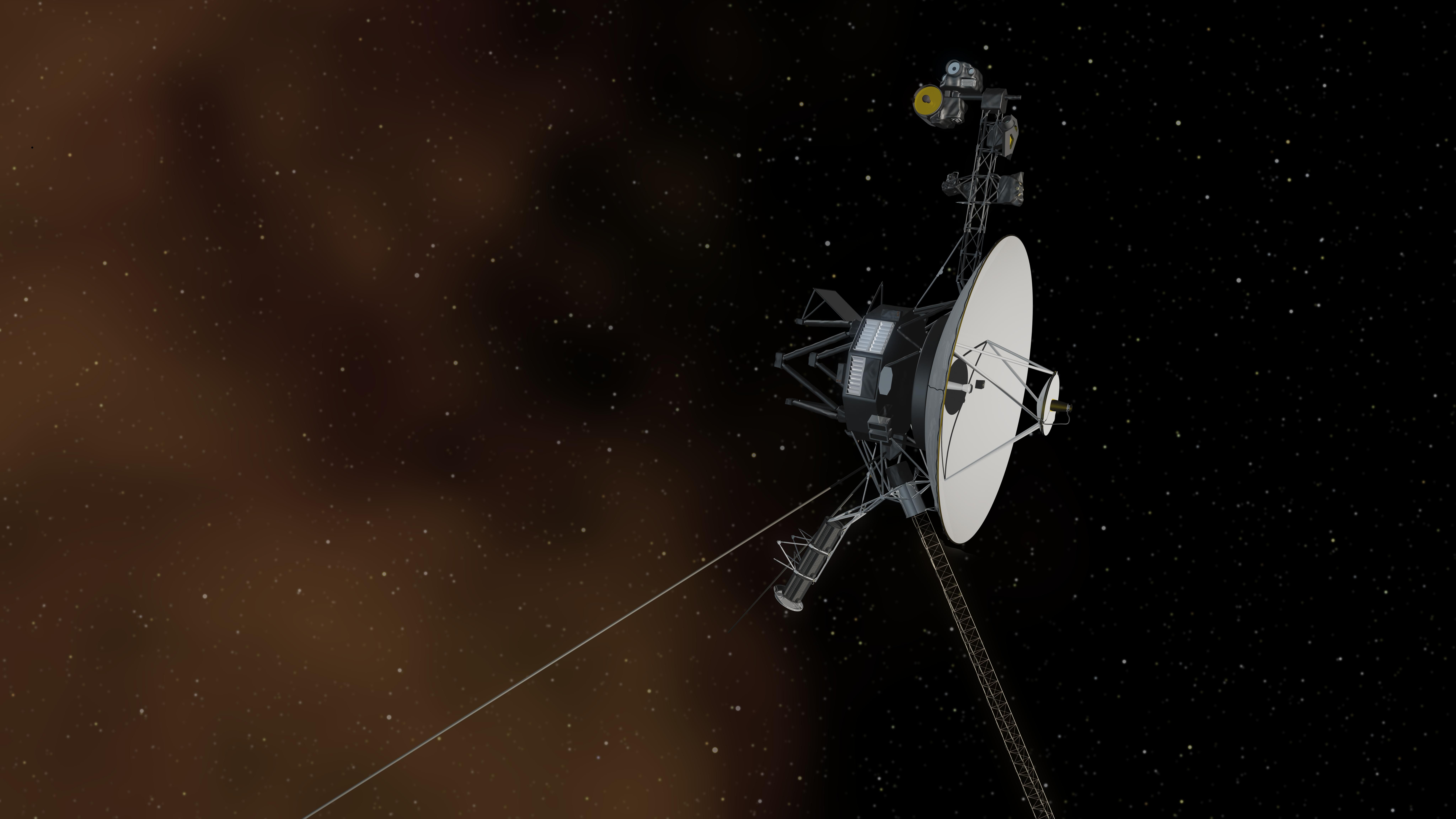
For now, the answer stands: 10,935 metres, at the bottom of a crescent-shaped scar in the western Pacific, deeper than Everest is tall, darker than a moonless night, and visited by fewer people than have left Earth orbit. If you want the fuller story of the trench — the life, the history and the expeditions — our earlier feature, Inside the Mariana Trench, the Deepest Place on Earth, goes deeper still. And if the deepest lake on Earth is your next question, the answer is Lake Baikal, 1,642 metres down — the deepest lake in the world, and the oldest one too. The farthest any human-made object has ever travelled, in the other direction, belongs to Voyager 1, now more than 24 billion kilometres from Earth.
The bottom line
How deep is the Mariana Trench? 10,935 metres at Challenger Deep, its lowest point — 35,876 feet, about 6.8 miles, and about 2,100 metres deeper than Mount Everest is tall. It took 150 years of sounding lines, echo sounders and submersible dives to settle that number, and the figure we use today comes from the dives of 2020, published in 2021, accurate to within six metres.
It is the deepest place on Earth that we know of — and the fact that only 27 people had been there by 2022 tells you how hard it is to reach. The trench is not just a record. It is a reminder of how much of our own planet remains unvisited, unmapped and barely understood.

Comments (0)
Comments are reviewed before they appear on the site. Your email address is never shown publicly.
No comments yet — be the first to share your thoughts.