
A scar in the floor of the Pacific
The trench lies in the western Pacific Ocean, near Guam and the Mariana Islands. It is the deepest of the ocean's trenches — great scars in the crust formed where one tectonic plate dives beneath another. The deepest part is named Challenger Deep, after the British ship HMS Challenger, whose crew first sounded — measured — the depth in this region in 1875, using the era's weighted lines. They had no way to know they had found the bottom of the world.
How deep is it, exactly?
NOAA Ocean Exploration reports that scientists have reevaluated the trench's depths using multibeam sonar data and updated the deepest known point to approximately 10,935 metres. Older surveys produced slightly different numbers — a few tens of metres higher or lower — which is why you will see different figures quoted in different places. Sounding nearly 11 kilometres of water is hard: the speed of sound changes with temperature, salinity and pressure, and every survey has to correct for all three.
The comparison that makes the scale real: the deepest point drops about 11,000 metres beneath the surface — deeper than Mount Everest is tall. Lower the world's highest mountain into Challenger Deep and its summit would still be under more than two kilometres of water.
A thousand atmospheres
Pressure in the ocean grows by roughly one atmosphere for every 10 metres of depth. Multiply that by nearly 11,000 metres and the water at the bottom of Challenger Deep presses down with more than 1,000 times the air pressure at sea level — on every square centimetre of anything that goes down there. It is the reason so few vehicles have ever made the trip, and the reason those that do are built around thick spherical crew capsules: a flat surface or a weak seam would fail catastrophically.
Only a handful of crewed descents have reached the bottom. The first was in 1960, when the bathyscaphe Trieste carried Jacques Piccard and Don Walsh down. In 2012, filmmaker James Cameron made the first solo descent. Each dive is less a visit than a brief trespass.
What lives at the bottom
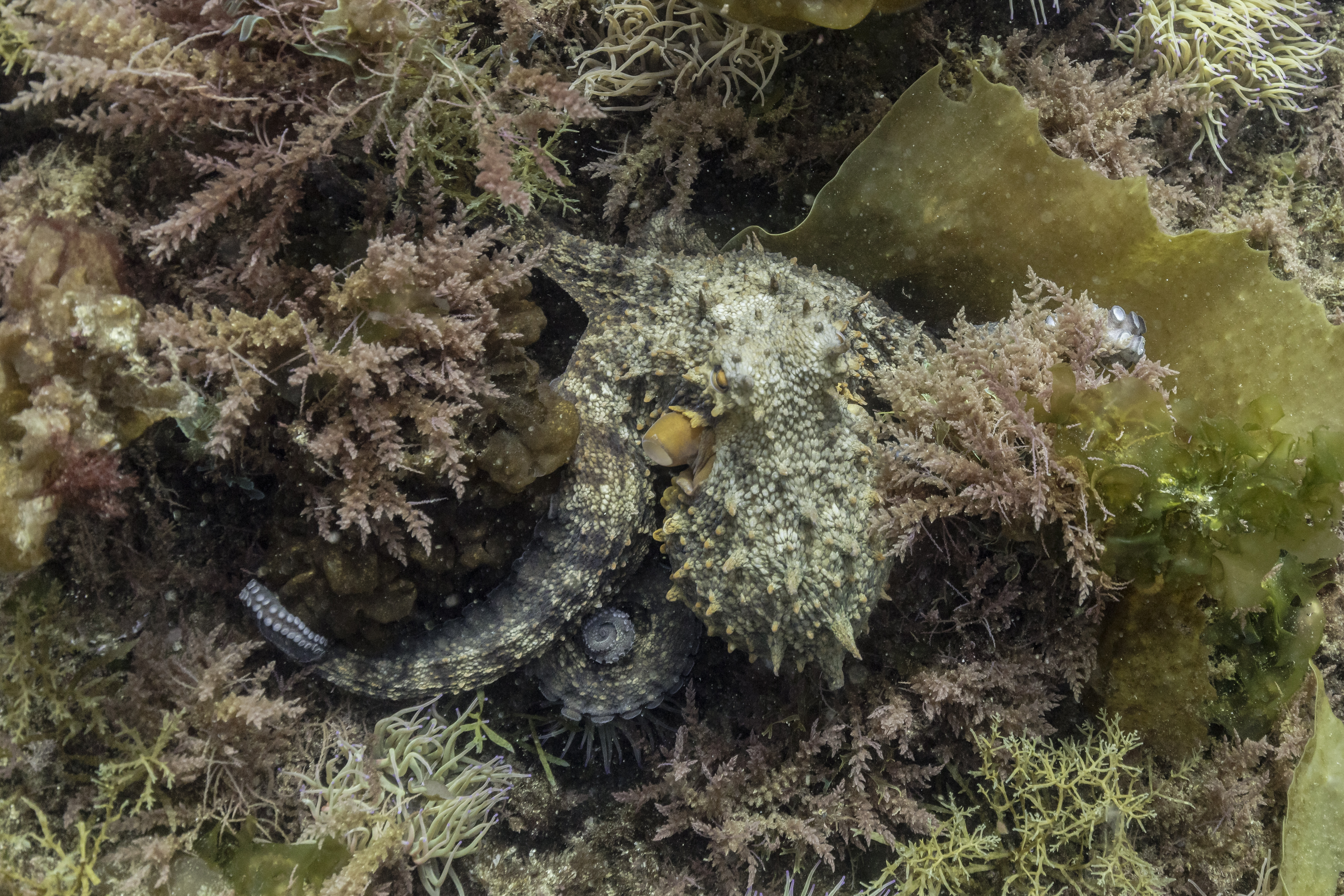
The trench is not empty. Cameras, landers and expeditions have documented sea cucumbers, isopods and other invertebrates living on and above its floor, fed not by sunlight — which never reaches these depths — but by organic material raining down from the sunlit world far above.
The vertebrate story has a hard edge. NOAA notes that the deepest confirmed fish sighting is a snailfish filmed at 8,336 metres — a tadpole-like fish with a large head, small eyes and no scales. Research suggests there may be a boundary between about 8,200 and 8,400 metres beneath which no fish can live at all, because the pressure defeats the chemistry that fish cells rely on. Below that boundary, every animal discovered so far has been an invertebrate — creatures without bony skeletons, like sea cucumbers and isopods, whose bodies are better suited to being squeezed.
The least-explored place on the planet
Here is the humbling statistic from NOAA's mapping work: it would take a single ship nearly 1,000 years to map the entire ocean floor at all depths, and only a fraction of the seafloor has been mapped in high resolution. The hadal trenches — the deepest bands of the ocean — are the least visited of all. We have better maps of the surface of the Moon than of much of the trench floor, and new hadal regions are still being recognised.
What is down there, in full? New species, certainly. Geological answers about how plates collide and how water cycles into the Earth, probably. The trench has been measured to within a few metres — and it is still, in every way that matters, unexplored.



Comments (0)
Comments are reviewed before they appear on the site. Your email address is never shown publicly.
No comments yet — be the first to share your thoughts.