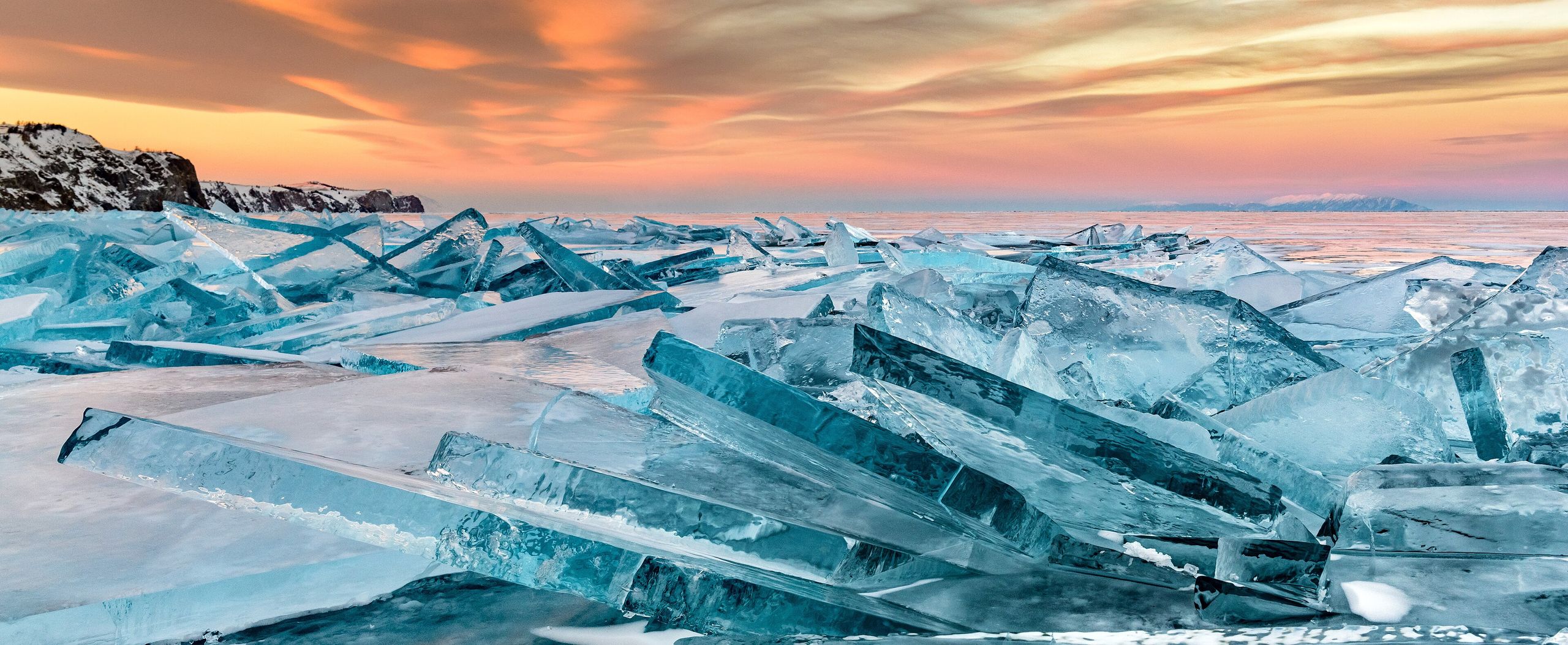
Lake Baikal, in Siberia, is the deepest lake in the world. Its maximum depth is 1,642 metres (5,387 feet) — measured by a bathymetric survey in 1992. To put that in perspective: if you stood the world's tallest building, the Burj Khalifa, on the lake floor, its tip would still be more than 800 metres underwater.
Baikal is not just the deepest lake. It is also the oldest lake on Earth, at 25 to 30 million years old, and it holds about 20% of all the unfrozen fresh water on the planet — more than all five of North America's Great Lakes combined. It is a lake so large, so deep and so old that scientists call it the "Galapagos of Russia": a world of its own, full of animals found nowhere else.
How deep is Lake Baikal, exactly?
The headline figure is 1,642 metres (5,387 feet). That comes from a detailed bathymetric survey — a sonar mapping of the lake floor — carried out in 1992, and it is the figure most reference works use today. A United Nations environment datasheet gives a slightly different number, 1,638 metres, from a different survey. UNESCO, which lists Baikal as a World Heritage Site, rounds the depth up to 1,700 metres. The differences come from where exactly you measure, and how the lake floor is mapped. The 1,642-metre figure is the standard one.
The second-deepest lake in the world is Lake Tanganyika, in Africa, at 1,426 metres — more than 200 metres shallower than Baikal. After that comes the Caspian Sea, which is technically a lake, at about 1,025 metres. Baikal's lead is not close.
The lake's average depth is about 744 metres, which is itself deeper than most lakes' maximum depth. Baikal is not a shallow bowl with one deep hole; it is a deep trench from end to end, 636 kilometres long and up to 79 kilometres wide, covering about 31,722 square kilometres — roughly the size of Belgium.
Why is Lake Baikal so deep?
Baikal is deep because it sits in a rift valley — a place where the Earth's crust is slowly pulling apart. The lake lies in the Baikal Rift Zone, in south-east Siberia, where two great slabs of the Earth's crust are moving away from each other. As they pull apart, the ground between them sinks, and the valley it forms fills with water.
This is the same process that created the Great Rift Valley in East Africa, and the same force that is splitting Africa apart today. At Baikal, the process has been running for 25 to 30 million years, far longer than at most other rift lakes. The rift floor is 8 to 11 kilometres below the surface, buried under about 7 kilometres of sediment that has washed into the valley over millions of years. The water fills only the top of that enormous crack in the crust.
And the rift is still active. The ground around Baikal is still sinking, the valley is still deepening, and the lake is still, very slowly, getting deeper. Baikal is not a finished feature of the landscape. It is a work in progress, still being built by the same forces that made it.
The oldest lake on Earth
At 25 to 30 million years old, Baikal is by far the oldest lake on Earth. Most lakes are young: they are carved by glaciers, dammed by landslides, or filled by rivers, and they last thousands or tens of thousands of years before they silt up or drain away. Baikal has lasted a thousand times longer, because the rift that holds it keeps sinking faster than sediment can fill it.
That age is what makes Baikal a living laboratory. A lake that has existed for 25 million years has had time for evolution to run wild inside it, cut off from the rest of the world's fresh water. The result is a fauna found nowhere else on the planet — a freshwater ecosystem with its own rules.
UNESCO recognised this in 1996, when it added Lake Baikal to the World Heritage List, calling it the oldest and deepest lake in the world, holding 20% of the world's unfrozen fresh water, with a fauna of exceptional value to evolutionary science. The lake is surrounded by a system of protected areas, and Russian law gives it special protection — though UNESCO has also raised concerns about pollution and development on its shores.
A fifth of the world's fresh water
Baikal's volume is about 23,615 cubic kilometres of water. That is roughly 20% of all the unfrozen fresh water on the surface of the Earth, and about 80% of Russia's fresh water. All five of North America's Great Lakes combined hold less. If Baikal were drained, it would take every river on Earth more than a year to refill it — and that is a conservative estimate.
The water stays so clean because it stays so long. More than 330 rivers flow into Baikal, the largest being the Selenga, the Barguzin and the Upper Angara. Only one river flows out: the Angara, which carries Baikal's water north to the Yenisei and eventually to the Arctic Ocean. A drop of water that enters Baikal takes about 330 years, on average, to make the journey through the lake and out again. In that time it is filtered by the lake's tiny crustaceans, which keep the water famously clear: in winter, you can see 40 metres down through the ice.
Life found nowhere else
Baikal is home to about 2,630 species of plants and animals, and about two-thirds of them live nowhere else on Earth. That is the highest level of endemism of any lake in the world, and the reason scientists call it the Galapagos of Russia.
The most famous resident is the Baikal seal, or nerpa. It is the only seal in the world that lives entirely in fresh water, and the only seal found so far from the sea — Baikal is hundreds of kilometres from the nearest ocean, yet its seals swim in a lake. Scientists think their ancestors came from the Arctic long ago, perhaps when the lake was connected to the sea by rivers, and then stayed as the land rose around them. There are around 100,000 nerpa in the lake today.
The lake also has about 60 native species of fish, around half of them found nowhere else, including the omul, a whitefish that is a staple food around the lake, and the golomyanka, a strange, translucent fish that lives in the deep water and contains so much oil that it was once burned as a lamp. In the shallows live sponges, crustaceans and flatworms, many of them species that exist only in Baikal.
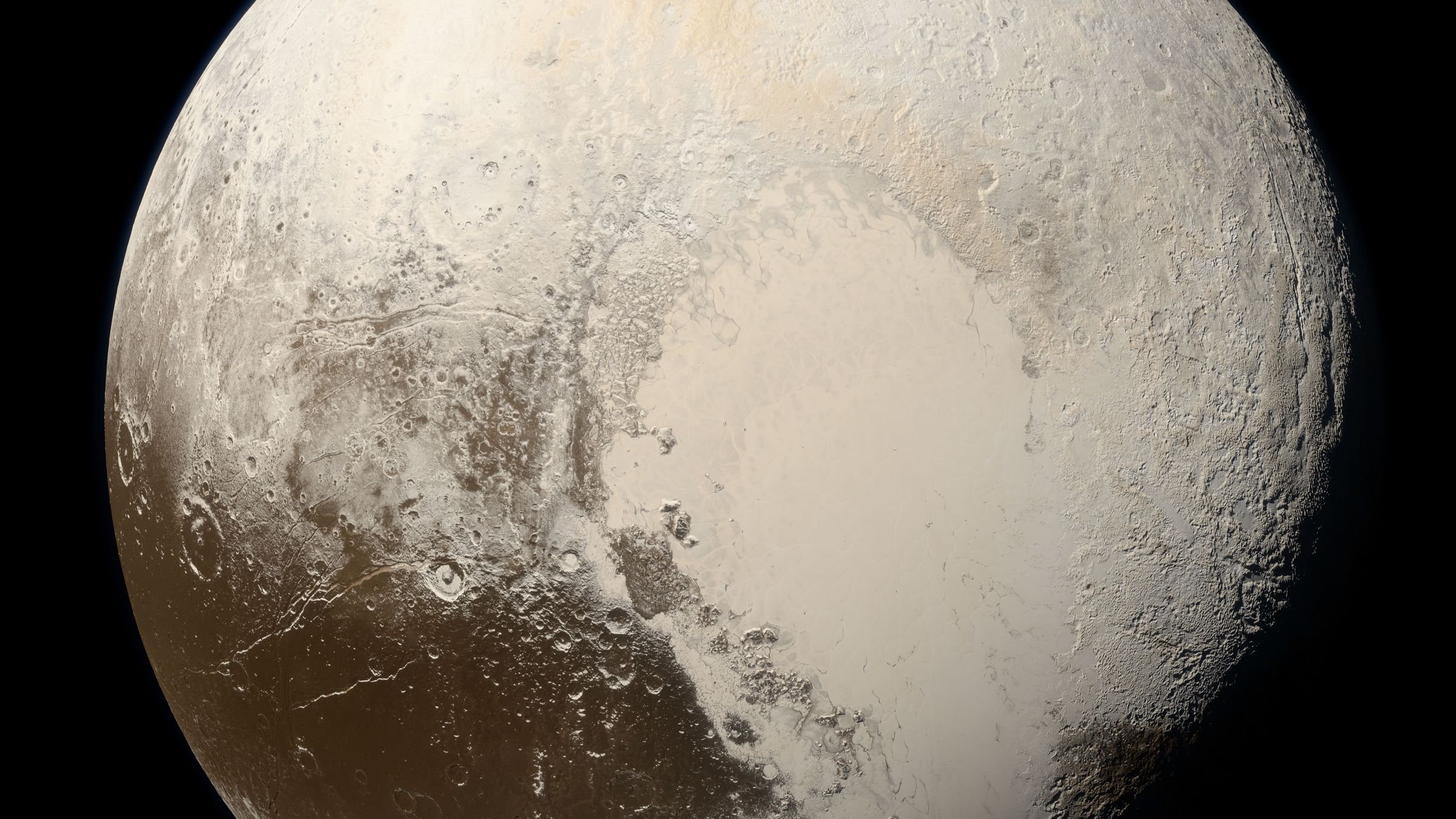
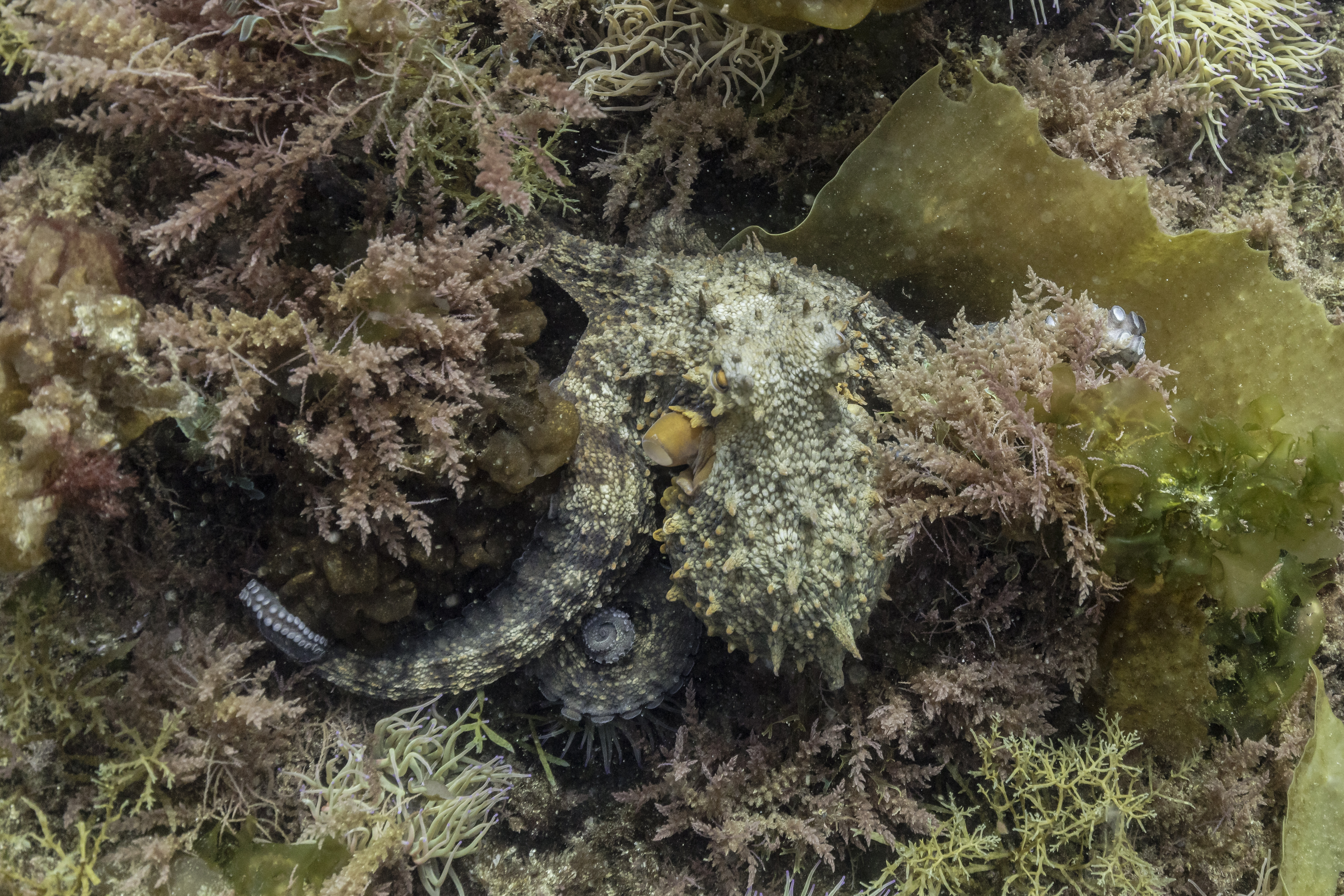
Baikal's deep, cold water is a world of its own — much like the deep ocean, where animals evolve in strange directions. Read about another creature built for the deep, the octopus with three hearts and blue blood, and about the ancient ice scientists found falling from the sky beyond Neptune in our Kuiper Belt story.
Winter on Baikal
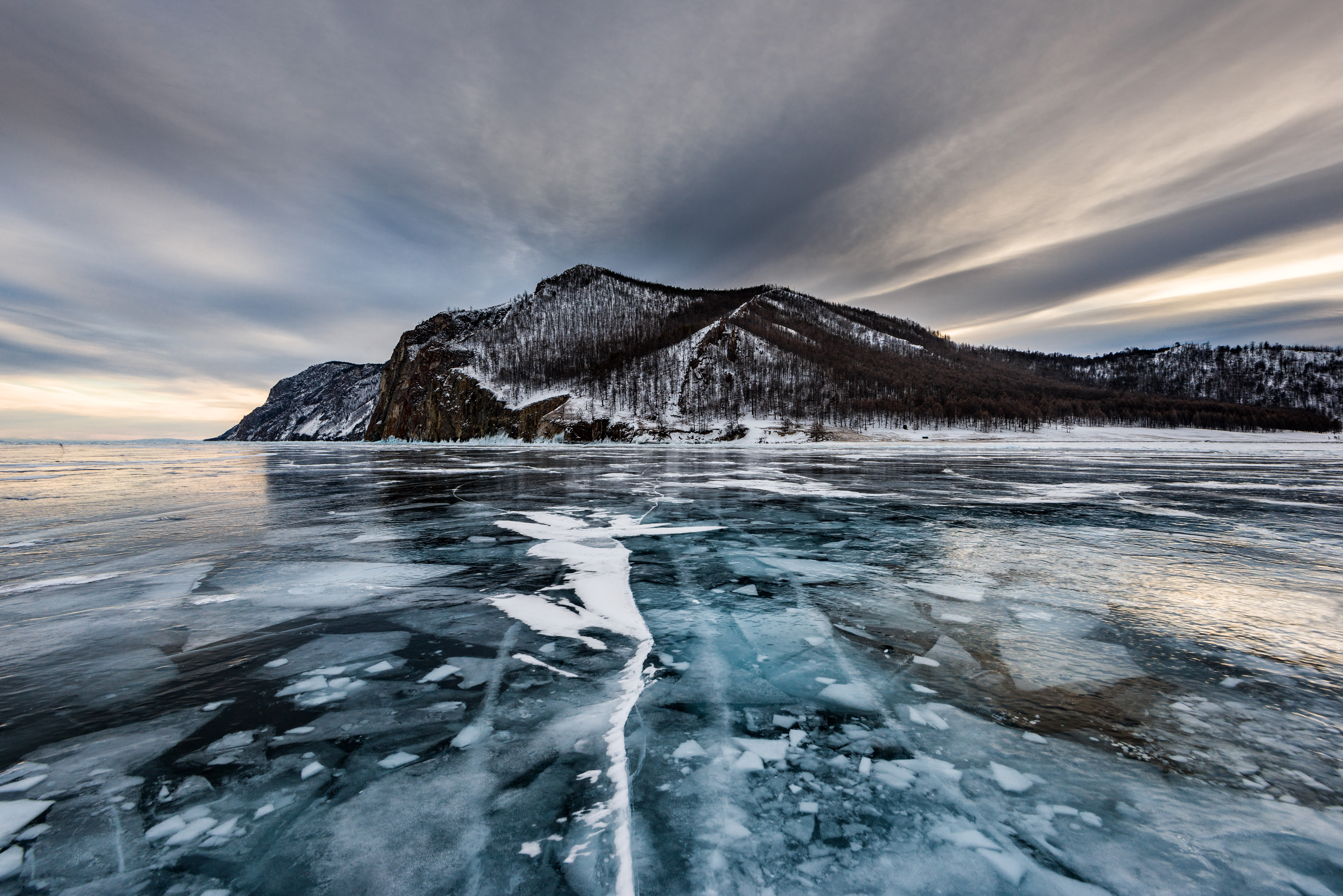
Every winter, from January to May, Baikal freezes over. The ice grows more than a metre thick, and in places it is so clear that it is called "black ice" — you can see through it to the water below, as if you were looking through glass. In spring, the ice breaks up into great turquoise shards that pile up on the shore in frozen waves, the scene in the photograph at the top of this article.
The ice matters to the lake's life. It seals the water off from the wind, and the water beneath it stays close to freezing all year. That cold, oxygen-rich water is part of why Baikal's creatures have evolved the way they have — and why the lake's water is so clear, and so slow to change.
Winter is also when most visitors come. Tourists walk, skate and drive across the frozen lake, and photographers come from all over the world for the blue ice. The lake is beautiful in summer too, when the shores are green and the water is warm enough to swim in the shallows, but it is the winter ice that made Baikal famous.
The lake that keeps its secrets
For all that scientists know about Baikal, much of it is still unexplored. Its deepest waters are cold, dark and under enormous pressure, and new species are still being found in them. The lake floor holds layers of sediment that record 25 million years of climate history — a natural archive of how the Earth has changed, waiting to be read.
That is the real answer to the question of what the deepest lake in the world is. It is not just a number. Lake Baikal is the deepest lake because it is the oldest lake, sitting in the deepest crack in a continent, holding a fifth of the planet's fresh water and a world of life that exists nowhere else. At 1,642 metres, it is deeper than any other lake by a wide margin — and it is still getting deeper.
Quick answers
What is the deepest lake in the world? Lake Baikal, in Siberia, Russia, at 1,642 metres (5,387 feet) deep.
Why is Lake Baikal so deep? It sits in the Baikal Rift Zone, where the Earth's crust is pulling apart. The valley has been sinking for 25 to 30 million years, and it is still sinking.
How deep is Lake Baikal? 1,642 metres at its deepest point. Its average depth is about 744 metres, and the second-deepest lake, Tanganyika, is 1,426 metres.
How old is Lake Baikal? 25 to 30 million years — the oldest lake on Earth.
How much water does it hold? About 23,615 cubic kilometres — roughly 20% of the world's unfrozen fresh water, more than all five Great Lakes combined.

Comments (0)
Comments are reviewed before they appear on the site. Your email address is never shown publicly.
No comments yet — be the first to share your thoughts.