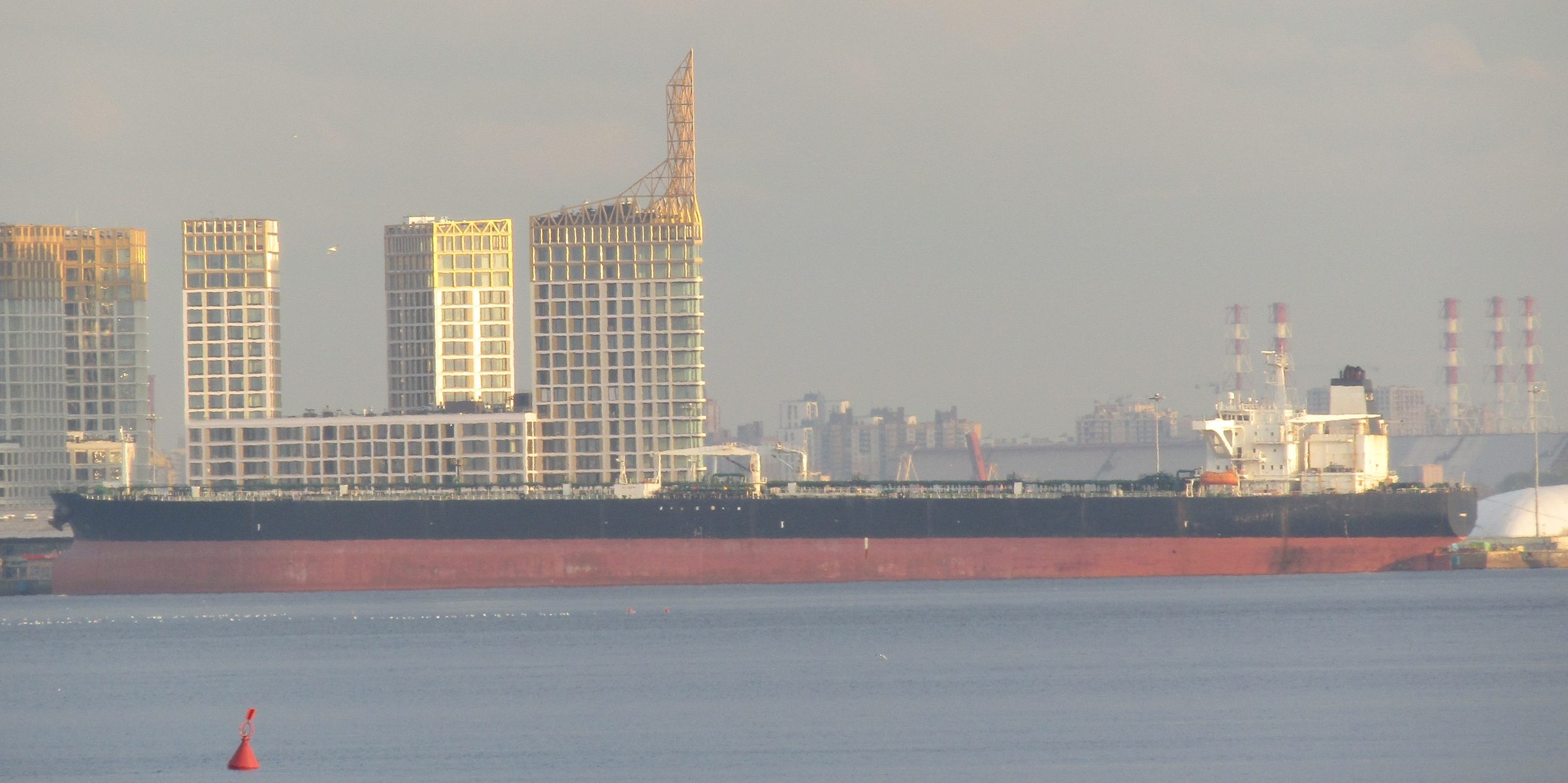
The Strait of Hormuz crisis took a new turn overnight. The United States has now spoken publicly about Iran's most dramatic claim of the week — and said it is not true. At the same time, the shipping industry's own records show the danger is real and growing: four more vessels were attacked, the tally of reported strikes reached 10 in a week, and the waterway that carries a fifth of the world's seaborne oil has gone almost silent.
Here is what changed overnight, what is confirmed, what is still only a claim, and what it means for oil prices.
The US response: the shipping lanes are clear, Washington says
US Central Command (CENTCOM) has rejected the claim by Iran's Islamic Revolutionary Guard Corps that three oil tankers struck naval mines in the Strait of Hormuz and caught fire. The rejection was reported by the National Security Journal, citing the Jerusalem Post, and carried by UK Fact Check on 24 November.
According to that reporting, CENTCOM says US forces have cleared all internationally recognised primary shipping routes through the strait, that those routes are free of sea mines, and that they are still being used by commercial vessels. The IRGC had said the three tankers caught fire after hitting mines while under US military air cover and escort — an account CENTCOM's statement directly contradicts.
Two cautions matter. First, neither side's account has been independently verified. Second, CENTCOM's denial refers to the primary shipping routes. The IRGC placed one tanker near the strait's southern coast and two in its eastern section, and no warning from UK Maritime Trade Operations (UKMTO) has been reported for those three incidents. The US statement does not, on its own, settle what happened to the three unnamed tankers — and Iran has named no tanker, flag, owner or cargo, and given no casualty figures.
The IRGC's claim was carried by Iran's official news agency IRNA early on Tuesday 24 November, with Tasnim News Agency saying the statement was issued on Monday night. Iran's navy has since put the running total higher, claiming four tankers in total have hit mines and caught fire — again, a claim no maritime authority has confirmed. The IRGC said it would later release footage of the explosions and fires.
The attacks that are confirmed: 10 ships in a week
While the mine claims remain unverified, the attacks confirmed by maritime authorities have kept rising. The latest warnings from UKMTO detail attacks against three tankers and a bulk carrier on 22 November, according to gCaptain, bringing the number of reported tanker strikes in the strait to 10 in a single week.
The Joint Maritime Information Center (JMIC), in its advisory of 22 November, reported that seven tankers had been struck in the Strait of Hormuz since 16 November. The three subsequently reported tanker attacks bring that tally to 10. Among the earlier incidents were attacks on the tankers Torkel and Arina on 21 November, both struck by unidentified projectiles near Khasab, Oman. In a separate incident, a bulk carrier at anchor off Khor Fakkan, United Arab Emirates, was struck by an unidentified projectile, triggering a fire on board. The identities of the four most recently attacked vessels have not been disclosed.
The wider picture is grim. The International Maritime Organization has confirmed 141 incidents and 25 seafarer deaths in the region's shipping attacks, according to gCaptain. JMIC continues to assess the maritime threat level in the strait as severe, warning that further deliberate attacks are highly likely. The attacks have now run for nearly nine months, in the context of the wider Iran war — and they are accelerating, not fading.
For the full background to this crisis, including how it began and what each side claims, read our earlier report. (Read more: Six Oil Tankers Hit Mines in the Strait of Hormuz as Iran–US Standoff Escalates)
The crackdown widens: now the tugboats are targets
The most significant overnight shift is not the number of attacks but their widening scope. Iran is no longer only targeting the tankers themselves — it is now going after the smaller vessels that keep shipping moving.
Iran's Persian Gulf Strait Authority announced that it had added 26 tugboats to its list of non-compliant vessels, accusing them of providing services to ships operating in violation of its restrictions in the southern Strait of Hormuz. According to maritime security analyst Martin Kelly of Orbital Risk Intelligence, Iran's non-compliance list already contained 240 vessels as of 19 November — potentially bringing the total to 266 with the latest additions.
Tugboats matter more than their size suggests. They tow damaged ships, guide tankers into port, and handle the salvage work when a vessel is hit. Targeting them — or threatening the companies that operate them — raises the cost of every transit and makes it harder to recover when an attack succeeds. The move signals a widening of Tehran's effort to control commercial shipping, and it comes at a time when repeated attacks have left a growing number of vessels damaged or disabled.
The shipping industry is responding. The Swedish Club, a marine insurer, is warning shipowners against non-essential transits of the Strait of Hormuz as the security situation deteriorates. When insurers tell ships to stay away, it is not a political statement — it is a calculation about risk, and it is one of the clearest signals that the strait is becoming too dangerous for normal commerce.
A strait going quiet
The most striking number of the week is not about attacks at all. It is about absence. IMF PortWatch recorded just one transit through the Strait of Hormuz on 22 November, against a pre-crisis baseline of about 85 per day. One ship, where there would normally be 85.
That is what a blockade looks like without anyone declaring one. Shipowners are not waiting for permission to sail; they are choosing not to. The combination of missile and projectile attacks, the mine claims, the blacklisting of service vessels and the insurers' warnings has done what a formal closure would do — with the difference that no government has to take responsibility for closing the world's most important oil chokepoint.
The strait carries roughly a fifth of the world's seaborne oil, along with a large share of liquefied natural gas. A sustained halt would not stay a regional problem for long: it would reach fuel prices, shipping costs and inflation in every country that buys oil. That is why the traffic numbers matter as much as the attack numbers. Ten damaged ships is a crisis; a strait with no ships in it is a different kind of crisis altogether.
Oil prices fall anyway
Here is the paradox of the morning: with the strait nearly empty and attacks at their worst, oil prices fell. Brent crude was trading at about $88 a barrel on Tuesday 25 November, down roughly 1–2 percent on the day from Monday's close of about $89.37. It had stood at $92.57 on Friday 20 November.
Reuters reported that supply-glut concerns were offsetting Middle East disruption fears. Traders are weighing two forces against each other: the attacks in the Gulf against a market that expects more oil than the world needs. Libya's National Oil Corporation has reopened the Sharara pipeline, US crude inventories rose more than expected, and the International Energy Agency has projected a supply surplus running into 2027. The OPEC+ group meets on 29 November, and its decision will set the direction for prices into next year.
The fall in prices does not mean the market is ignoring the strait. It means the market believes, for now, that the oil will keep flowing — through other routes, from stored supplies, or because the attacks, however frequent, have not yet stopped a major export flow. That belief could change with a single incident. The gap between the price and the danger is itself a measure of how uncertain this crisis has become.
Washington, meanwhile, has added economic pressure of its own. The US Treasury announced new sanctions on 24 November targeting more than two dozen Iranian exchange houses, front companies and key personnel, under an operation aimed at restricting financial networks tied to Iran's oil revenue.
What happens next
Four things will decide how this develops. The first is evidence: whether Iran releases the footage of the mine strikes it promised, and whether any independent authority confirms or refutes the mine claims. The second is the UKMTO warnings — the most reliable public record of what is actually happening to ships. The third is traffic: whether the near-total halt on 22 November was a single day or the new normal. And the fourth is the OPEC+ meeting on 29 November, which will show whether the world's oil producers think the strait will stay open.
Iranian state television also claimed its air force shot down two US drones over the strait. That claim, like the mine claims, has not been independently confirmed.
The pattern of the last week is clear: each day's claims are bigger than the last, the confirmed attacks keep coming, and the ships keep staying away. The US has now put its name to a denial. What it has not done — yet — is produce the evidence that would settle the argument. Until someone does, the Strait of Hormuz will remain what it has become: the most dangerous waterway in the world, and the most uncertain.
Developing story. This article will be updated as new information is confirmed. Earlier, unrelated cyberattacks on financial firms show how exposed global infrastructure has become — read our report on the JPMorgan vendor breach. (Read more: JPMorgan Chase Vendor Cyberattack Exposes Customer Data)


Comments (0)
Comments are reviewed before they appear on the site. Your email address is never shown publicly.
No comments yet — be the first to share your thoughts.