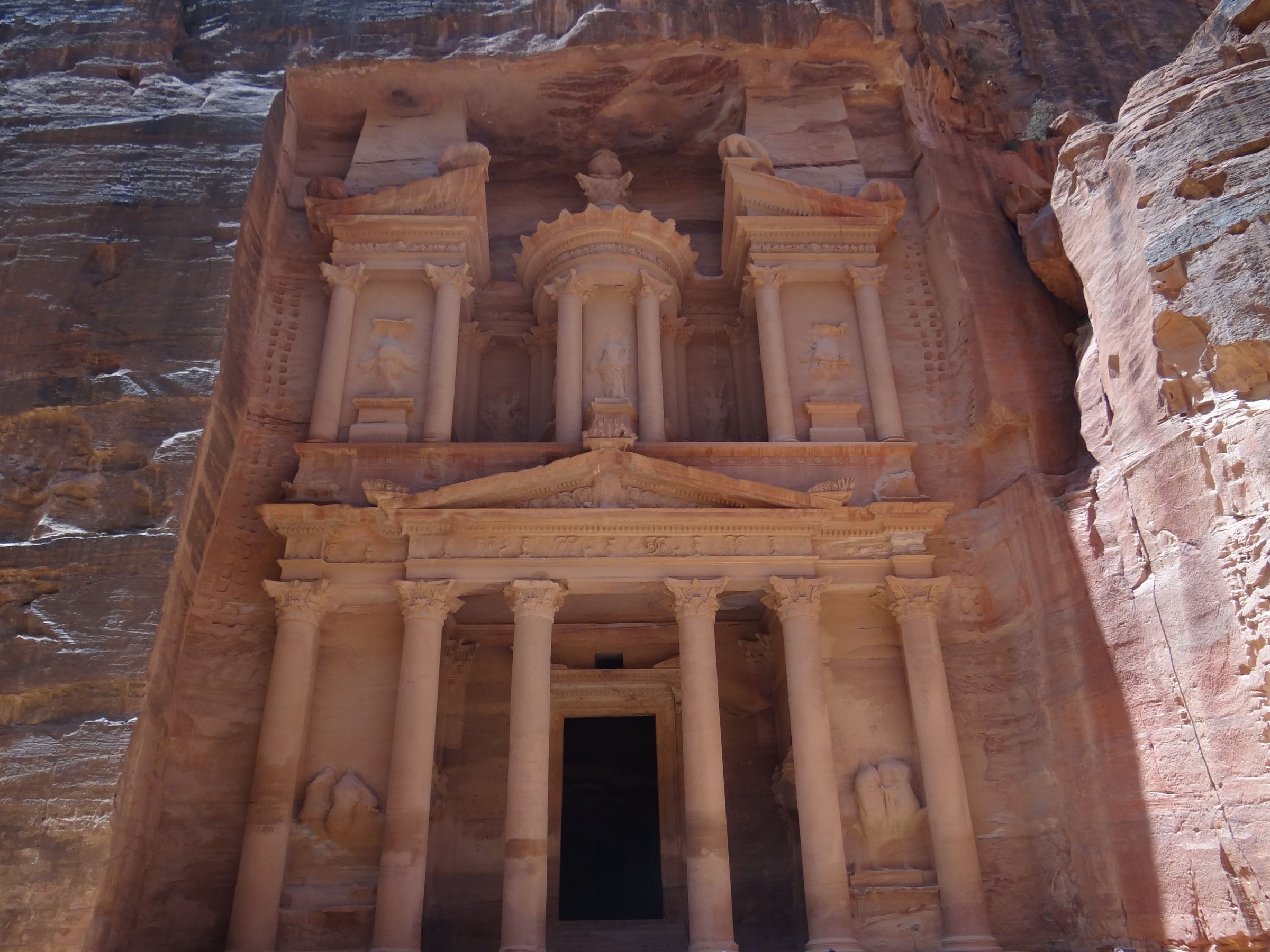
There is a moment, deep inside a narrow desert gorge in Jordan, when the rock walls suddenly part — and a 40-metre-tall temple, carved entirely out of a cliff face, glows pink in the sunlight. It is one of the most famous views on Earth. But the Treasury, as that facade is called, is only the front door. Behind it lies an entire city cut from stone: tombs, temples, a theatre for 8,500 people, and a water system so clever that it kept tens of thousands of people alive in the desert.
A City Hidden in the Desert
Petra sits in the mountains of southern Jordan, between the Red Sea and the Dead Sea, near the modern town of Wadi Musa. Its name comes from the Greek word for "rock" — petra — and the name fits: the city is half-built and half-carved into the rock, as UNESCO puts it, surrounded by mountains riddled with passages and gorges.
But "Petra" is the name outsiders gave it. Its own people, the Nabataeans, called it Raqmu. People had lived in this valley long before they arrived: a Neolithic village at nearby Beidha dates back to around 7000 BC. The Nabataeans — Arab nomads who had wandered the desert with their herds — settled here in the 4th century BC, and by the 2nd century BC their settlement had become the capital of a kingdom.
Why build a capital in such a harsh place? Because Petra sat exactly where the money was: at the crossroads of the caravan routes carrying frankincense and myrrh from southern Arabia, spices from India, and silk from China toward the Mediterranean. The Nabataeans did not produce most of these goods. They stood in the middle and took a cut — one ancient account says they taxed imports at 25 percent. At its height, in the 1st century AD, the city held tens of thousands of people.
The Nabataeans: Traders Who Turned Rock Into Riches
The Nabataeans left almost no written history of their own — what we know comes from Greek and Roman writers, business papers on papyrus, inscriptions, and the ruins themselves. What the ruins make clear is that they were master traders and master builders. Their wealth bought them the best of the ancient world: the facades of Petra mix Greek and Roman styles — Corinthian columns, broken pediments, winged victories — with the Nabataeans' own tradition of cutting temples and tombs directly into the cliff. UNESCO calls this fusion of Hellenistic architecture with Eastern tradition "a unique artistic achievement".
Water: The Secret Behind the City
None of this should have been possible. Petra receives less than 200 millimetres of rain a year, much of it arriving all at once in sudden flash floods. The Nabataeans answered with engineering: dams to slow the floods, a tunnel to divert water away from the entrance gorge, channels cut into the rock to carry rainwater, and a vast network of cisterns and reservoirs to store it, topped up by pipes from springs outside the city. UNESCO describes the system as "ingenious" — it collected, in the words of one archaeologist, "every drop of water". Without it, there would have been no capital in the desert at all.
Walking the Siq: The Greatest Entrance in the Ancient World
Every visit to Petra begins the same way it has for 2,000 years: on foot, through the Siq. This winding natural gorge, about 1.2 kilometres long, is the city's main entrance from the east. In places it is only 3 or 4 metres wide, and its walls climb as high as 180 metres. The path bends so often that you lose all sense of where the city is — and then, at the very end, the walls part and the Treasury appears, framed like a picture.
The Treasury: A Tomb, Not a Treasure Chest
Al-Khazneh, the Treasury, is the face of Petra — and almost everything about it is a misunderstanding. About 40 metres tall and 25 metres wide, its facade was carved top-down out of solid sandstone in the early 1st century AD. Despite its name, it was almost certainly never a treasury at all. Most archaeologists now believe it was a royal tomb, very likely the mausoleum of King Aretas IV, who ruled from 9 BC to AD 40. But its exact purpose is still debated — no inscription on the building says who it was for.
The name comes from a Bedouin legend: the stone urn at the top of the facade hides the treasure of a pharaoh. Treasure hunters believed it for generations — the bullet holes in the urn are from people firing at it, hoping to crack it open and spill the gold. There was never any gold inside. What was underneath turned out to be something better.
In 2003, archaeologists found tombs in front of the Treasury. Then, in the summer of 2024, a Jordanian-American team using ground-penetrating radar found another hidden tomb beneath it — a chamber holding the complete remains of 12 people, with bronze, iron and ceramic grave goods, all about 2,000 years old. One skeleton was found holding a ceramic vessel shaped like a chalice. The find mattered for science as well as headlines: very few complete Nabataean burials have ever been recovered at Petra, and these twelve may finally help answer who the Treasury was built for. The chamber was dated to between the mid-1st century BC and the early 2nd century AD, which fits the reign of Aretas IV — though researchers stress the work is still going on, and the mystery is not yet closed.
Beyond the Treasury: A Whole City in Stone
Most visitors stop at the Treasury. That is a mistake, because Petra is a city, not a single monument — and more than 600 carved facades are spread across its valleys. Past the Treasury, the Street of Facades is lined with dozens of tombs. Then comes the theatre, cut straight into the hillside, with room for around 8,500 spectators. Across the valley rise the Royal Tombs: the Urn Tomb, later turned into a church in the 5th century AD; the Silk Tomb, named for the rippling colours of its rock; the Corinthian Tomb; and the Palace Tomb, built to look like a Roman palace front.
Further on, the Colonnaded Street runs through the heart of the old city, past the Nymphaeum and the Great Temple, to the Qasr al-Bint — the city's main temple, which still stands nearly to its full height. Together they are the remains of a real, working city: streets, shops, baths, markets and temples.
The Monastery: Bigger Than the Treasury
If you have the legs for it, the greatest reward at Petra is the climb to Ad Deir, the Monastery. More than 800 rock-cut steps wind up from the end of the Colonnaded Street to a windswept plateau — and there stands a facade even larger than the Treasury, about 47 metres wide and 48 metres high, with a doorway 8 metres tall. It was carved around 2,000 years ago, and an inscription found nearby links it to the deified king Obodas I.
Its modern name comes from the Byzantine period, when Christians carved crosses on its rear wall and used the great hall as a church — hence "the Monastery". Few visitors make the climb, which is exactly why it is worth it: the crowds thin out, and the Monastery faces west, so late afternoon light is its best hour.
Why Petra Fell Silent
Petra's golden age did not last. In AD 106, the Roman emperor Trajan annexed the Nabataean kingdom, and Petra became the capital of the Roman province of Arabia Petraea. The city kept prospering for a while — it even received a visit from the emperor Hadrian in AD 131 — but the trade that made it rich was shifting to the sea, and Petra's importance slowly faded.
Then the earth moved. A massive earthquake in AD 363 levelled many of the city's buildings. Another earthquake struck centuries later. The population dwindled, the grand buildings fell into ruin, and Petra faded from the maps of the outside world. It was never completely abandoned — local Bedouin families knew the ruins and lived among them — but to the West, the rose-red city became a legend, a place many believed was a myth. It stayed that way for more than a thousand years.
The Rediscovery: A Swiss Explorer in Disguise
On 22 August 1812, a Swiss explorer named Johann Ludwig Burckhardt walked into Petra disguised as a Muslim pilgrim. Travelling under the name Sheikh Ibrahim ibn Abdallah, he had told his Bedouin guide that he wanted to visit the tomb of the prophet Aaron, traditionally said to lie on Jebel Haroun, the mountain above the city. It was a cover story — and it worked. Burckhardt became the first Westerner in centuries to see the ruins, and his account introduced Petra to the world.
Word spread slowly at first, then faster. Explorers, artists and archaeologists followed, and the first real excavations began in 1929. In 1985, UNESCO inscribed Petra on the World Heritage List, calling it "one of the most precious cultural properties of man's cultural heritage". In 2007, in a worldwide public vote, it was named one of the New7Wonders of the World. And in 1989, the Treasury became famous to a whole new generation when it appeared in the film Indiana Jones and the Last Crusade. The poet John William Burgon had described it better, a century and a half earlier, as "a rose-red city half as old as time".
Petra Today: What a Visitor Sees
Today Petra is Jordan's most-visited tourist attraction, and it rewards time more than speed. A single day covers the main trail — the Siq, the Treasury, the theatre, the Royal Tombs and the Colonnaded Street — but two days let you climb to the Monastery and the High Place of Sacrifice, an open-air shrine on Jebel Madbah. On selected evenings, Petra by Night lights the Siq and the Treasury with hundreds of candles.
The site is still giving up secrets: the 2024 tomb proved that after two centuries of exploration, Petra has not finished surprising us. A band of desert traders found a hidden valley, taught it to catch every drop of rain, and carved a capital out of solid rock so beautiful that the world, having forgotten it for a thousand years, fell in love with it all over again the moment it was found.
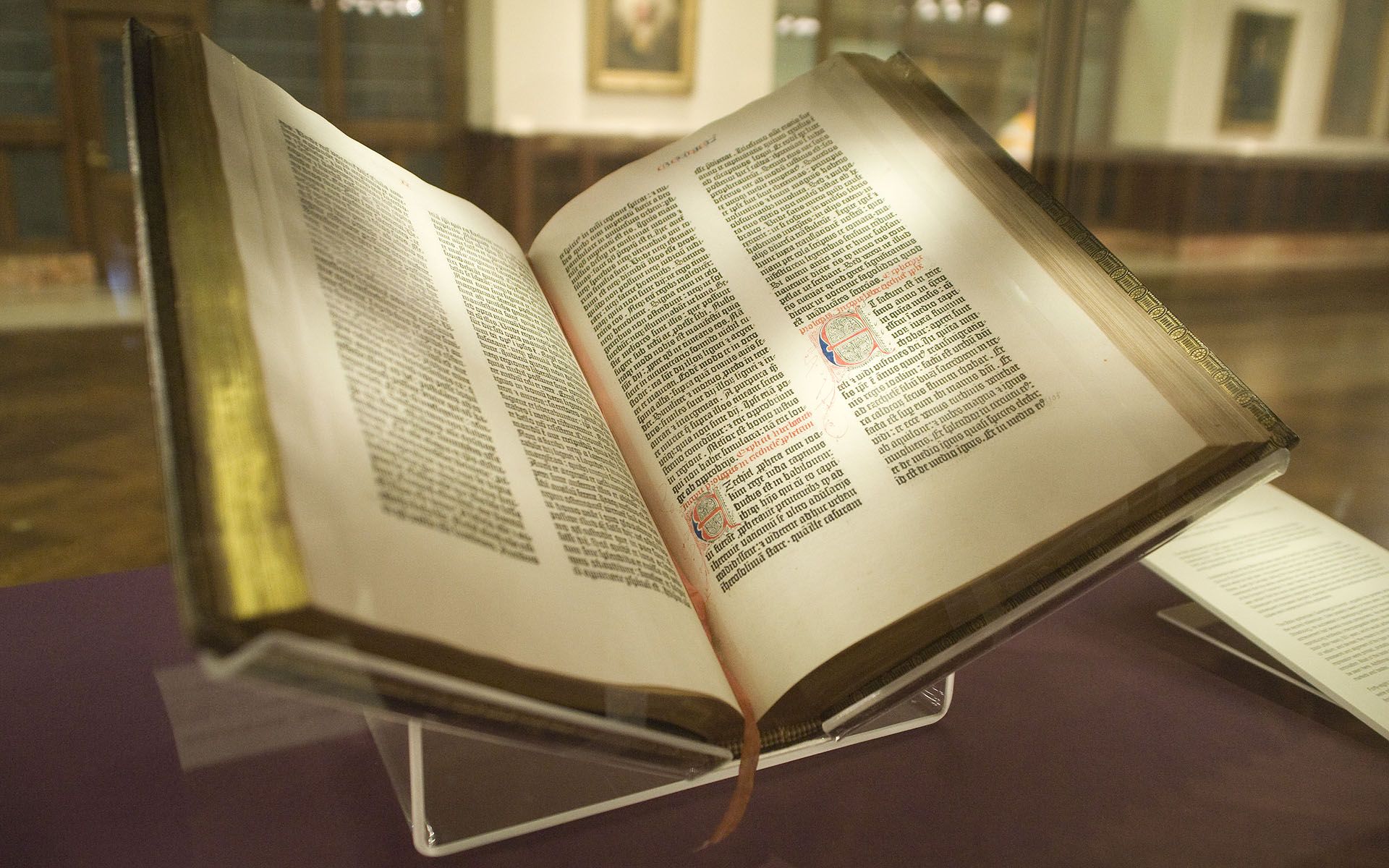
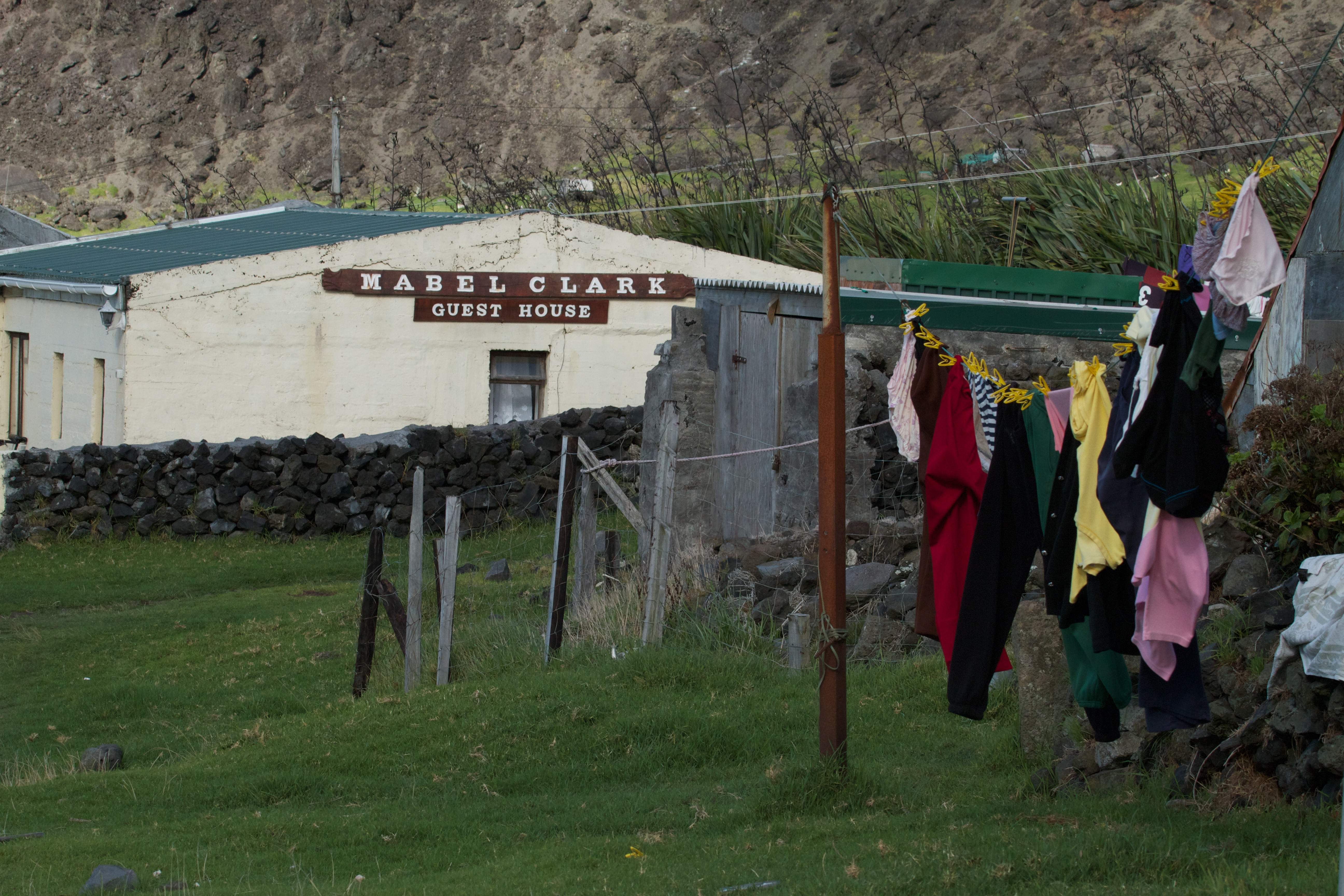
For travellers who love places at the far edge of the map, Petra belongs on the same list as the most isolated spots on Earth — like Tristan da Cunha, the most remote inhabited island on the planet. And just as the printing press carried new ideas across Europe, Burckhardt's published account carried Petra from a desert valley into the imagination of the whole world.

Comments (0)
Comments are reviewed before they appear on the site. Your email address is never shown publicly.
No comments yet — be the first to share your thoughts.