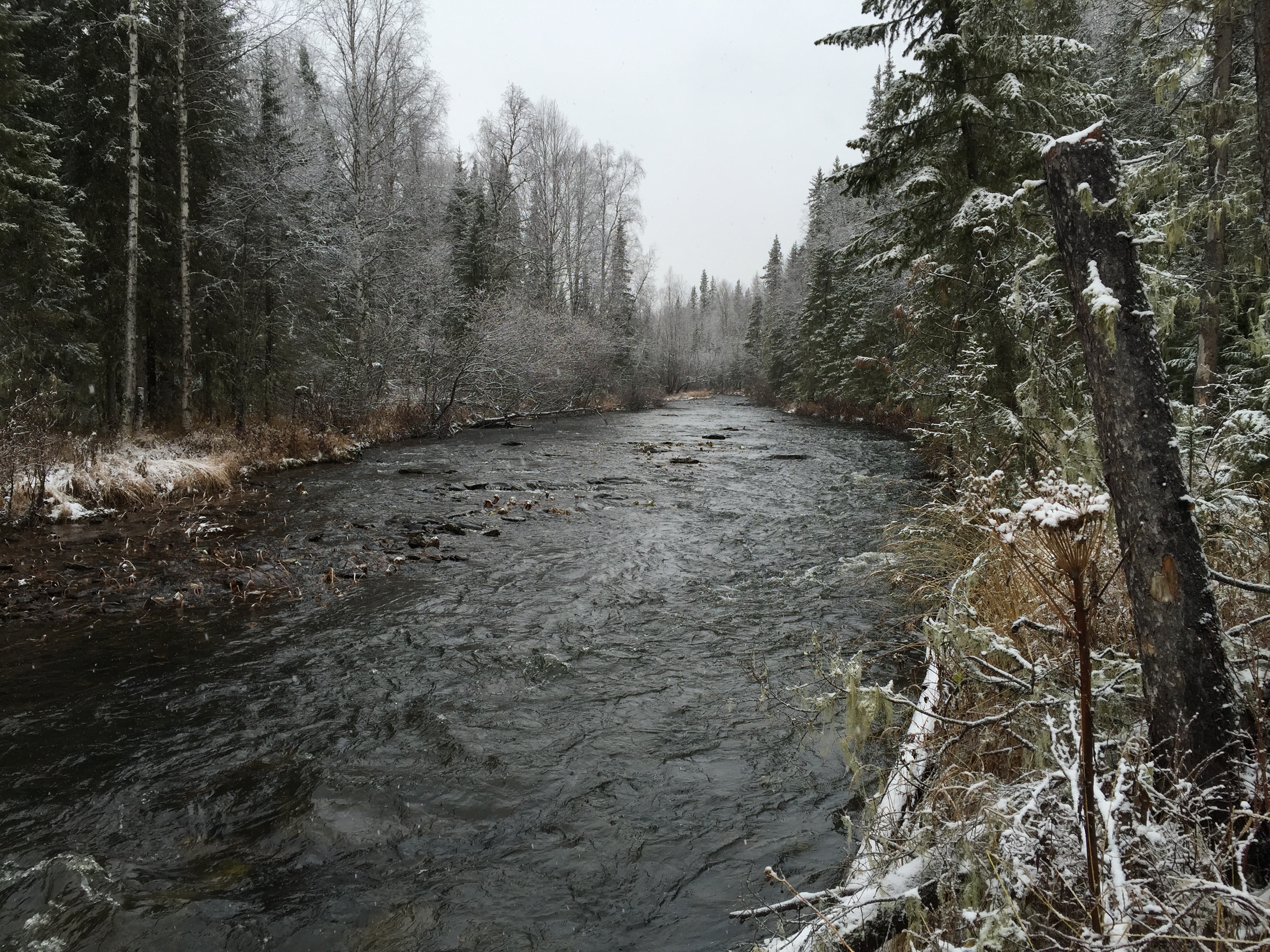
The expedition and the tent
The ten hikers — mostly students and graduates of the Ural Polytechnical Institute, led by 23-year-old Igor Dyatlov — were attempting a demanding winter ski traverse in the northern Urals. One member, Yuri Yudin, turned back ill, a decision that saved his life. On the evening of 1 February 1959, the remaining nine pitched their tent on the slope of Kholat Saykhl, a name that translates from the Mansi language as "Dead Mountain."
Searchers found the tent 26 days later. It had been cut open from the inside. Footprints led away, more than a kilometre down to the tree line — made, remarkably, by people in socks or a single boot. Temperatures that night were below −25 °C, with fierce katabatic winds funnelling down the slope.
The bodies and the injuries
The first five bodies were recovered near the tent and along the path to the forest. The last four were found in May, in a ravine under some four metres of snow. The official picture, then and now: six of the nine died of hypothermia. But four of the ravine group carried severe injuries — crushed chests and, in one case, a fractured skull — the kind of trauma that fed sixty years of speculation. Two of the ravine bodies were missing their eyes, and one her tongue; the ravine lay in a stream, and weeks of exposure, decay and scavenging are the investigators' standard reading of that detail. Traces of radioactivity were found on some of the group's clothing. The 1959 investigation closed with a famously vague verdict: the deaths were caused by "a compelling natural force."
Why an avalanche was long doubted
Avalanche was always on the list of suspects, and always argued down. The 2021 study lists the classic objections itself: searchers found no avalanche debris 26 days later; the average slope above the tent, about 23 degrees, is gentler than the 30 degrees slabs usually need; the group's own timeline implies any avalanche released at least nine hours after they cut into the slope to pitch the tent; and the chest and skull injuries looked wrong for a small slide — too severe in one way, not lethal in the way real avalanches usually kill.
The 2021 model
Johan Gaume and Alexander Puzrin, snow scientists at Swiss and Israeli institutes, rebuilt the slope in a computer model — including a detail earlier debates had smoothed away: the terrain above the tent is not a uniform incline but a series of steps. Buried under snow, the weak layer followed those steps at a local angle of about 28 degrees, steep enough to fail. All day, the katabatic wind had been loading the slope with fresh snow above the tent, which the hikers had undercut when they dug their platform.
Their simulation produced a delayed slab release between 7.5 and 13.5 hours after the cut — a window that matches the forensic time of death. And the slab that fell was small: their modelling showed it could inflict exactly the severe but non-lethal chest and skull injuries found on the victims, without burying them deeply or killing them outright. The reconstruction that follows is grim and simple: injured, in the dark, fearing a second slide, the group evacuated downhill to the trees — and the cold, not the snow, killed most of them.
The expeditions that checked
The authors did not stop at modelling. In a 2022 follow-up paper, they reported three expeditions to the pass. Drone surveys produced a high-resolution terrain model confirming steps steeper than 30 degrees above the tent site. Russian snow scientists who had worked the reopened case confirmed the assumptions: snow cover above the tent that night exceeded 150 cm, and reconstructed wind speeds of 9 to 12 metres per second sat right in the range the delay model requires.
In January 2022, in weather resembling the night of the tragedy, guides documented two fresh slab avalanches on an eastern slope less than three kilometres from the tent site — one with a crown thickness close to the model's prediction. Within an hour, wind-blown snow had made one of them practically invisible. That single observation answers the oldest objection: a small slab at Dyatlov Pass erases its own evidence, which is why searchers found nothing three weeks on.
What remains unexplained
The 2021 paper is careful about its own limits: it addresses the trigger and the injuries. It does not explain the traces of radioactivity on some clothing — mundane explanations have been offered, including that two of the hikers had worked at a nuclear facility and that period camping-lantern mantles contained thorium, but the paper does not take it up. It does not reconstruct the group's exact movements after leaving the tent, or account for the reports of glowing orange spheres in the sky that night, which other hiking groups described and which have never been satisfactorily sourced.
Russia's own reinvestigation, reopened in 2015 and concluded by the Prosecutor General in July 2020, also landed on avalanche. Two independent routes — a state investigation and a physics model — now point the same way. But as Gaume and Puzrin themselves wrote after their expeditions: the case itself remains open. What physics has provided is not a verdict, but the first explanation of that night that survives being tested.



Comments (0)
Comments are reviewed before they appear on the site. Your email address is never shown publicly.
No comments yet — be the first to share your thoughts.